Medicare Solar Generator DME Coverage: Why None of Medicare’s 6 DME Categories Fit
 By Lee Arnold
Medical Solar Power Backup Specialist | 8+ years in the field
Quick Answer:
A solar generator doesn’t qualify for Medicare solar generator DME coverage under any of Medicare’s six DME payment categories — not because of a special exclusion, but because it never reaches the DME definition to begin with.
What actually IS bundled into your Medicare DME rental depends heavily on which category your device falls into. Oxygen equipment rentals cover “necessary supplies and accessories,” CPAP falls under a 13-month capped rental, and ventilators bundle in every accessory and service with no separate billing at all.
None of those bundles were ever built to include a standalone battery or solar generator — they’re built around what a specific device needs to function, not backup power for when the grid goes down. For the full policy reasoning behind that exclusion, see our Medicare Part B DME emergency backup guide.
Most content on this keyword either repeats a generic “Medicare doesn’t cover DME accessories” line or converges on the same backup-equipment policy without ever explaining what Medicare’s actual payment categories are. This one starts there, since “what DME qualifies” is a real, answerable question with six specific categories behind it.
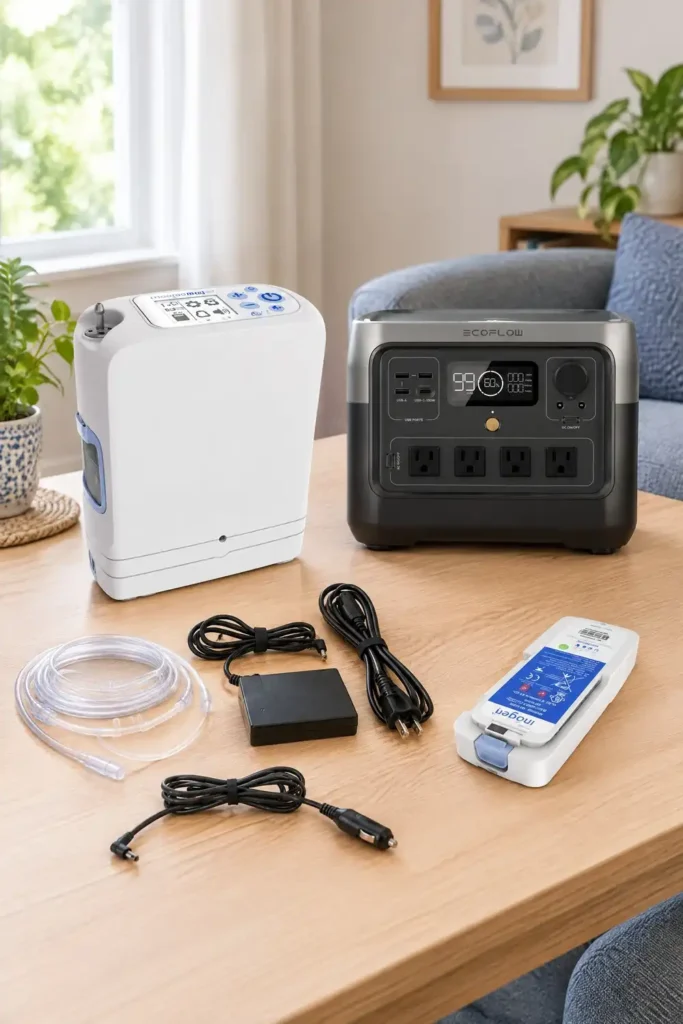
Table of Contents
The Six Ways Medicare Actually Pays for DME
Every piece of Medicare-covered durable medical equipment gets slotted into one of six payment categories, each with its own rules for what’s bundled and what isn’t, per CGS Medicare’s own DMEPOS fee schedule categories chapter:
- Inexpensive or Routinely Purchased (IRP) — equipment under $150, or items purchased outright at least 75% of the time. You or Medicare can choose rental or lump-sum purchase.
- Frequent and Substantial Servicing (FSS) — rental only, no purchase option, ever. Ventilators fall here.
- Certain Customized Items — paid as a lump sum based on actual production and acquisition cost, evaluated individually.
- Other Prosthetic and Orthotic Devices — lump-sum purchase, a separate track from the servicing-heavy categories.
- Capped Rental — rental payments for up to 13 months, front-loaded at 10% of purchase price for the first three months, then 7.5% through month 13. Most CPAP and BiPAP machines fall here.
- Oxygen and Oxygen Equipment — its own category entirely, rental-only for up to 36 months.
A solar generator or backup battery doesn’t fit into any of these, for a reason that has nothing to do with cost or category rules: the categories only apply to equipment that already meets Medicare’s DME definition, and a power source that isn’t itself medical equipment never gets that far.
What Oxygen Equipment’s Rental Actually Bundles
Oxygen equipment is worth a closer look, since it’s the category with the most explicit “what’s included” language. Medicare’s own oxygen equipment coverage page states the monthly rental includes “all refills of tanks or cylinders,” plus “any supplies, accessories, and services necessary for use of the oxygen and oxygen equipment” — tubing, a mouthpiece, and equipment maintenance are named specifically.
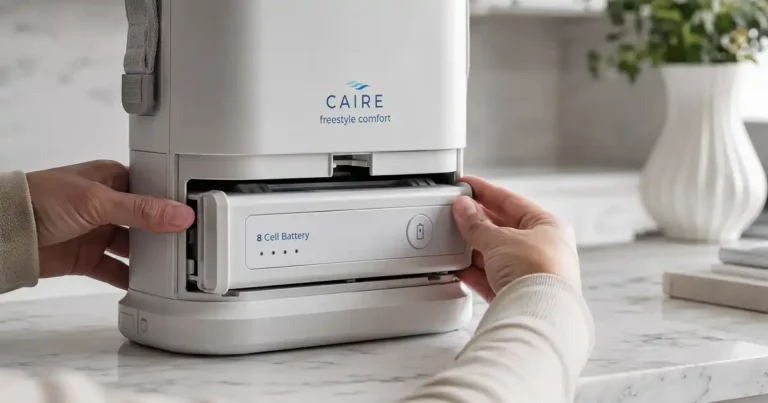
That “necessary supplies and accessories” phrase is broad, but it’s never itemized down to batteries specifically. In practice, that means whether your portable oxygen concentrator’s standard battery counts as part of the bundle is a real gray area worth confirming directly with your supplier, not something to assume either way from the general language.
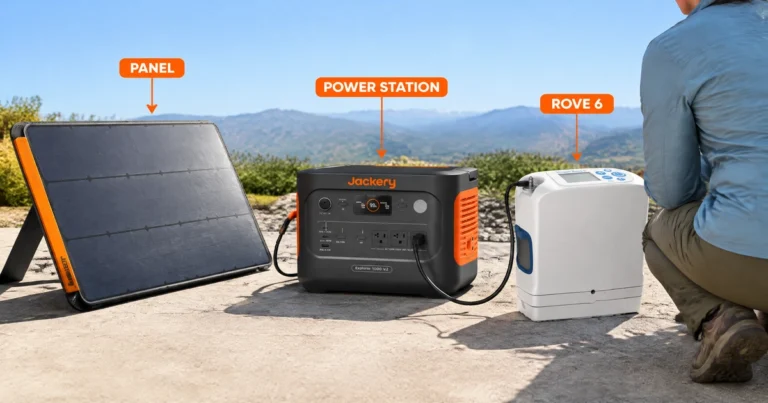
What that phrase clearly does not stretch to cover is a separately purchased solar generator or power station bought for outage backup. That’s not a supply “necessary for use of the oxygen equipment” in the way tubing is — it’s a separate piece of infrastructure for a scenario (grid failure) the rental bundle was never built around.
Ventilators Bundle Everything — Which Still Isn’t the Same Thing
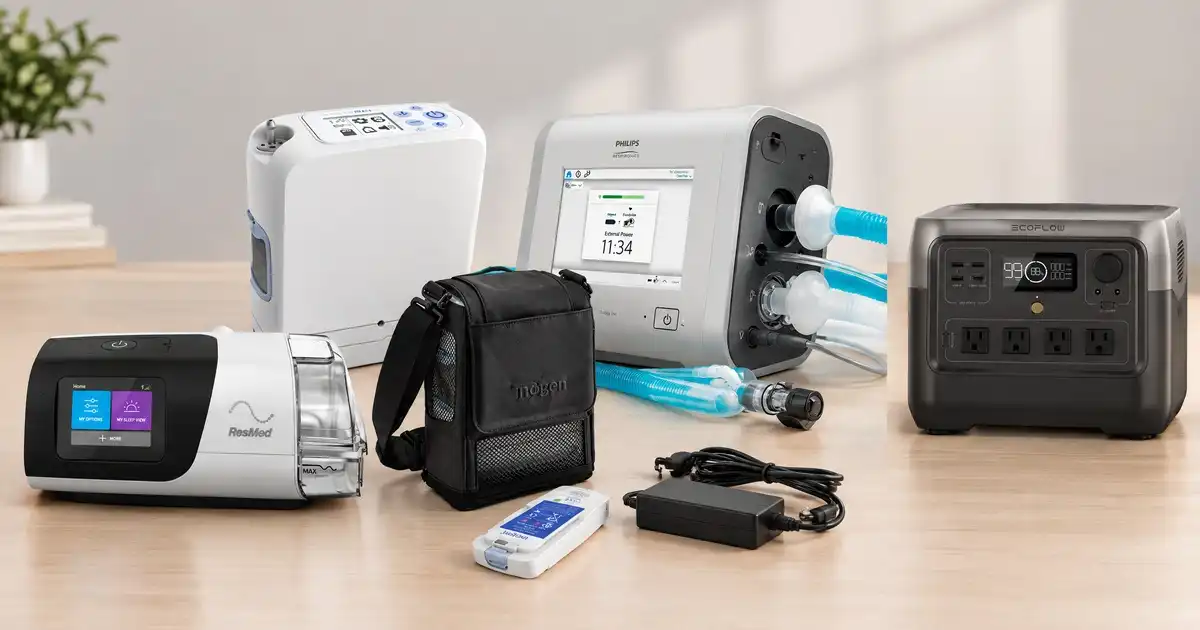
Ventilators sit in the Frequent and Substantial Servicing category, and Noridian’s own billing guidance for that category is unusually absolute: “there is no separate payment by Medicare for any options, accessories or supplies used with a ventilator.” The same guidance adds that “all necessary maintenance, servicing, repairs and replacement are also included in the monthly rental.”
That’s the most comprehensive bundle in the whole DME system; even the ventilator’s own internal battery replacement falls under the supplier’s servicing obligation. It’s tempting to read that as covering backup power too, but it doesn’t. The bundle covers what the ventilator itself needs to keep running — not a separate power source for when your home’s electricity goes out entirely.
The 36-Month and 13-Month Cycles Matter More Than People Realize
Here’s a detail that rarely comes up outside billing circles, but genuinely helps with backup-power planning: oxygen equipment rental runs for a maximum of 36 months, after which you stop paying rental fees but the supplier still owns the equipment for another 24 months, covering maintenance as needed. CPAP and similar capped-rental equipment tops out at 13 months before you effectively own it outright.
Where you sit in that cycle matters for backup planning, separate from the coverage question. Equipment nearing the end of a rental cycle may be due for replacement with a newer unit — worth timing any backup power purchase around, rather than buying for a unit’s exact specs right before it changes.
Ask Your Supplier This, Not Medicare
Since the “necessary supplies and accessories” language leaves real gray area at the accessory level, the more useful move than guessing is asking your DME supplier directly: is the battery or power supply for this specific unit included in my rental agreement, or would a replacement or backup be a separate purchase?
Suppliers vary in how they interpret and bill the bundle. A direct answer for your specific equipment and supplier beats assuming based on general policy language.
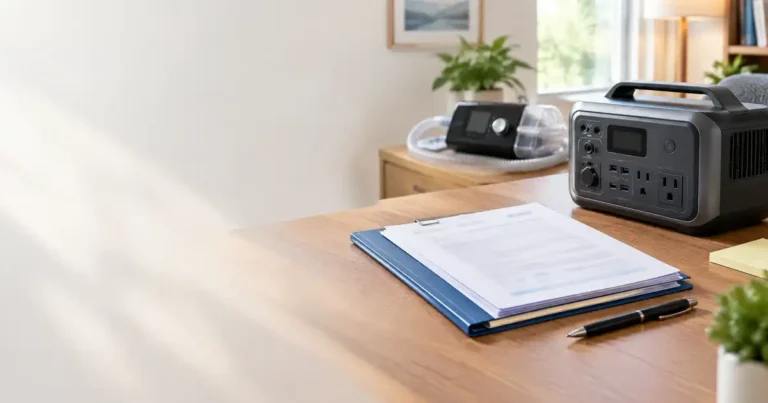
If the answer is “separate purchase,” that’s exactly the gap a letter of medical necessity and HSA/FSA funds are built to cover — walked through in our letter of medical necessity guide.
How This Differs From Our Medicare Backup Equipment Guide
Our Medicare Part B DME emergency backup guide covers the specific policy that excludes backup power — Medicare’s own back-up equipment rule, plus the real alternative pathways through Medicare Advantage, state Medicaid waivers, and HSA/FSA funds.
This guide answers a different, earlier question: what Medicare’s actual DME payment system looks like, and where a solar generator falls relative to it. Read this one first if you’re trying to understand how DME coverage works at all; read the other one for what to do once you know backup power specifically isn’t included.
FAQs
What DME payment category would a solar generator fall into?
None of them. Medicare’s six DME payment categories only apply to equipment that already meets the DME definition — durable, medically necessary, used in the home, typically useful only to someone sick or injured. A power source that isn’t itself medical equipment never enters the category system.
Does my oxygen concentrator rental include the battery?
Medicare’s bundled “necessary supplies and accessories” language for oxygen equipment doesn’t specifically itemize batteries, which leaves real ambiguity. Confirm directly with your supplier whether your specific unit’s standard battery is included in the rental agreement.
Why do ventilators bundle in more than other equipment?
Ventilators fall under Medicare’s Frequent and Substantial Servicing category, which bundles every accessory, supply, and service into the monthly rental with no separate billing allowed. That’s about what the ventilator itself needs to function, not a separate power source for a full grid outage.
Does it matter where I am in my equipment’s rental cycle?
For planning purposes, yes. Oxygen equipment tops out at 36 months of rental payments, CPAP-type capped rentals at 13 months. Equipment nearing that point may be replaced with a newer unit, which is worth factoring in before buying backup power sized to your current unit’s exact specs.
If my supplier says my equipment’s power supply isn’t covered, what are my options?
An HSA or FSA can reimburse a backup power purchase with a letter of medical necessity, which doesn’t depend on Medicare’s DME rules at all. Our Medicare backup equipment guide covers the additional Medicare Advantage and state Medicaid pathways worth checking too.
Bottom Line
Medicare solar generator DME coverage isn’t a gap in an otherwise generous system — it’s the predictable result of a payment structure built entirely around specific medical devices, not general backup power. Every one of Medicare’s six DME payment categories bundles supplies and accessories around what a device needs to function, and none of them were built with grid-outage backup in mind.
The most useful thing you can do isn’t searching for an exception; it’s confirming directly with your supplier what your specific rental actually includes, and treating a solar generator as the separate purchase it is — one that HSA, FSA, and in some cases Medicaid or Medicare Advantage benefits can help offset.
This article reflects CMS DMEPOS fee schedule categories and Medicare oxygen equipment coverage rules current as of October 2026. Exact bundling and billing practices can vary by supplier and by specific equipment — confirm current details with your DME supplier or plan administrator before making purchasing decisions. This is not insurance, legal, or financial advice.