LiFePO4 vs Lead Acid Battery for Medical Device Backup
 By Lee Arnold
Medical Solar Power Backup Specialist | 8+ years in the field
Quick Answer:
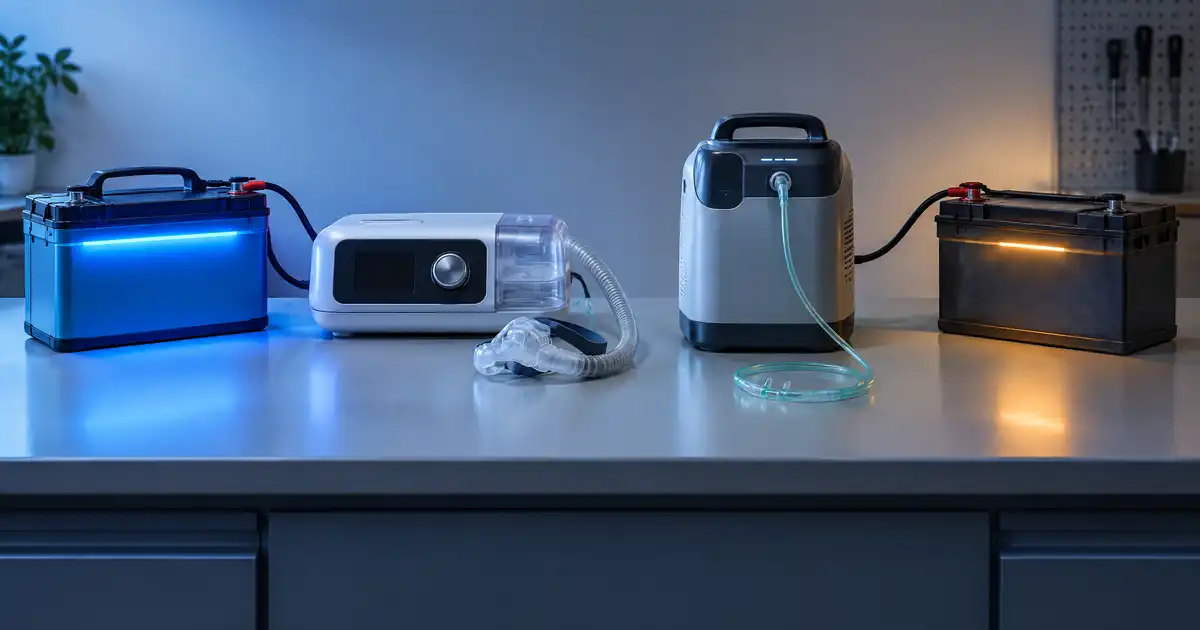
For medical device backup power, LiFePO4 (lithium iron phosphate) beats lead acid and AGM on nearly every number that matters: roughly a third of the weight, 6 to 10 times the cycle life, and full usable capacity instead of the 50% you’re supposed to stop at with lead acid. The bigger real-world difference is how each one behaves under load — lead acid’s voltage sags as it drains, which matters if your CPAP or concentrator draws a startup surge from a battery you don’t know is already half-depleted. LiFePO4 holds a flat voltage curve almost to empty. The one limitation that gets glossed over: most LiFePO4 batteries won’t safely charge below freezing, while lead acid will (just less efficiently) — worth knowing if your backup plan involves recharging outside during a winter outage.
Most “LiFePO4 vs lead acid” articles are written for RVs and trolling motors, and they treat the question as basically settled — lithium wins, lead acid is obsolete, end of comparison. That’s not wrong exactly, but it skips the two things that actually matter when the battery in question is keeping a CPAP or oxygen concentrator running overnight: what happens to voltage under a sudden current draw, and what happens when you need to recharge the thing in the cold. Neither gets much attention anywhere I could find, medical-focused or otherwise.
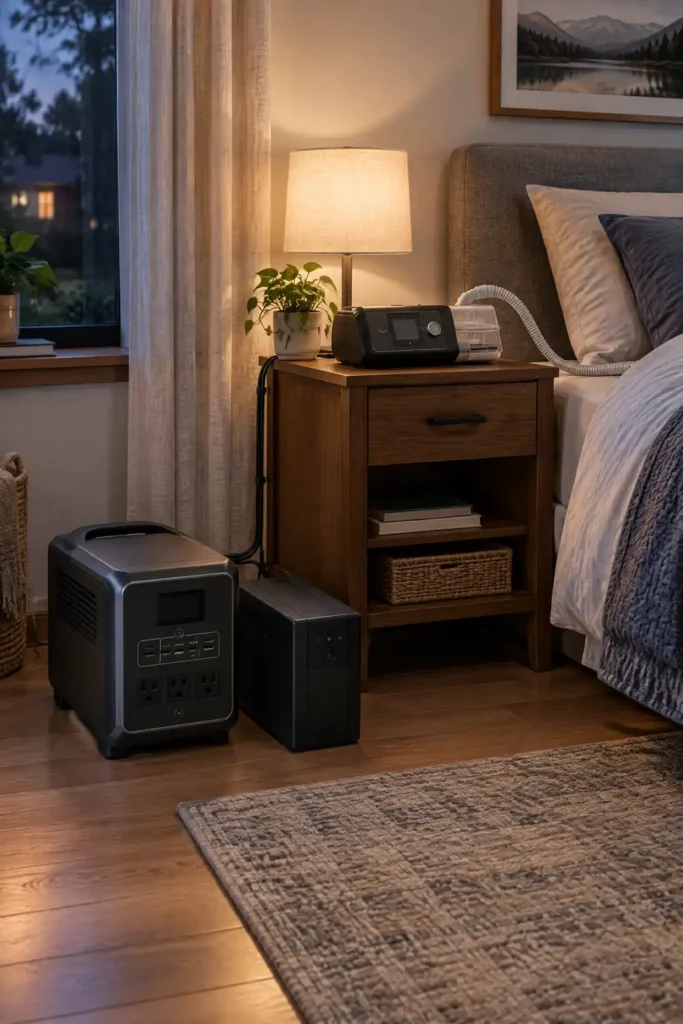
Table of Contents
What’s Actually Different, Chemically
Lead acid batteries — including the sealed AGM type most UPS units use — store energy through a reaction between lead plates and sulfuric acid electrolyte. It’s over 160-year-old technology: reliable, cheap, and heavy, with well-understood failure modes.
LiFePO4 batteries use lithium iron phosphate cells instead. The chemistry is more stable than other lithium formulations (the kind that make headlines for overheating), and it’s built around a battery management system (BMS) that actively monitors and protects each cell from overcharge, overheating, and short circuits.
That stability is why LiFePO4 shows up in essentially every portable power station recommended on this site — it’s the chemistry inside the EcoFlow and Jackery units covered in our oxygen concentrator solar charging and Inogen At Home backup guides.
The Real Numbers, Side by Side
| LiFePO4 | Lead Acid / AGM | |
|---|---|---|
| Usable depth of discharge | Up to 100% of rated capacity | ~50% (deeper regularly shortens lifespan) |
| Cycle life | 3,000–5,000 cycles to 80% capacity (manufacturer-rated) | 300–500 cycles |
| Weight (100Ah, 12V class) | ~20–31 lbs depending on brand | 60+ lbs |
| Voltage under load | Flat discharge curve, stays steady until near-empty | Sags as internal resistance rises through the discharge cycle |
| Charging in freezing temps | Most models won’t charge below 32°F/0°C without a heater | Charges in the cold, just less efficiently |
| Sealed/ventilation needs | Sealed, no off-gassing under normal operation | AGM is sealed; flooded lead acid needs ventilation |
| Upfront cost | Higher | Lower |
The cycle-life and weight figures come from Battle Born Batteries’ published spec sheet for a 100Ah LiFePO4 unit (3,000–5,000 cycles, 31 lbs, full rated-capacity discharge) — consistent with the 3,000–4,000-cycle figure we cite for the power stations in our main solar generator guide. The voltage-sag and internal-resistance behavior is documented by Battery University, an independent battery-research and education site.
Why Voltage Sag Actually Matters Here
Every battery’s voltage dips a little under load — that’s basic electrical resistance. The difference is how much, and lead acid’s internal resistance climbs as it discharges, roughly 40% higher at a low state of charge than at full, per Battery University’s testing. Stack cold weather on top of that and resistance climbs further, since lead acid’s chemical reactions slow down as temperature drops.
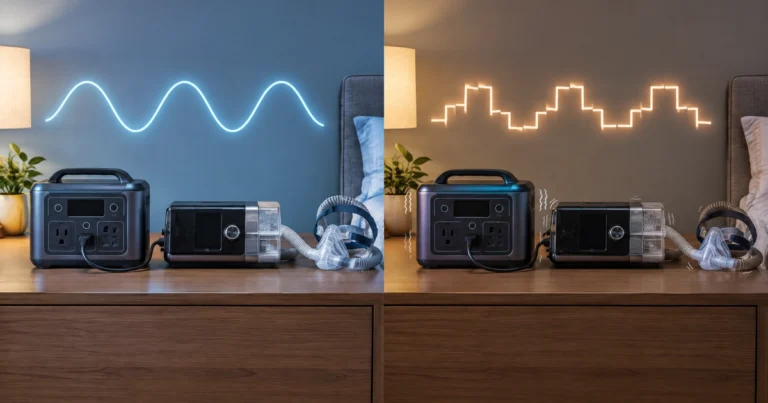
Here’s why that’s not just a spec-sheet curiosity for a medical device. A CPAP’s humidifier and heated tubing, or an oxygen concentrator’s compressor, pull a startup current spike well above their steady-state running wattage. If that spike hits a lead acid battery that’s already partway depleted — which you may not know, since you didn’t necessarily check the charge level before the power went out — the voltage can sag enough to trip a low-voltage cutoff or reset the device, even though the battery technically still has capacity left on paper.
LiFePO4’s flatter discharge curve means the voltage you get at 20% remaining looks a lot like the voltage at 80% remaining. For something you’re depending on to work correctly the one time the grid actually fails, that predictability is worth more than it sounds like on a spec sheet.
The Cold-Charging Limit Almost Nobody Mentions
Nearly every article comparing these two chemistries treats LiFePO4 as strictly better. It usually is — except for one scenario that’s directly relevant to emergency backup power: recharging in freezing temperatures.
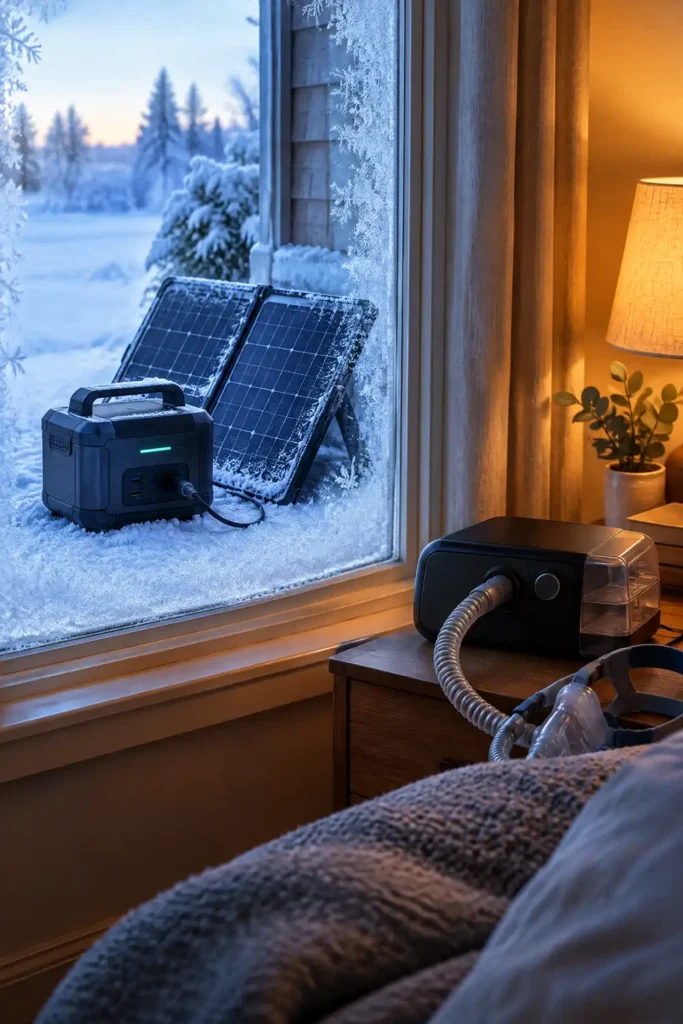
A lithium battery charged below 32°F (0°C) develops lithium plating on the anode — a reaction that permanently reduces capacity every time it happens, according to RedARC Electronics’ technical guidance on the subject. Most LiFePO4 battery management systems know this and will simply block charging below that threshold to protect the cells — which is the right call for the battery, but not what you want to discover mid-outage when you’re trying to top off a power station from a solar panel propped against a snowbank.
Two things soften this in practice. First, it only affects charging — a cold LiFePO4 battery will still discharge and power your equipment fine, it just won’t accept a recharge until it warms up. Second, some newer LiFePO4 batteries and power stations include a built-in heating pad that warms the cells before charging begins, removing the restriction entirely — worth checking for specifically if winter reliability is a priority, rather than assuming any LiFePO4 unit handles it.
Lead acid has no such hard cutoff. It charges in the cold, just less efficiently. For a bug-out bag going somewhere warm, that difference doesn’t matter. For a home backup system in a climate with real winters, it’s a genuine point in lead acid’s favor that most “lithium wins everything” content skips entirely.
Where Lead Acid Is Probably Already Hiding in Your Setup
A UPS marketed for CPAP or medical use — the kind that plugs into the wall and switches over automatically — is more likely than not running on lead acid internally, not lithium. We cover this directly in our medical-grade UPS guide: both units reviewed there use internal lead acid batteries with a rated 3-to-5-year service life, and one of them isn’t user-replaceable at all.
That’s not necessarily a problem — a UPS sitting plugged into a wall outlet, topped off and temperature-stable indoors, is close to the ideal use case for lead acid’s weaknesses. It’s the portable, take-it-anywhere, recharge-from-solar scenario where LiFePO4’s advantages actually show up.
What About Safety, Sitting Next to the Bed?
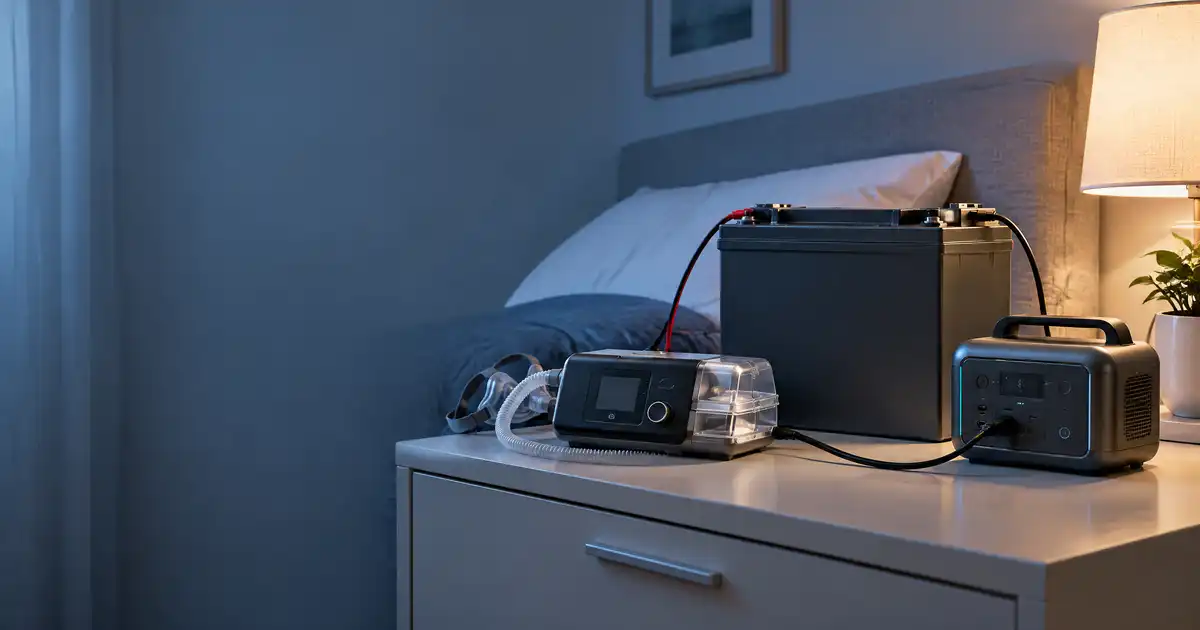
A backup power source for a CPAP or oxygen concentrator often ends up on a nightstand or the floor next to where someone is sleeping, sometimes while on oxygen. That’s a different environment than a battery box bolted into an RV’s exterior compartment, and it’s worth a beat of attention here — though we’ve covered it in real depth separately in our indoor solar generator safety guide, including ventilation clearances and what “sealed” actually means under fault conditions, so we won’t duplicate that here.
The short version: sealed AGM lead acid and BMS-protected LiFePO4 both avoid the hydrogen off-gassing that makes old-style flooded lead acid a genuine indoor hazard. If what you’re considering is a flooded (wet-cell) lead acid battery for indoor medical backup, that’s the one configuration worth ruling out on safety grounds alone, ventilation or not.
So Which Should You Actually Buy
For anything portable — a power station you’ll move between rooms, take on a trip, or recharge from a solar panel during an outage — LiFePO4 is the better call for the reasons above, and it’s why every power station we’ve reviewed on this site for CPAP, oxygen concentrator, and BiPAP backup uses that chemistry. Our main solar generator guide walks through sizing and specific picks; the DreamStation 2 solar backup and Inogen At Home guides cover device-specific setups if you already know what you’re powering.
If what you actually have is a stationary UPS that stays plugged into the wall and rarely moves, lead acid’s downsides matter a lot less — weight isn’t a factor, it’s not going anywhere cold, and the lower upfront cost is a real advantage for a device that’s mostly sitting there waiting for a power failure that may never come.
HSA/FSA Note
Backup power equipment purchased to maintain a prescribed medical device’s operation during a power outage can qualify as a deductible medical expense under IRS Publication 502, provided you have supporting documentation — typically a prescription for the underlying device and, in some cases, a letter of medical necessity. This applies to lead acid UPS units and LiFePO4 power stations alike; the chemistry doesn’t affect eligibility, only how you’ll use and maintain it. Check with your HSA/FSA administrator before purchasing, since documentation requirements vary by plan.
FAQs
Can I just swap the lead acid battery inside my medical UPS for a LiFePO4 one?
Sometimes, but not always. It depends on whether the UPS’s charging circuitry and BMS expectations are compatible with lithium chemistry — dropping a LiFePO4 pack into a charger designed for lead acid’s different voltage curve can undercharge or damage it. Our medical-grade UPS review notes that one common model isn’t user-replaceable at all; check your specific unit’s documentation before attempting a swap rather than assuming it’ll work.
Is AGM the same thing as lead acid?
AGM (absorbent glass mat) is a sealed subtype of lead acid, not a separate chemistry. It shares lead acid’s roughly 50% usable depth of discharge and shorter cycle life, but the sealed design avoids the ventilation concerns of older flooded lead acid batteries.
Will a LiFePO4 battery actually last 10-plus years for medical backup?
Realistically, often yes — calendar life tends to outlast cycle life in this use case. A battery rated for 3,000 to 5,000 cycles that only gets drained a handful of times a year for actual outages and occasional testing isn’t going to hit that cycle count for a very long time. Storage habits matter too: keeping a battery at partial charge in a cool location generally preserves it longer than leaving it fully charged in a hot garage.
Does storing an uncharged LiFePO4 battery in a cold garage over winter damage it?
No — the cold-weather limitation is specifically about charging, not storage or discharge. A LiFePO4 battery sitting unused in a cold garage isn’t being harmed by the temperature itself; the BMS will simply decline to accept a charge until the cells warm back up above freezing.
Is LiFePO4 actually safe to keep on a nightstand overnight?
Generally yes — a BMS-protected LiFePO4 power station doesn’t off-gas under normal operating conditions, unlike a flooded lead acid battery. We cover ventilation and clearance specifics in our indoor solar generator safety guide if you want the fuller picture.
Bottom Line
LiFePO4 wins the medical-backup comparison on the numbers that matter most day to day — weight, cycle life, usable capacity, and steady voltage under load — which is why it’s the chemistry behind every power station recommended elsewhere on this site. Lead acid isn’t obsolete, though: it’s still the practical choice inside a stationary UPS that stays plugged in and never gets asked to charge in the cold, and its lower upfront cost is a legitimate reason it’s still what ships inside most off-the-shelf medical UPS units. The nuance most comparisons skip — voltage sag under a startup surge, and LiFePO4’s freezing-temperature charging limit — is the part that actually changes which one makes sense for your specific setup.
For sizing and current picks, see our main solar generator guide, medical-grade UPS review, and indoor safety guide.
This article reflects manufacturer specifications and independent battery-research sources current as of October 2026. Battery specifications vary by brand and model — always check the specific product’s datasheet before purchasing.