UPS vs Solar Generator for Medical Equipment
 By Lee Arnold
Medical Solar Power Backup Specialist | 8+ years in the field
Quick Answer:
A UPS is built to bridge a short outage — typically 10 to 90 minutes depending on load — with a near-instant switchover, and it was designed with computers in mind, not medical devices. A solar generator (portable power station) runs for hours instead of minutes, recharges from the sun, and can actually get you through an overnight or multi-day outage. For most home medical setups — CPAP, oxygen concentrator, insulin refrigeration — the solar generator is the one doing the real work; a standalone UPS on its own usually isn’t enough. Which matters more, switchover speed or total runtime, depends entirely on what you’re powering — and that’s the part most comparisons skip.
Most articles comparing these two treat it as a straight upgrade path — UPS good, solar generator better, buy the bigger one. That’s not quite right for medical equipment specifically, because the two devices aren’t actually competing for the same job. One is built to bridge a gap. The other is built to replace the outage entirely. Mixing them up is how people end up with a UPS that quietly runs out at minute 75 of an overnight CPAP session.
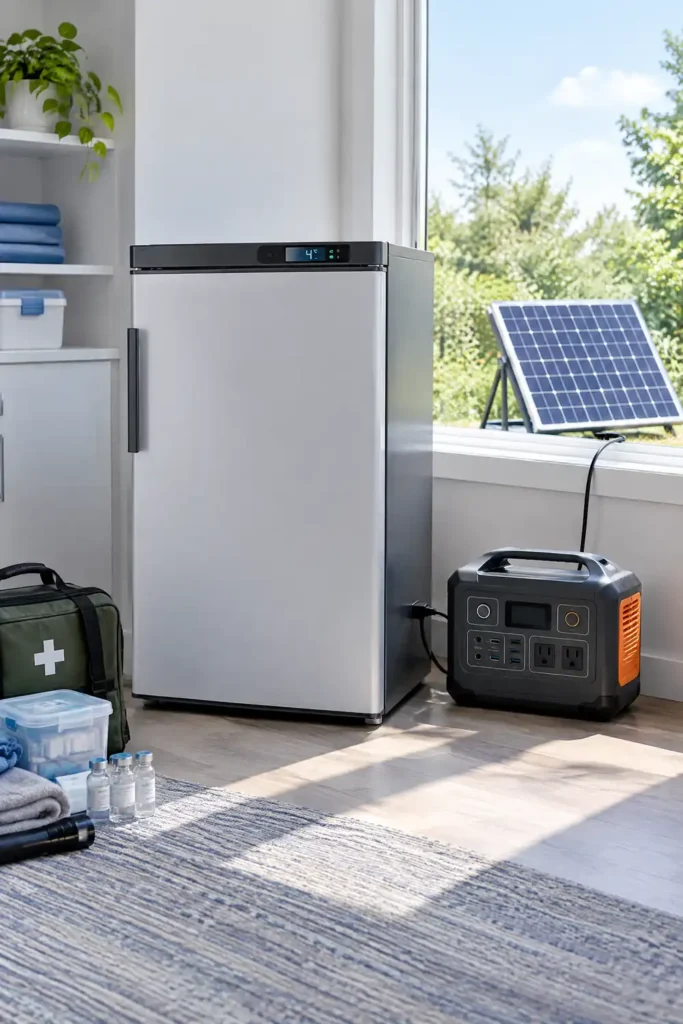
Table of Contents
What Each One Is Actually Built For
A UPS (uninterruptible power supply) sits between the wall outlet and your equipment, watching for a power interruption and switching to its internal battery within milliseconds when one happens. It was built for computers and servers, where even a fraction-of-a-second gap can corrupt data mid-write. That heritage matters: UPS capacity is small by design, because its job was never to run something for hours — it’s to keep things alive for the few minutes until a generator kicks in or the grid comes back.
A solar generator — the portable power station category covered throughout this site — is a much larger battery with inverter and charging circuitry built in, sized in the hundreds to low thousands of watt-hours instead of a UPS’s smaller capacity. It can also run in UPS/pass-through mode, switching over automatically like a UPS does, but its real advantage is what happens after that: hours of runtime, and the ability to recharge from a solar panel when the grid doesn’t come back on its own schedule.
The Real Difference Is Runtime, Not Switchover Speed
Switchover time gets most of the marketing attention, and it’s worth being straight about what it actually means. EcoFlow’s own documentation states its power stations switch over in under 10 milliseconds in UPS mode — on par with a dedicated UPS, not slower. So for current-generation equipment, switchover speed usually isn’t the deciding factor between the two categories anymore.
Here’s the part that’s harder to find written down anywhere: that millisecond figure is a computer-protection number, not a medical one. EcoFlow’s own explanation of why it matters cites desktop computers and hard drives risking data corruption from a gap — not CPAPs or oxygen concentrators. A CPAP doesn’t hold therapy data in volatile memory that a power blip could corrupt; it just restarts, the same way it does every time you turn it off at night. The interruption that actually matters for a medical device isn’t measured in milliseconds — it’s measured in minutes, because that’s how long you’d actually be without therapy while a small UPS’s limited runtime plays out.
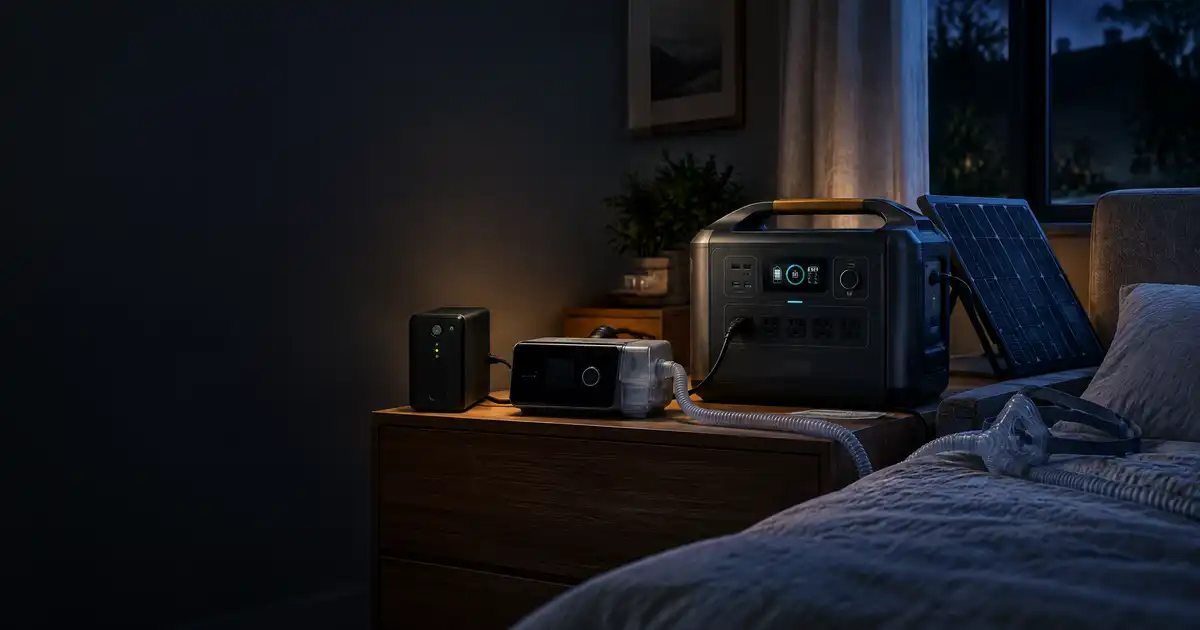
Our medical-grade UPS review put real numbers on this: a typical home UPS covers roughly 60 to 90 minutes at CPAP-level draw, and drops to 20 to 40 minutes once you add a portable oxygen concentrator’s power draw. That’s fine for a brief blip. It’s not an overnight plan.
Match the Backup to the Device
The right choice depends heavily on what you’re actually powering — specifically, whether the risk is a brief interruption or running out of runtime mid-outage.
| Device | What actually matters | Better fit |
|---|---|---|
| CPAP / BiPAP | Full night of runtime (6–9 hrs); switchover speed is a non-issue on modern equipment | Solar generator/power station — see our CPAP UPS guide for sizing by machine |
| Portable oxygen concentrator | Continuous compressor draw (150–250W) plus startup surge; most standalone UPS units are undersized | Solar generator sized to the concentrator’s spec sheet — see our oxygen concentrator battery guide |
| Insulin / vaccine refrigeration | Multi-day runtime; switchover speed is close to irrelevant — a fridge doesn’t notice a momentary gap | Solar generator with daily solar recharge — our insulin cold-chain guide recommends planning for 72 hours minimum |
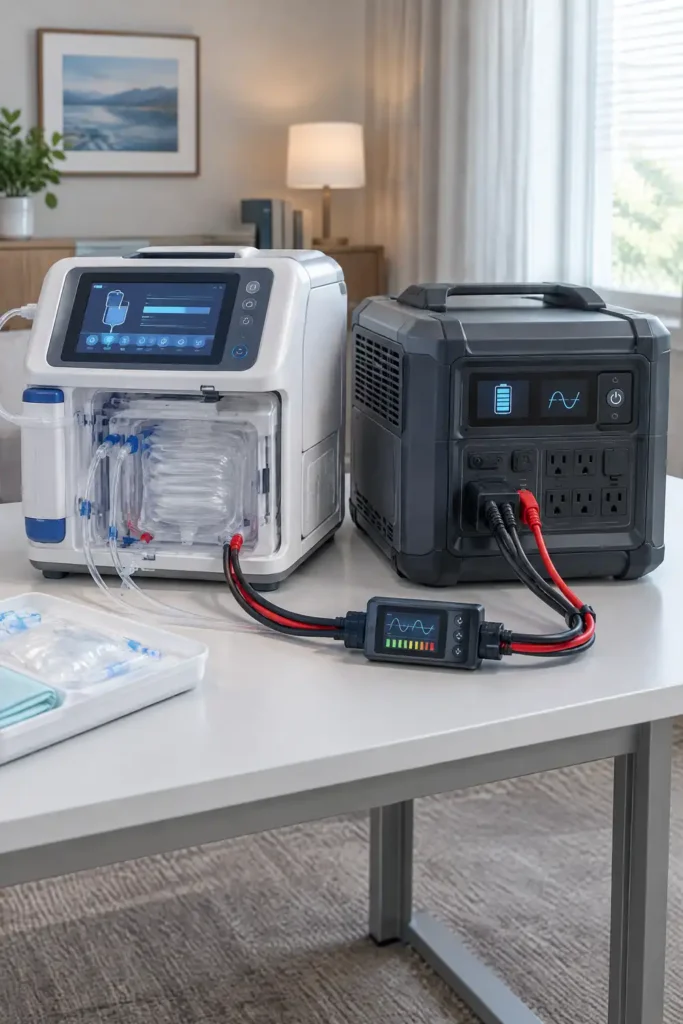
| Home dialysis (peritoneal cycler) | High, model-specific wattage — a Fresenius Liberty Select draws roughly 480–700W depending on voltage, per compiled manufacturer specifications | Large-capacity solar generator sized to your exact model — confirm with your dialysis program before relying on any backup power source |
| Powered wheelchair/scooter charging | Not time-critical — charges over hours, no live interruption risk | Either works; runtime capacity matters more than switchover speed |
The dialysis figures deserve an extra note of caution: peritoneal and hemodialysis equipment varies significantly by manufacturer and model, and getting the sizing wrong isn’t a minor inconvenience. Talk to your dialysis provider and check your specific machine’s power rating before choosing a backup power source for it.
So Which Should You Actually Buy
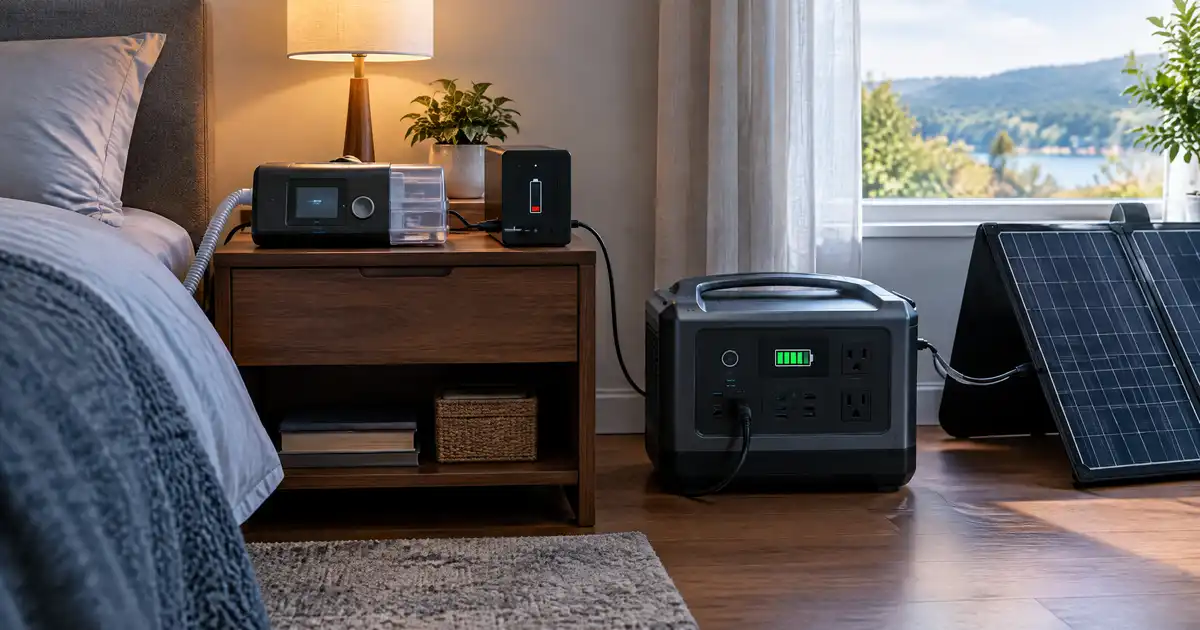
For most home medical setups, a standalone UPS makes more sense as a secondary layer than a primary plan — useful for a router or a CPAP’s brief startup bridge while a larger system spins up, but not the thing carrying you through an actual overnight outage. The solar generator category is what does that job, and it’s why every device-specific guide on this site points toward a properly sized portable power station rather than a UPS alone.
Our main solar generator guide walks through sizing methodology and current picks if you’re starting from scratch. If you already have a UPS and are wondering whether it’s enough on its own, the honest answer for most overnight medical use is no — pair it with a dedicated power station rather than relying on it alone.
FAQs
Can I just use a UPS instead of a solar generator for overnight CPAP backup?
Not reliably. A typical home UPS covers roughly 60 to 90 minutes at CPAP-level draw before it’s exhausted, per our medical-grade UPS testing. A full night of therapy runs 6 to 9 hours, so a standalone UPS leaves you without power for most of the night.
Do I need both a UPS and a solar generator?
Not necessarily both as separate purchases — most portable power stations include a UPS/pass-through mode that handles the automatic-switchover job a standalone UPS does, at speeds on par with a dedicated unit. A separate small UPS still makes sense for something like a router or a medical fridge’s alarm system if it’s on a different circuit than your main backup device.
Is a portable power station as reliable as a dedicated medical UPS for switchover speed?
Current-generation power stations switch over in under 10 milliseconds in UPS mode, matching traditional UPS performance. For a CPAP or oxygen concentrator — neither of which holds therapy data in volatile memory the way a computer does — that switchover speed was never the limiting factor to begin with.
Can a UPS run a home dialysis machine?
Almost certainly not for a full treatment session. A typical 1,500VA home UPS is undersized for equipment like a peritoneal cycler drawing 480 to 700W continuously, and even a properly sized solar generator needs to be matched to your exact machine’s spec sheet. Confirm sizing with your dialysis provider before relying on any backup power source for treatment.
Are portable power stations HSA/FSA eligible the same way a medical UPS is?
Both can potentially qualify under IRS Publication 502 when purchased to maintain a prescribed medical device during an outage, with supporting documentation. Eligibility isn’t tied to the product category — it’s tied to the medical necessity documentation you can provide.
Bottom Line
The UPS-vs-solar-generator decision isn’t really about which technology is newer — it’s about matching runtime capacity to how long you actually need the device powered. A UPS was built to bridge a computer through a few minutes of outage, and that heritage shows in its capacity: enough for a brief gap, not an overnight. A solar generator scales to hours or days and recharges on its own, which is what most home medical backup situations actually call for. Switchover speed, the number most comparisons lead with, has largely stopped being the differentiator now that current power stations match traditional UPS speeds — what hasn’t changed is that the device you’re powering, not the spec sheet, should decide which category you buy.
For device-specific sizing, see our CPAP UPS guide, oxygen concentrator battery guide, insulin cold-chain guide, and the main solar generator guide for sizing methodology and current picks.
HSA/FSA Note
Both UPS units and portable power stations purchased to maintain a prescribed medical device’s operation during an outage can potentially qualify as a deductible medical expense under IRS Publication 502, typically with a prescription for the underlying device and documentation showing the equipment’s medical necessity. Requirements vary by plan administrator, so confirm before purchasing.
This article reflects manufacturer specifications and published power data current as of October 2026. Power requirements for medical equipment, especially dialysis and other prescribed devices, vary by model — always verify against your specific equipment’s documentation and your care team’s guidance before relying on any backup power source.