Mini 4 Hour Battery Oxygen Concentrator: What’s Actually Worth Buying
 By Lee Arnold
Medical Solar Power Backup Specialist | 8+ years in the field
Quick Answer:
The Inogen Rove 4 is the current mini POC that best hits this mark: 2.9 pounds, sold in three battery tiers. Its intermediate battery is rated up to 4 hours at setting 1 — the closest direct match to this exact search — while the extended (8-cell) battery runs about 4 to 4.5 hours in real-world setting-2 use, up to 6 hours at setting 1. The CAIRE Freestyle Comfort’s standard 8-cell battery lands in the same range — about 4 hours at setting 2 — before you ever touch the 16-cell upgrade. The Inogen One G4 uses the exact same battery as the Rove 4, so if you see both names in your search results, that’s not a typo — it’s the same hardware. One popular “smallest ever” pick, the AirSep Focus, does not belong on this list despite the marketing: its two micro-batteries add up to 3 hours combined, and I’ll explain why that matters below.
A search for a “mini” oxygen concentrator usually means one thing: you’ve carried a bigger unit somewhere — through an airport, up a flight of stairs, into a car — and decided the weight isn’t worth it anymore. Fair. But every gram a manufacturer shaves off a POC comes from somewhere, and it’s almost always the battery. Go small enough and you stop getting a 4-hour battery and start getting a 90-minute one, with no warning on the box.
This is the one part most “smallest POC” roundups skip. They’ll tell you a unit weighs 1.75 pounds and call it a win. They won’t tell you that 1.75-pound unit’s battery taps out in 90 minutes, or that the “4-hour” number on a different model only applies with the extended battery installed — not the one it ships with by default. Here’s what actually delivers 4 hours in a genuinely small package, and where the tradeoff stops being worth it.
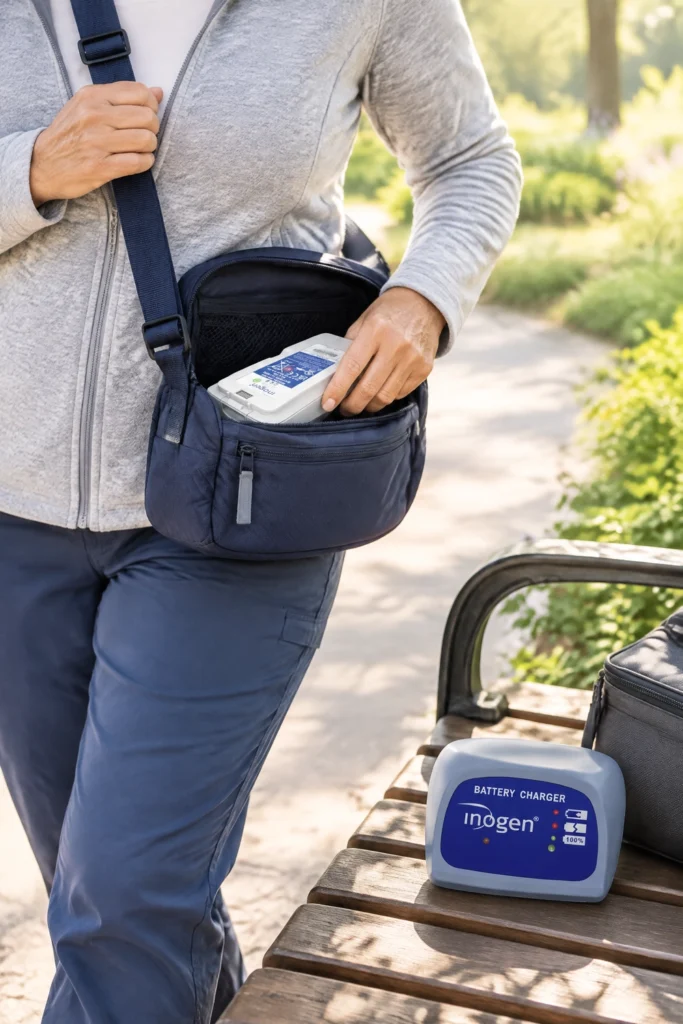
Table of Contents
Quick Comparison: Mini POCs and Their Real Battery Life
| Inogen Rove 4 / One G4 | CAIRE Freestyle Comfort (stock battery) | Philips SimplyGo Mini | AirSep Focus | |
|---|---|---|---|---|
| Weight | 2.9 lbs (Rove 4) / 2.8–3.3 lbs (G4) | ~5 lbs | ~5 lbs | 1.75 lbs |
| Standard battery runtime | ~2.5–2.7h @ setting 1 (4-cell) | ~4h @ setting 2 (8-cell) | ~4.5h | 1.5h per battery, 3h with both |
| Extended battery runtime | ~5–6h @ setting 1, ~4–4.5h @ setting 2 (8-cell) | ~8h @ setting 2 (16-cell, sold separately) | ~9h (double battery) | Not applicable — no extended option |
| Flow settings | 1–3 (G4) / 1–4 (Rove 4) | 1–5 | 1–5 | 1–2 |
| FAA-approved | Yes | Yes | Yes | Yes |
| Currently sold new | Yes | Yes | No — discontinued Jan 2024 | Yes |
| Best for | Smallest unit with a genuine ~4-hour runtime | Shortest-trip use now, room to upgrade to 8 hours later | Existing owners only | Very short errands only — not this list’s pick |
Settings and battery configuration change these numbers more than weight does — the next section is why that matters more than the spec sheet lets on.
Why the “4-Hour” Number Is Trickier Than It Looks
Two things get glossed over constantly in mini POC marketing, and both of them change your actual runtime by 50% or more.
Single battery versus double battery. The Inogen G4 and Rove 4 both ship with a single 4-cell battery by default — that’s the “standard” configuration most people order. It runs about 2.5 to 2.7 hours at the lowest setting. The 4-to-6-hour numbers you see quoted everywhere come from the extended 8-cell (double) battery, which is a separate purchase. If a listing just says “up to 6 hours” without specifying which battery, assume it means the extended one — because the standard battery has never come close to that number on any independent test I’ve seen.
Setting 1 versus setting 2. Manufacturer specs are almost always measured at setting 1, the lowest flow rate. Independent testing at setting 2 — which is where most people who need more than a trace amount of oxygen actually land — runs roughly 15 to 25% shorter. That’s the gap between Inogen’s own “6 hours, 7 minutes” claim for the extended G4/Rove 4 battery and the closer-to-4.5-hour number independent testers report at setting 2.
Put those two together and the real range for a “mini, 4-hour” POC is: extended battery, setting 2, real-world use. Anyone shopping on the standard battery’s spec or a setting-1 numbers is going to be disappointed by a wide margin.
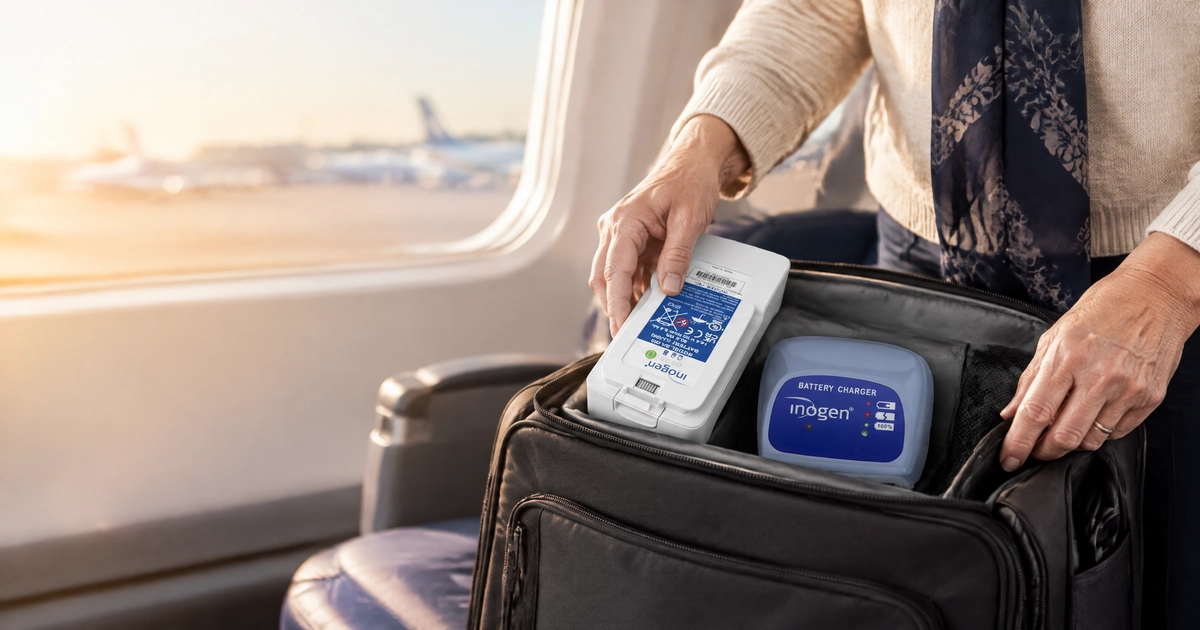
The Mini POCs Worth Actually Considering
Inogen Rove 4 and Inogen One G4
These are, for practical purposes, the same machine. Inogen sells the identical hardware under two names, and the batteries and chargers are fully interchangeable between them — a listing for “G4/Rove 4” battery isn’t hedging its bets, it’s telling you the truth about compatibility. At 2.9 pounds with the standard battery, it’s the lightest current-production FAA-approved POC from a major manufacturer that still has a legitimate extended-battery option.
With the extended (8-cell) battery, Inogen’s own current spec is up to 6 hours 7 minutes at setting 1. Real-world testing at setting 2 — where most active users run it day to day — lands closer to 4 to 4.5 hours. That gap is normal for this device category, not a defect; it’s the same pattern you’ll see on every POC in this comparison. Inogen also sells a middle-tier intermediate battery, rated up to 4 hours at setting 1, that most competing roundups skip entirely — it’s the closest direct match to a “4-hour” POC without paying for the extended battery’s added weight and cost.
- Weight: 2.9 lbs (Rove 4), 2.8–3.3 lbs depending on battery (G4)
- Extended battery: ~6h @ setting 1 (mfr) / ~4–4.5h @ setting 2 (real-world)
- Intermediate battery: ~4h @ setting 1 (mfr) — the closest match to this article’s exact keyword
- Standard battery: ~2.5–2.7h @ setting 1 — not adequate alone if 4 hours is your target
- FAA-approved, prescription required (FDA Class II medical device)
CAIRE Freestyle Comfort (Stock 8-Cell Battery)
For anyone who doesn’t need the smallest possible unit and doesn’t mind carrying about 5 pounds, the Freestyle Comfort’s stock 8-cell battery already lands at roughly 4 hours at setting 2 — no upgrade purchase required. The advantage over the Rove 4/G4 here isn’t size, it’s headroom: if 4 hours stops being enough later, CAIRE’s 16-cell battery doubles that to around 8 hours without buying a new machine. I cover that upgrade path in detail in my portable oxygen concentrator 8-hour battery guide if that’s a realistic future need for you.
- Weight: ~5 lbs with standard 8-cell battery
- Runtime: ~4h @ setting 2 (stock), expandable to ~8h with the 16-cell battery
- FAA-approved, prescription required
Philips SimplyGo Mini (Existing Owners Only)
The SimplyGo Mini’s standard battery ran about 4.5 hours, which is exactly the range this article is about — but Philips discontinued the entire portable oxygen concentrator line in January 2024 and exited the US POC business. I’m not including it as something to buy new, but if you already own one, the battery is still available through respiratory equipment dealers, and the unit itself remains serviceable through January 2029.
AirSep Focus: Why the “Smallest” Isn’t the Pick Here
The AirSep Focus shows up on nearly every “smallest POC” list at 1.75 pounds, and it earns that spot honestly — it’s smaller than everything else here. What most of those lists don’t spell out clearly: it ships with two micro-batteries that run about 1.5 hours each, 3 hours combined, with no extended-battery option at all. That’s roughly a third of what the Rove 4 delivers on its extended battery, in exchange for about a pound of weight savings. For a quick errand where you’re never far from an outlet, that trade might be fine. For anything resembling a half-day out, it isn’t — which is exactly why it’s not one of this article’s recommendations despite showing up at the top of so many others.
When a Short-Battery Mini POC Actually Makes Sense — and When It Doesn’t
Most articles on this topic are written for travelers comparing carry-on weight limits. I look at this from the power-outage side too, and that changes the calculus in a way worth spelling out plainly.
A 4-hour mini POC is a reasonable choice for: short errands, medical appointments, a single flight leg, or anyone whose prescribed setting is low enough that 4 hours genuinely covers most of a day away from an outlet.
It’s a risky primary choice for: extended power outages, any multi-hour stretch without reliable access to an outlet, or as your only oxygen source if you don’t also have a stationary concentrator or oxygen tank at home. Four hours disappears fast in a grid outage that runs into its second day. If backup power during an outage — not travel — is actually what brought you to this page, my battery for oxygen concentrator guide walks through pairing a POC with a portable power station for multi-day coverage, and the free Oxygen Concentrator Runtime Calculator on this site will run the exact math for your specific model and flow setting rather than the general ranges above.
Always confirm your prescribed flow setting and mode with your physician before choosing between these units — the difference between pulse dose and continuous flow, and between settings 1 and 2, matters more to your actual coverage than any spec sheet number.
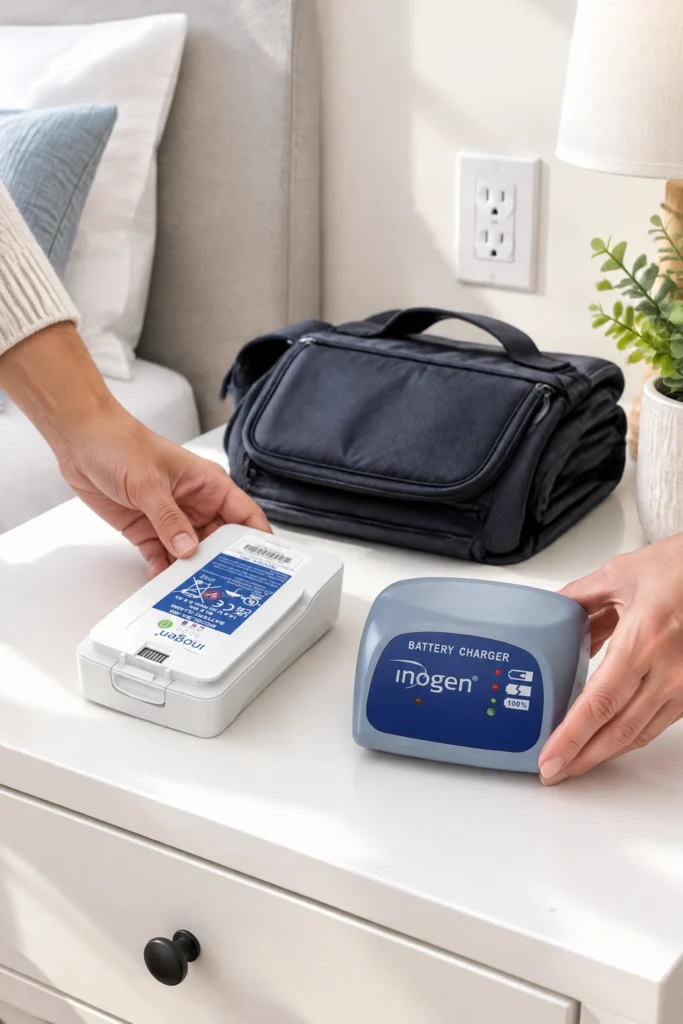
FAA Rules for Flying With a Mini POC
All four units in this comparison meet FAA acceptance criteria, and the core rule is the same regardless of which one you pick: carry enough battery for at least 150% of your scheduled flight time, including connections. Review the FAA’s official POC guidance directly before you fly. Because these mini units run shorter to begin with, that 150% rule bites harder here than it does on a longer-running unit — a 2-hour flight still needs 3 hours of covered battery, which is nearly the entire extended-battery runtime on the Rove 4 or G4. I go through the full airline-notification and boarding process in my 8-hour battery guide, since the rules don’t change based on which POC you’re carrying.
Where to Actually Buy These (Verified October 2026)
How I verified these picks: every runtime figure above is checked against the manufacturer’s own spec sheet and, where available, independent real-world testing, not just marketing copy. I confirmed each linked product’s current listing status directly rather than trusting a snippet — including catching one Amazon battery listing that had gone dead since I first checked it, which is exactly the kind of thing worth a final click-through before anything here goes live. Stock and pricing on medical equipment change fast, so treat any link as a starting point and check the current listing before you buy.
The Concentrator Itself: Inogen Rove 4
For most people reading this, the Rove 4 is the model to consider if you’re shopping for the concentrator itself. It’s sold in three battery configurations, and the one most people overlook is the one that matches this article’s exact keyword: Inogen’s intermediate battery is rated up to 4 hours at setting 1, sitting right between the standard 4-cell battery (roughly 2.5 to 3 hours) and the extended 8-cell battery (roughly 6 hours at setting 1, closer to 4 to 4.5 hours in real-world setting-2 use, covered above). Most competing roundups only mention the standard and extended tiers — if you want a unit that hits 4 hours without paying for the largest battery, ask specifically about the intermediate configuration.
The Rove 4 is a prescription-required Class II medical device, so — same as every reputable source covering this category — it isn’t something sold on Amazon. Inogen sells it factory-direct with a prescription-verification step at checkout, and it’s also available through authorized respiratory equipment dealers. Inogen’s official Rove 4 product page has current configurations and specs if you want to see the unit itself before talking to your equipment provider.
Extending Runtime: What’s Actually on Amazon
Already own a Rove 4 or G4 — or ordered the standard or intermediate configuration and want more runtime on hand? These two genuine Inogen accessories are the ones actually worth buying, and both are available on Amazon.
Inogen Extended (8-Cell) Battery — for G4/Rove 4
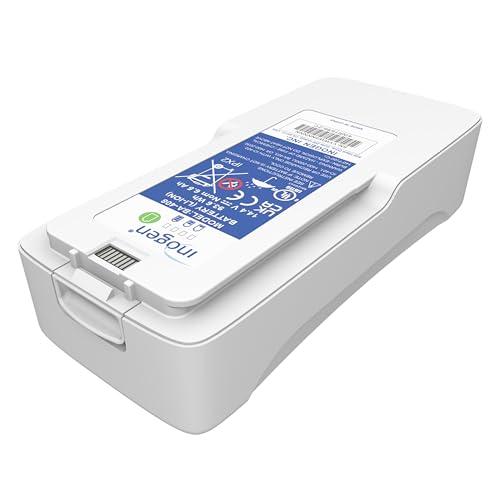
What Makes It Different This is the specific battery that takes a Rove 4 or G4 from roughly 2.5 hours to roughly 4 to 4.5 hours in real-world setting-2 use. The standard 4-cell battery that ships with the unit will not get you there on its own — this is not an optional accessory if 4 hours is your target.
Compatibility Check Built for the Rove 4 and G4 platform specifically, and the two are fully interchangeable — this same battery, same SKU, fits either name. It does not fit the G3, G5, or Rove 6, which each use a different battery format entirely.
Setup & Charging Notes It’s a tool-free swap: release the standard battery, seat the extended one in the same bay, done. From empty, plan on roughly 4 hours to fully charge it — close to the runtime it delivers, so an overnight charge comfortably covers a full day’s use the next morning.
Pros: Genuine Inogen part, roughly doubles runtime over the standard battery, hot-swappable, FAA-approved for carry-on.
Cons, with the fix: Real-world setting-2 runtime lands closer to 4 to 4.5 hours than the headline 6-hour, setting-1 number — budget for that gap. Multiple sellers list this same battery at different prices on the same listing, so compare offers before checking out.
Why You’ll Love It It’s the single purchase that turns “I need to plan my whole outing around battery life” into “I have most of a workday covered.”
What Others Are Saying Reviewers consistently describe the swap as simple and the runtime improvement as real, with the most common complaint being price relative to the standard battery rather than performance.
HSA/FSA Note Same Publication 502 logic as every accessory on this site: a backup or extended battery for a prescribed oxygen concentrator generally counts as an operating cost for the device. I walk through the documentation trail — receipt, prescription, and when a Letter of Medical Necessity helps — in my HSA eligible portable power station guide, which covers the same reimbursement framework. Confirm specifics with your plan administrator.
Warranty & Returns Genuine Inogen batteries carry a 1-year manufacturer warranty, on top of Amazon’s standard return window — check the specific listing since return terms can vary by seller.
Don’t Miss Out If this exact listing is out of stock or overpriced when you check, Main Clinic Supply’s OxyGo Fit 8-cell battery is a lower-cost aftermarket option built for the same G4/Rove 4 platform.
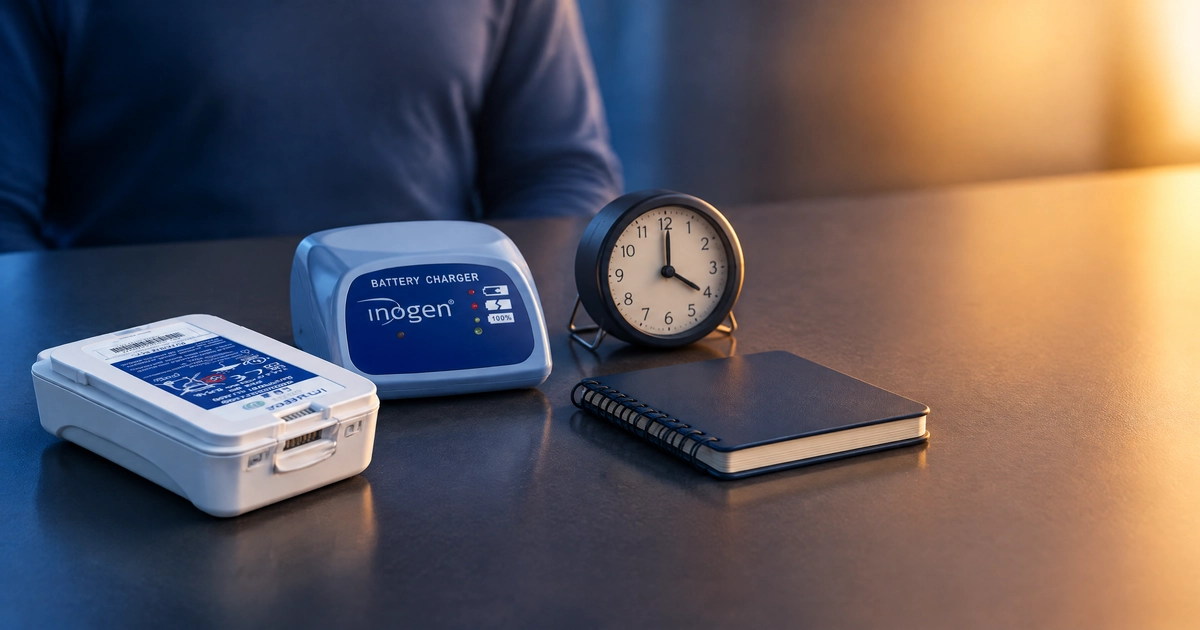
Inogen External Battery Charger (G4/Rove 4)
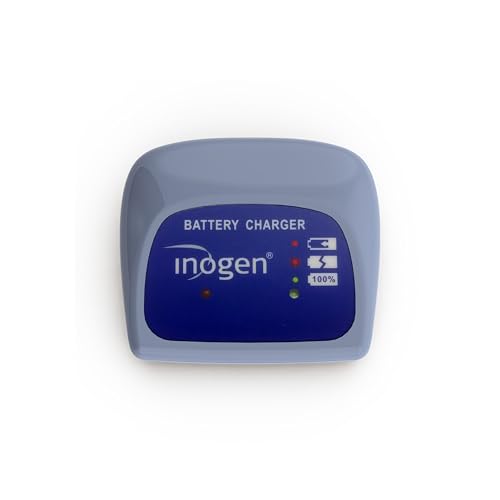
What Makes It Different This charges a spare battery outside the concentrator, so you’re not taking the machine itself out of service to top off a battery you’re not currently using.
Setup & Charging Notes Plug in, dock the battery, done — no pairing required. This is the same logistics fix I recommend for every POC in this size class: one battery running the machine, one charging on the side, swap when needed.
Pros: Genuine Inogen part, lets you keep a fully charged spare ready at all times, small enough to pack alongside the unit. Cons, with the fix: It’s an added cost on top of the extended battery itself — worth it mainly if you’re away from an outlet often enough that off-machine charging matters, less so for occasional use.
HSA/FSA Note Charging accessories for a prescribed device generally fall under the same operating-cost category as the battery itself — see the HSA/FSA note above for the documentation approach.
Warranty & Returns Inogen’s standard 90-day accessory warranty applies, plus Amazon’s return window.
Best for: daily errands, short outings, setting 1 patients, and users with regular outlet access.
FAQs
What’s the difference between the Inogen G4 and the Rove 4?
For battery and accessory purposes, none — they use identical batteries and chargers. The naming difference comes down to how Inogen markets and sells the unit through different channels, not a hardware change that affects runtime or compatibility.
Can I get more than 4 hours out of a mini POC without switching models?
Only by carrying a second battery. None of the units in this comparison support a battery larger than the “extended” option already covered above — if you need more runtime than the extended battery provides, a spare battery (with the external charger to keep it topped off) is the only way to extend it without moving to a larger unit like the Rove 6 or full-size Freestyle Comfort with its 16-cell battery.
Is a 4-hour battery enough for daily use?
It depends entirely on how many hours a day you’re away from an outlet, not on your prescription alone. Someone home most of the day with occasional errands is well covered. Someone out for a full workday, or anyone relying on it during a power outage, generally needs either a spare battery or a longer-running unit.
Does a smaller POC mean a shorter battery no matter what?
Generally yes, within a given generation of battery technology — there’s only so much lithium-ion capacity that fits in a given size and weight. The AirSep Focus versus Rove 4 comparison above is the clearest example: shaving off roughly a pound costs you close to an hour and a half of runtime.
Bottom Line
If “mini” and “4-hour battery” are both non-negotiable, the Inogen Rove 4 (or the identical Inogen One G4) with its extended battery is the pick — 2.9 pounds and a genuine 4 to 4.5 hours in real-world use. The CAIRE Freestyle Comfort’s stock battery lands in the same runtime range at a bit more weight, with room to upgrade to 8 hours later if your needs change. Skip the ultra-small options like the AirSep Focus if 4 hours is actually your target — the size savings there come directly out of battery life, and it isn’t a close trade. Whichever you choose, the standard battery it ships with is not the one hitting these numbers; budget for the extended battery as part of the purchase, not an optional add-on.
For the longer-runtime side of this same decision, see my portable oxygen concentrator 8-hour battery guide, and for outage-specific backup planning, my battery for oxygen concentrator guide.