How Do I Keep Insulin Cold During a Power Outage? The 4-6 Hour Window (2026)
 By Lee Arnold
Medical Solar Power Backup Specialist | 8+ years in the field
Quick Answer:
How do I keep insulin cold during a power outage? It lasts 4-6 hours in a closed refrigerator after the power first goes out. Move it to a cooler with ice packs for 24-72 hours. Never let insulin freeze. Most opened insulin stays good at room temp (59-86°F) for 28 days. Throw away any insulin that froze. Discard any vial that hit 100°F+ or shows color changes.
A reader from Louisiana called me at 11 p.m. last August. Hurricane Francine had hit four hours earlier. The grid was dark. Her 8-year-old son was Type 1 diabetic.
She had a single bag of ice in the freezer. Two unopened insulin vials in the fridge. No backup plan.
We spent the next 20 minutes building one over the phone.
That call shaped this guide.
That question, how do I keep insulin cold during a power outage, comes down to one fact: insulin is one of the most temperature-sensitive medications at home, and the wrong storage during an outage destroys potency fast. A 6-year-old whose insulin lost its punch ends up in the ER. Sometimes worse.
Here’s what eight years of helping diabetic families through outages taught me. The right protocol keeps your insulin safe for days. Even weeks. The wrong moves ruin a $400 vial in an afternoon.
This pillar guide covers every step. The 60-second action plan. Time limits by insulin type. Cooler method comparisons. Long-term backup planning. And the danger signs that mean toss the vial.
Table of Contents
The 60-Second Action Plan
Power just died? Run this checklist right now.
Step 1: Don’t open the fridge
A closed refrigerator holds cold for 4 to 6 hours. Every door opening cuts that window. Resist the urge to check on your insulin.
Step 2: Grab a cooler from storage
Any insulated cooler works. Hard-sided, soft-sided, even a small lunch bag. Get it ready on the counter.
Step 3: Pre-chill ice packs or improvise
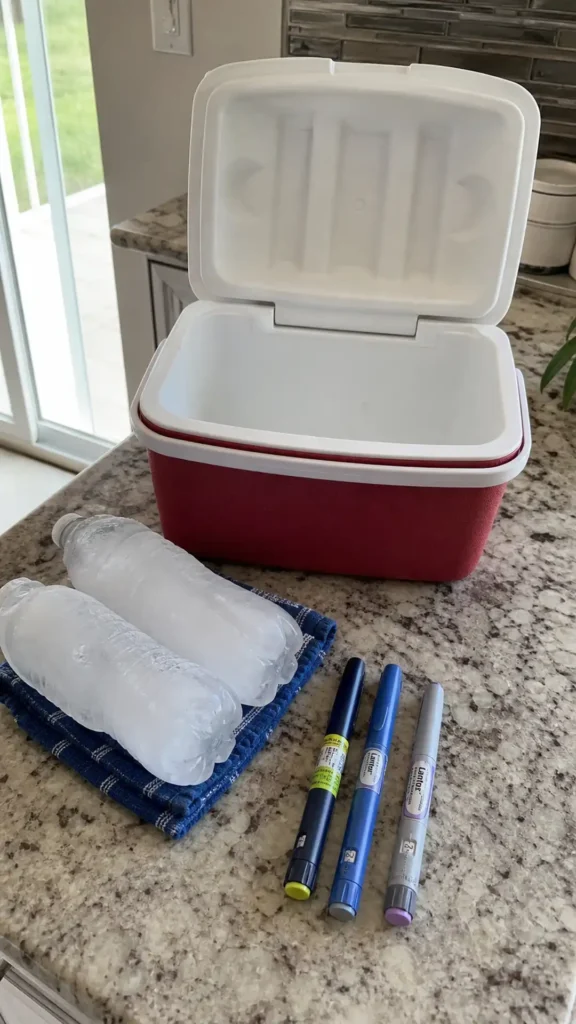
Pull frozen ice packs from the freezer. No ice packs? Use frozen water bottles. Or freeze a few sealed sandwich bags of water.
Step 4: Wait for the 4-hour mark
Power still out at the 4-hour mark? Transfer insulin to the cooler. Move sooner if the room is hot.
Step 5: Wrap insulin to prevent freezing
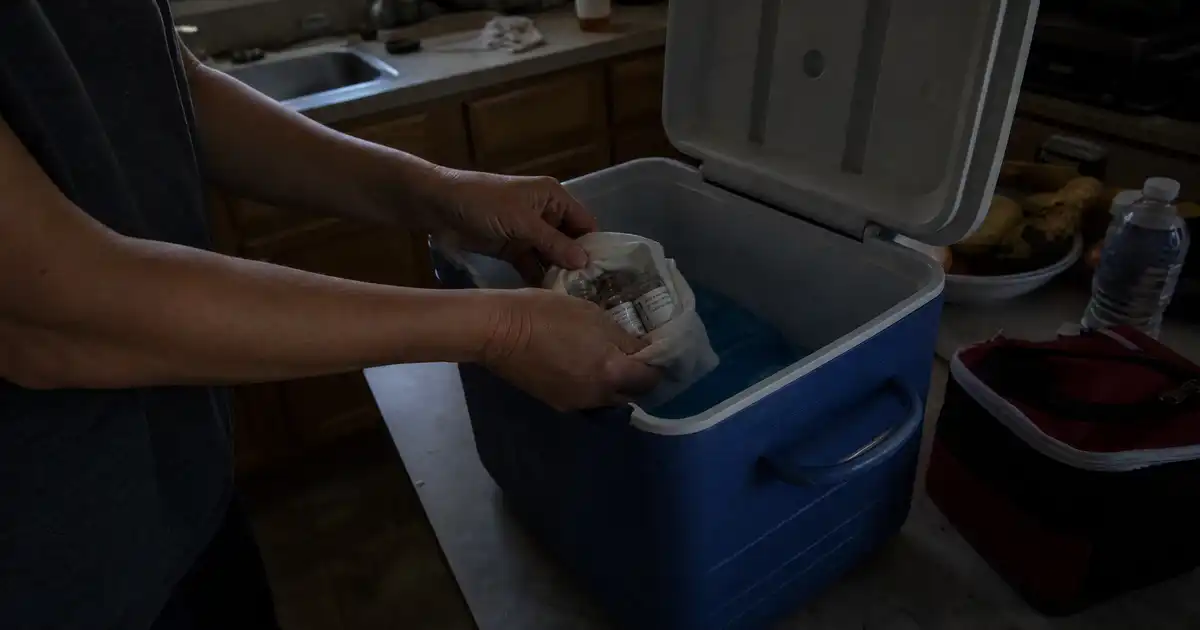
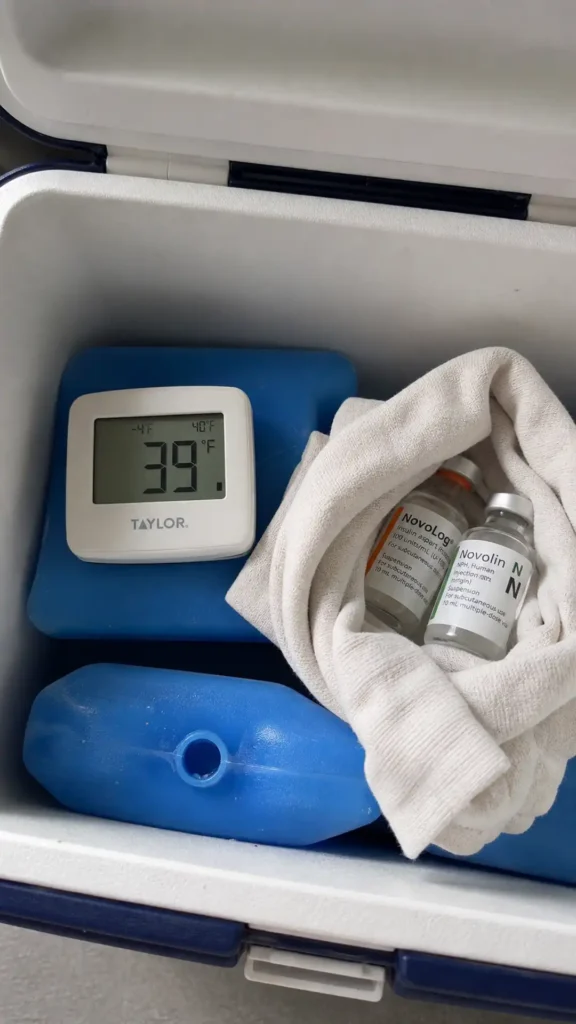
Place ice packs at the bottom. Wrap each insulin vial or pen in a thin cloth. Put the wrapped insulin on top of the ice. Never let insulin touch ice directly.
Step 6: Note the time
Write the time and date you transferred the insulin. You’ll need this for the 28-day room temp rule below.
That’s it. Six steps. Two minutes of work. Your insulin survives the first day.
Insulin Storage Temperature Requirements (FDA Guidelines)
Three temperature zones matter for insulin storage. Memorize them.
Refrigerated zone: 36-46°F (2-8°C)
Unopened insulin must live here. The factory-sealed vial or pen stays good until the printed expiration date.
Room temp safe zone: 59-86°F (15-30°C)
Opened insulin lives here for up to 28 days. Per FDA emergency guidance, unopened vials stay safe here 28 days too. That window is your friend during outages.
Danger zones (below 36°F or above 86°F)
Frozen insulin is dead. Even partial freezing kills potency. Insulin above 86°F starts losing potency. The longer the exposure, the worse the damage.
Real numbers from the FDA. Insulin exposed to 100°F for hours loses meaningful potency. At 110°F or above, even brief exposure can wreck a vial.
That 86°F ceiling matters most. Summer outages with no AC push indoor temps to 90°F+ fast. A hot attic or sealed car becomes a furnace within hours.
How Long Your Closed Fridge Stays Cold
The first cushion in any outage is your existing refrigerator. The numbers depend on three factors.
How full is your fridge?
A full fridge holds cold 2x as long as an empty one. Frozen items hold cold even longer. The mass of cold food extends your safety window.
How well-insulated is the unit?
Newer fridges (post-2018) hold cold for 4-6 hours closed. Older units may drop temperature faster. Side-by-side models often lose cold quicker than top-mount freezers.
How often does the door open?
Every door opening cuts the window by 30-60 minutes. The outage rule: treat the fridge like a vault. Open it once an hour if you must. Never more.
The realistic safety window
A full fridge in a 70°F room: 4-6 hours of safe storage.
A half-empty fridge in an 85°F room: 2-3 hours of safe storage.
That window is your runway to set up the cooler. Use it well.
The Cooler Protocol: 4 to 24 Hours
By hour 4 of an outage, your insulin needs to move. The cooler protocol takes over.
Pick the right cooler
A hard-sided Coleman or Yeti cooler holds cold longest. 24-48 hours typical. A soft-sided lunch bag holds cold 4-8 hours. Either works for short outages. The hard-sided unit wins for storms.
Pre-cool the cooler
Run cold water through it for a minute before adding ice. A warm cooler wastes ice cooling its own walls.
Stack ice packs correctly
Place ice packs at the bottom and along the sides. Leave the top open for cold air to pool down (cold sinks).
Wrap insulin to prevent freezing
This step matters more than any other. Insulin that touches ice freezes within minutes. Frozen insulin loses 100% of its potency.
Wrap each vial or pen in a clean cloth or paper towel. A sock works too. Place the wrapped insulin on top of the ice. Not against it. Not next to it.
Add a thermometer
A $5 refrigerator thermometer inside the cooler tells you the real story. Target 36-46°F. Adjust ice placement if numbers drift.
Refresh ice every 12 hours
Frozen water bottles last 8-12 hours in a hard cooler. Swap them out before they fully melt. The melted water still keeps things cold but provides less buffer.
Track time at room temp
Mark the cooler with the date and time you transferred the insulin. The 28-day clock starts now.
Extended Outages: 24-72 Hours
After 24 hours, ice management becomes the daily ritual.
Source new ice fast
Most gas stations and convenience stores keep selling bagged ice during outages. Grab two bags first thing in the morning.
Freeze water in advance
Before storm season, freeze 8-10 sealed plastic water bottles. They double as ice packs and emergency drinking water.
Consider dry ice (carefully)
The FDA notes one useful number. 50 pounds keeps an 18-cubic-foot freezer cold for 48 hours. Big help for families with multiple insulin users.
Critical warnings on dry ice. Never touch it with bare skin (causes severe burns). Never store it in an airtight container (releases CO2). Never store in a small unventilated room (suffocation risk). Use insulated gloves and good airflow.
Use a Frio cooling pouch as backup
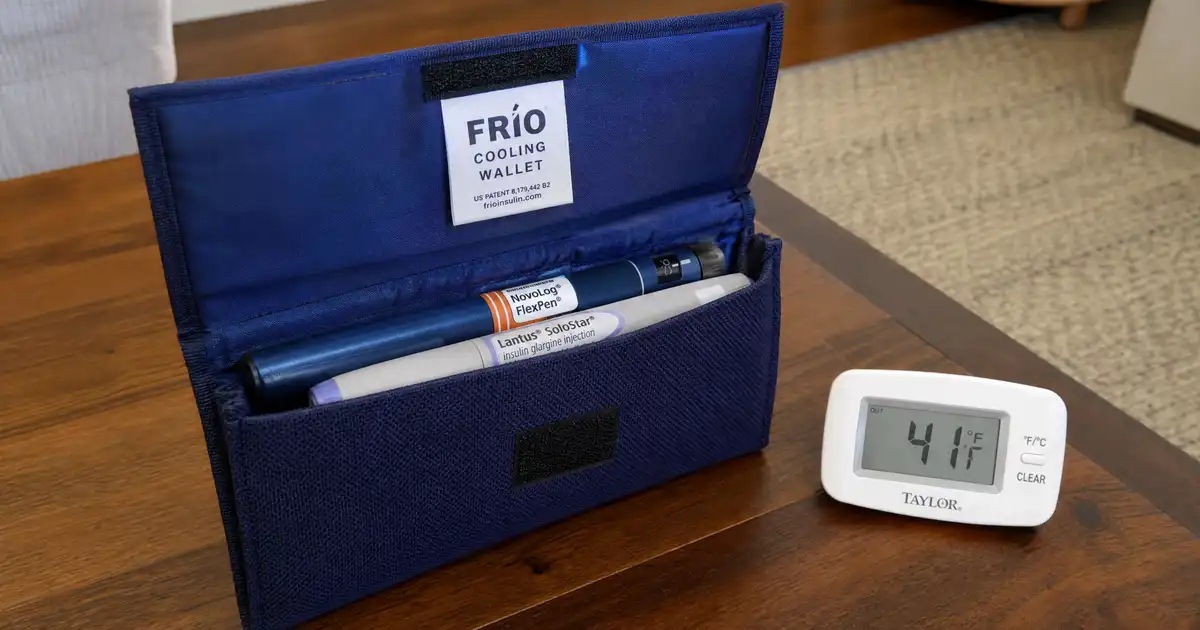
Frio cooling wallets use evaporation, not ice. Soak the wallet in water for 10-15 minutes. The crystals inside expand and cool. No ice. No freezing risk. Cools for 45+ hours per soak.
Frio wallets fill a critical gap. When your ice runs out, the Frio keeps cooling. Especially useful for vials and pens you actively use.
Monitor indoor temperature
A simple indoor thermometer tracks your house temperature. So does a phone app with a Bluetooth sensor. Above 86°F for hours means even room-temp insulin loses potency.
Long-Term Outages: 72+ Hours
Day three of a power outage means new strategies. Ice runs thin. Patience runs thinner. Your insulin needs real backup.
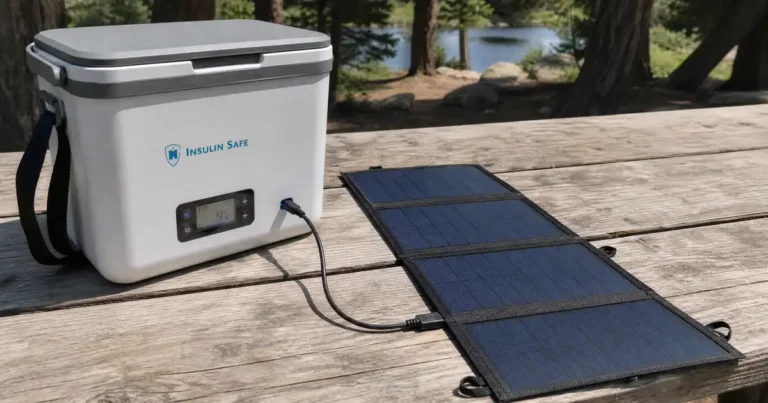
Option 1: Solar-powered insulin cooler
Solar coolers run on solar panels and battery storage. They keep insulin at refrigerator temperatures for days. Some models switch between fridge and freezer modes.
For diabetic-family-tested product picks, see my best solar-powered insulin cooler guide.
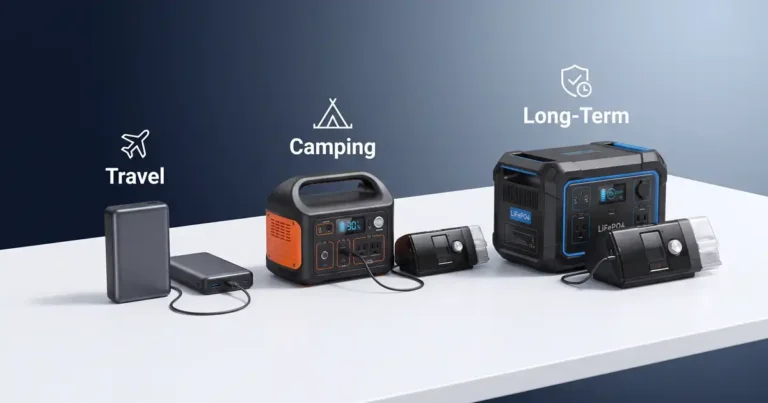
Option 2: Portable power station + mini fridge
A 1,000-2,000Wh power station runs a 12V mini fridge 24-48 hours. Add solar panels. The runtime extends indefinitely during daylight.
For tested picks, see my best solar generator for medical devices post.
Option 3: Move to a powered location
A relative’s house with power. A hotel that didn’t lose grid. A community shelter with refrigeration. Sometimes the safest move is relocating insulin where the power still works.
Option 4: Contact your pharmacy
Many pharmacies maintain emergency stockpiles for diabetic patients during disasters. Call ahead. Some can dispense replacement insulin same-day with a doctor’s call.
Option 5: The 28-day room temp window
This is the safety net most diabetic patients don’t realize they have. FDA confirms most insulin stays usable at room temp for 28 days. The range: 59-86°F. Even unopened vials qualify. A house under 86°F keeps insulin safe until the grid comes back.
Cooling Methods Compared
The right method depends on outage length and budget.
| Method | Duration | Cost | Best For |
|---|---|---|---|
| Closed fridge | 4-6 hours | $0 | First hours of outage |
| Hard cooler + ice packs | 24-48 hours | $30-$100 | Short outages |
| Dry ice in freezer | 48 hours | $20-$40 | Multi-day outages |
| Frio cooling wallet | 45+ hours per soak | $20-$40 | Active-use vials |
| Solar insulin cooler | Days to weeks | $200-$800 | Hurricane zones |
| Power station + mini fridge | 24-72 hours per charge | $500-$2,000 | Whole-family setups |
| Room temp (28-day rule) | 28 days | $0 | Houses below 86°F |
The right combination depends on your climate and outage profile. Most diabetic families need 2 or 3 methods layered.
Insulin-Specific Time Limits
Not all insulin works equally. Each formula has its own room-temperature window.
Rapid-acting insulins
- Humalog (lispro): 28 days at room temp
- Novolog (aspart): 28 days at room temp
- Apidra (glulisine): 28 days at room temp
- Lyumjev (lispro-aabc): 28 days at room temp
- Fiasp (faster aspart): 28 days at room temp
Long-acting insulins
- Lantus (glargine): 28 days at room temp
- Basaglar (glargine): 28 days at room temp
- Levemir (detemir): 42 days at room temp
- Tresiba (degludec): 56 days at room temp
- Toujeo SoloStar (glargine U-300): Always refrigerate (no room temp option)
Premixed and intermediate insulins
- Humulin N (NPH): 31 days at room temp (KwikPen: 14 days only)
- Humulin 70/30: 31 days at room temp
- Novolin N: 42 days at room temp
- Novolin 70/30: 42 days at room temp
- Humalog Mix 75/25: 10 days at room temp (shortest window)
- Novolog Mix 70/30: 14 days at room temp
Important caveat
These numbers come from manufacturer labeling. Confirm with your specific product’s package insert. Pharmaceutical companies update labels regularly.
How to Tell If Your Insulin Has Gone Bad
Visual inspection saves lives. Run this check before every injection during an outage.
Sign 1: Color changes
Clear insulin (Humalog, Novolog, Apidra, Lantus) should stay completely clear. Any yellow tint or cloudiness means discard.
Cloudy insulin like Humulin N or Novolin N should mix uniformly cloudy. Lumps, crystals, or stringy bits mean discard.
Sign 2: Clumping or particles
Tiny floating particles or visible clumps inside the vial. The product is dead. Throw it out.
Sign 3: Frosting on the vial
A frosted, crystallized residue clinging to the inside walls. This usually means the insulin froze and thawed. Discard immediately.
Sign 4: Unusual smell
Insulin has a faint phenol or carbolic smell. A strong sour, vinegar, or rancid odor means degraded product.
Sign 5: Loss of glycemic control
You took your usual dose. Blood sugar barely moved. Test again with a different vial. Does the new vial work? The old one likely lost potency.
When in doubt, throw it out
A single bad dose can mean a hospital visit. A wasted $400 vial costs less than an ER bill. Or a DKA emergency.
Frozen Insulin: Always Discard
This rule has zero exceptions. Frozen insulin loses essentially all potency.
The chemical structure of insulin proteins gets disrupted by ice crystal formation. The molecules unfold. They cannot rebind to your cell receptors. They cannot lower blood sugar.
Signs your insulin froze
- Vial sat directly against ice
- Vial sat in a freezer or below 32°F (0°C)
- Visible frost or crystals inside the vial
- Cloudy insulin shows separation that won’t remix
- Vial sat in a refrigerator with the freezer compartment overworking
The verification trick
Hold the vial up to light. Gently rotate. Frozen-and-thawed insulin often shows tiny ice crystal patterns or stringy precipitation. Healthy insulin moves smoothly without those patterns.
Cost vs safety
Yes, replacement vials are expensive. No, that doesn’t change the math. Frozen insulin can trigger DKA (diabetic ketoacidosis), a life-threatening emergency. Discard. Replace. Move on.
When to Call Your Doctor
Power outage emergencies sometimes need professional input. Call your provider in any of these scenarios.
Insulin supply running low
Most pharmacies will rush a refill during declared emergencies. Your doctor can call it in same-day. Don’t wait until your last vial.
Blood sugar unstable for 4+ hours
Persistent highs or lows during outages may signal degraded insulin. Or stress-related changes. Your provider can guide dose adjustments.
Symptoms of DKA
Watch for: nausea, vomit episodes, abdominal pain, fruity breath, confusion. These warning signs mean call 911 or go to the ER immediately. Do not wait.
Insulin pump or CGM failure
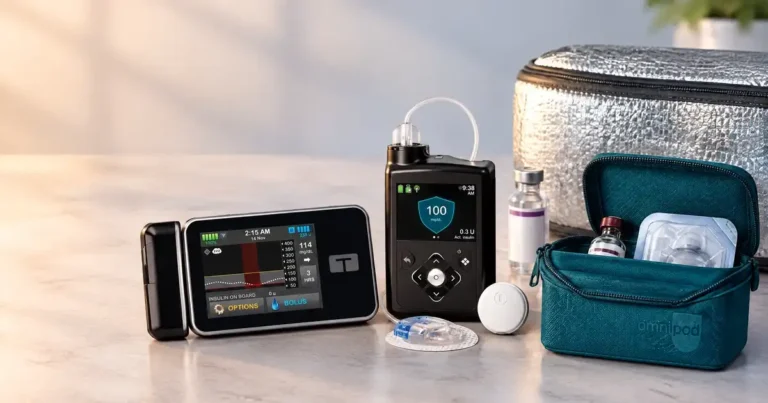
Battery-powered devices may fail during extended outages. Your endocrinologist can guide you back to syringe injections temporarily.
Pediatric or elderly patients
Children and seniors metabolize insulin differently under stress. Any unusual symptoms in those groups deserve a call.
Long-Term Backup Planning
Reactive scrambling never wins. Diabetic families need a permanent plan before storm season.
Build a 30-day insulin reserve
Most insurance plans allow 90-day refills. Stagger your refills to keep 30+ days of insulin on hand. Two to three vials beyond your immediate use.
Pre-stage cooling gear
Hard cooler in the garage. Six frozen water bottles in the freezer. Two ice packs ready to go. A Frio wallet in the medicine cabinet.
Backup power for refrigeration
A portable power station runs a small fridge or dedicated insulin cooler. See my best solar generator for medical devices pillar for tested options.
Solar coolers for hurricane zones
Florida residents need one. Same goes for Gulf Coast and Carolina coast diabetics. Hurricane zones make solar insulin coolers a must, not a maybe. See my best solar-powered insulin cooler picks tested by diabetic families.
Emergency contacts list
Post these on the fridge.
- Your doctor’s emergency line
- Your pharmacy’s after-hours number
- Your insurance’s emergency replacement protocol
- The nearest 24-hour ER
Insurance and HSA documentation
Solar coolers and power stations may qualify under HSA/FSA. A Letter of Medical Necessity from your doctor opens that path. See my HSA-eligible portable power station guide for details.
Test your plan annually
Once a year, run a dry test. Pretend the power is out. Move insulin to your cooler. Check ice supply. Run your power station. Make sure the plan still works.
FAQs From Real Readers
The questions that keep landing in my inbox.
How long does insulin last without refrigeration?
Most opened insulin stays good at room temperature (59-86°F) for 28 days. Some formulas have shorter windows. Humalog Mix 75/25 lasts 10 days. Humulin N KwikPen lasts 14 days. Check your specific product’s package insert.
Can I use insulin that got warm during a power outage?
The FDA confirms one emergency rule. You may need to use insulin that exceeded 86°F. Try to keep it as cool as possible. Watch for signs of degradation. Replace as soon as fresh insulin becomes available.
What if my insulin froze during the outage?
Discard it. Frozen insulin loses essentially all potency. No exceptions. Frozen insulin can trigger DKA.
How long can insulin sit in a closed refrigerator after the power dies?
A full, well-sealed fridge keeps insulin safe for 4-6 hours. Open the door less often to extend this window.
Is dry ice safe to use around insulin?
Yes, with precautions. Use insulated gloves. Never let insulin touch dry ice directly (causes freezing). Store in a ventilated space. 50 pounds keeps an 18-cubic-foot freezer cold for 48 hours.
What’s the best cooler for diabetic emergencies?
A hard-sided cooler holds cold longest. Yeti, Coleman Xtreme, and RTIC all work well. For active-use vials, a Frio cooling wallet needs no ice. Cools for 45+ hours.
Should I move insulin to a freezer if the power’s out?
No. Insulin freezing destroys potency. Move it to a refrigerated cooler with ice packs. Place a barrier between the insulin and the ice.
Can I store insulin in my car during an outage?
No. Cars become greenhouses in summer (130°F+) and freezers in winter (below 32°F). Both destroy insulin.
What if I’m on an insulin pump?
The pump reservoir handles one fill cycle safely. Your fridge-stored bulk insulin follows the vial-user protocol. Plan for pump battery replacement separately.
How do I know if my insulin pump’s stored insulin is degraded?
Watch your blood sugar response after injections. Persistent highs after correction doses may signal degradation. Replace the reservoir if patterns emerge.
Does insurance cover replacement insulin damaged during a power outage?
Many plans do, especially during declared disasters. Save photos of damaged insulin. Call your insurance line. FEMA-declared disaster zones often trigger special refill rules.
What about glucagon emergency kits?
Most glucagon kits tolerate room temperature better than insulin. Refer to your specific product’s storage rules. The newer Baqsimi nasal glucagon is room-temp stable.
Should I have a backup home generator?
For diabetic families in storm-prone areas, yes. A 1,000-2,000Wh solar generator handles a small fridge plus essentials. See my best solar generator for medical devices pillar for tested picks.
Bottom Line
Insulin storage during a power outage follows one rule. Cool, but not frozen. Below 86°F if possible. Below 100°F at all costs.
The 28-day room temp window from the FDA is your strongest ally. Most opened insulin survives a multi-day outage at typical indoor temperatures. The cooler protocol just adds safety margin.
The bigger risks are freezing and extreme heat. A vial sitting on top of ice freezes within hours. A vial in a 100°F attic loses potency within an afternoon. Both kill the medication.
Build the reserve before the storm hits. Stage the gear. Practice the protocol once a year. Diabetic families who plan ahead sleep through outages. Those who improvise during the storm end up in ERs.
Your insulin is one of the most expensive medications in your home. It’s also one of the most fragile. Treat it like the life-saving precision tool it is.
For deeper coverage, see my medical device power outage preparedness guide.