CPAP Wattage: Power Draw for Every Major Machine (2026)
 By Lee Arnold
Medical Solar Power Backup Specialist | 8+ years in the field
Quick Answer:
CPAP wattage ranges from 6W (travel) to 105W (full humidifier, heated hose). The ResMed AirSense 11 draws 30-56W without humidifier and 56-73W with it. The Philips DreamStation 2 draws 22W without humidifier and 67W with it. Multiply your draw by 8 hours to get your overnight watt-hour need. That number sizes your backup battery.
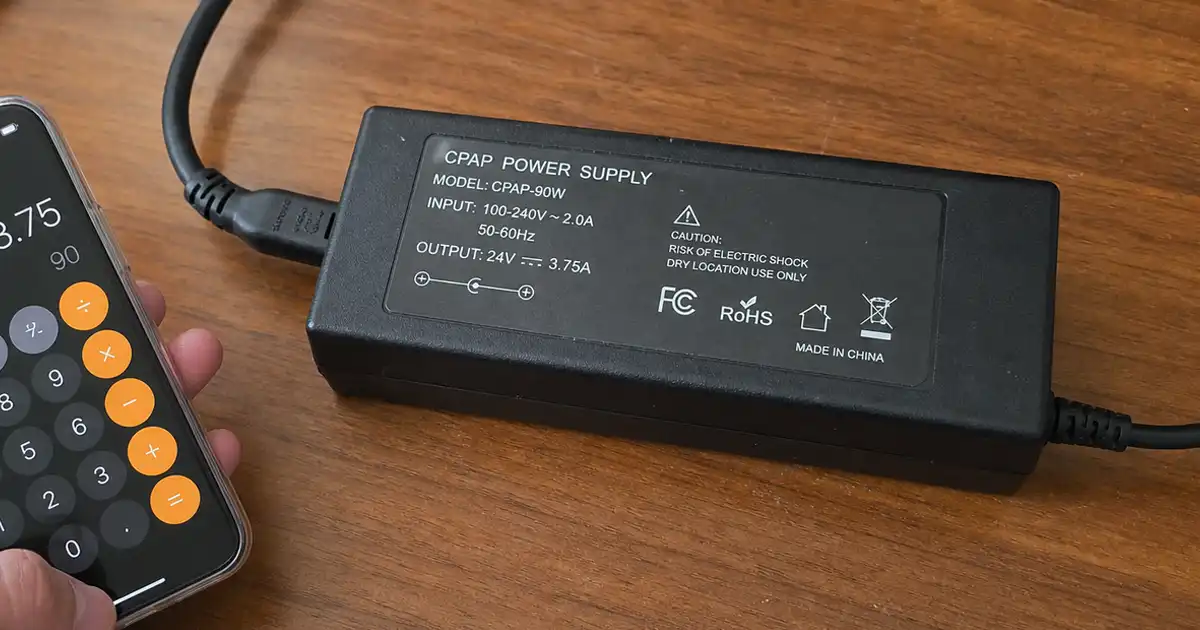
The adapter rating on your CPAP is not your actual power draw.
That surprises most people. A 90W adapter means the machine can pull up to 90W. In real overnight use, the actual draw is far lower. The motor adjusts with your breathing. It doesn’t run at full power all night.
Eight years in this field taught me this about CPAP wattage. The label lies — not by intent, but by design. You need measured draw numbers, not adapter ratings.
This guide covers verified wattage for every major CPAP model. It covers what drives the number up. It covers how to calculate your exact overnight energy need. And it covers using that number to pick the right battery.
Table of Contents
Why CPAP Wattage Matters
Your CPAP wattage determines three things.
Battery size: A machine drawing 30W for 8 hours needs 240Wh. A machine drawing 80W needs 640Wh. The wrong battery leaves you without therapy at 3 a.m.
Solar panel size: A 30W machine needs a 50W panel for comfortable daytime charging. An 80W machine needs a 100-200W panel.
Electricity cost: Lower draw = lower monthly bill. Not dramatic, but worth knowing.
Most CPAP patients size their backup battery from the adapter rating. That number overprepares them. Or they guess low. Either way, the result is a poor purchase.
Use actual measured draw numbers instead. That’s what this guide provides.
CPAP Wattage: Machine-by-Machine Numbers
These are measured draw figures, not adapter ratings. Ranges reflect pressure variation and humidifier settings.
ResMed AirSense 11 AutoSet
| Setting | Typical Draw | Peak Draw |
|---|---|---|
| No humidifier, no heated hose | 30-40W | 56W |
| Humidifier on (level 3-4) | 50-65W | 73W |
| Humidifier + heated hose | 65-73W | 90W |
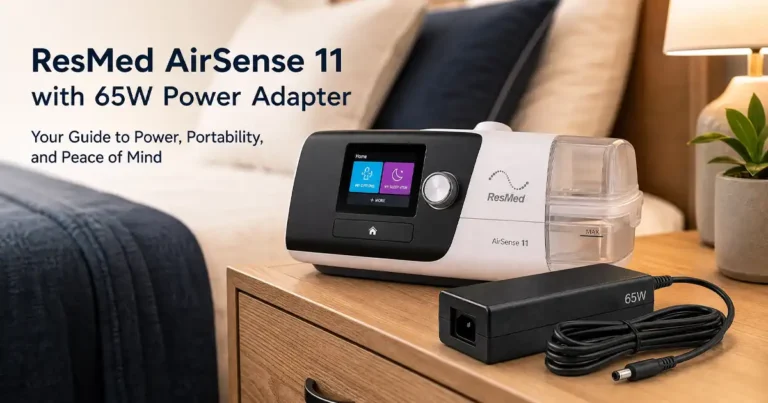
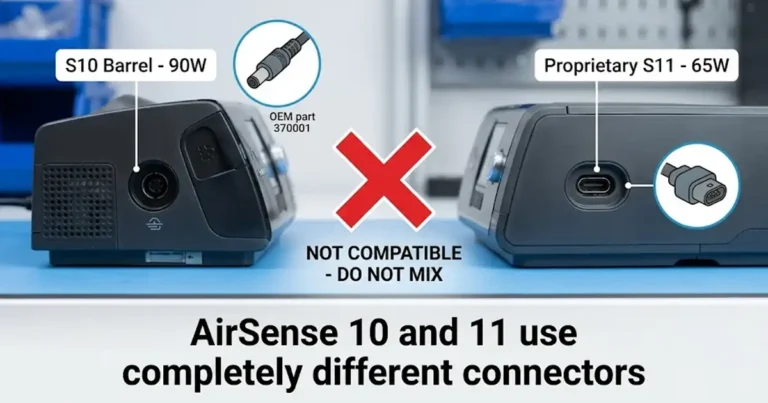
The AirSense 11 comes with a 65W AC adapter. That reflects the unit’s rated capacity, not typical overnight draw. Real use with humidifier at moderate settings: 56W typical.
The 24V DC path cuts draw by 20-30%. A DC cord reduces your overnight energy need. For DC cord options, see my airsense 11 power cord guide.
ResMed AirSense 10 Elite / AutoSet
| Setting | Typical Draw | Peak Draw |
|---|---|---|
| No humidifier | 30-45W | 53W |
| Humidifier on | 53-80W | 90-104W |
| Heated hose | 80-90W | 104W |
The AirSense 10 comes with a 90W adapter. Real-world overnight draw at pressure 8cmH2O with humidifier: 43W average. Peak: 57W in cold conditions.
ResMed AirMini (Travel CPAP)
| Setting | Typical Draw | Peak Draw |
|---|---|---|
| HumidX waterless humidifier | 6.3W | 27W |
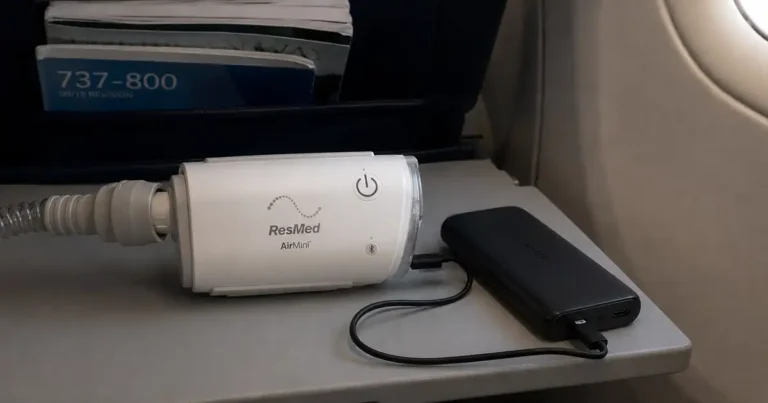
The AirMini is the lowest-draw CPAP on the market. No heated humidifier option. The HumidX waterless insert adds no power draw. A 200Wh power station runs the AirMini for 2-3 nights.
Philips DreamStation 2
| Setting | Typical Draw | Peak Draw |
|---|---|---|
| No humidifier | 22W | 45W |
| Humidifier on | 45-67W | 80W |
The DreamStation 2 comes with an 80W adapter. Without humidifier, it’s one of the most efficient full-featured CPAPs available. A 500Wh station covers multiple nights at 22W draw.
Philips DreamStation 1
| Setting | Typical Draw | Peak Draw |
|---|---|---|
| No humidifier | 30-45W | 60W |
| Humidifier on | 45-67W | 80W |
The DreamStation 1 uses a similar power profile to its successor. Slightly less efficient than the DreamStation 2 overall.
Fisher & Paykel SleepStyle / Icon Series
| Setting | Typical Draw | Peak Draw |
|---|---|---|
| No humidifier | 30-40W | 60W |
| Integrated humidifier | 40-75W | 90W |
Fisher & Paykel machines integrate humidification differently from ResMed and Philips. The draw curve is steeper when the integrated heater runs.
React Health Luna G3
| Setting | Typical Draw | Peak Draw |
|---|---|---|
| No humidifier | 25-35W | 45W |
| Humidifier on | 50-65W | 75W |
The Luna G3 competes directly with the AirSense 11. Its power draw profile is similar. DC cord compatibility is available but adapter selection matters.
HDM Z2 / Z2 Auto (Travel)
| Setting | Typical Draw | Peak Draw |
|---|---|---|
| No humidifier | 18W | 30W |
| Z-Breathe humidifier | 25-35W | 45W |
The Z2 is a favorite for travel and camping backup. Its 18W baseline means a 300Wh station covers 2+ nights without humidifier.
BiPAP Machines (General Range)
| Setting | Typical Draw | Peak Draw |
|---|---|---|
| No humidifier | 30-80W | 100W |
| Humidifier + heated hose | 80-120W | 150W |
BiPAP draws more than standard CPAP. The dual-pressure delivery system requires more sophisticated electronics. Size backup batteries generously for BiPAP patients.
What Drives CPAP Wattage Up
Four factors push your CPAP draw higher.
1. Heated humidifier
The humidifier is the biggest wattage driver. Cut it off to reduce draw by 30-50% on most machines. At low humidifier settings (level 1-2), the increase is modest. At level 4-5, draw spikes hard.
In an outage, cut the humidifier first. It extends runtime fastest.
2. Heated tubing (ClimateLineAir, ClimateLine Max)
Heated tubing adds 10-15W. It prevents rainout (condensation in the tube). Cut it off during outages to save energy. Most patients tolerate passover humidification without heated tubing for short outages.
3. Prescribed pressure
Each additional cmH2O of pressure adds 2-3W to motor draw. A patient on 8cmH2O draws less than a patient on 15cmH2O. APAP machines (auto-titrating) vary pressure and draw with each breath. Average draw over a night reflects your average pressure delivery.
4. AC vs DC power path
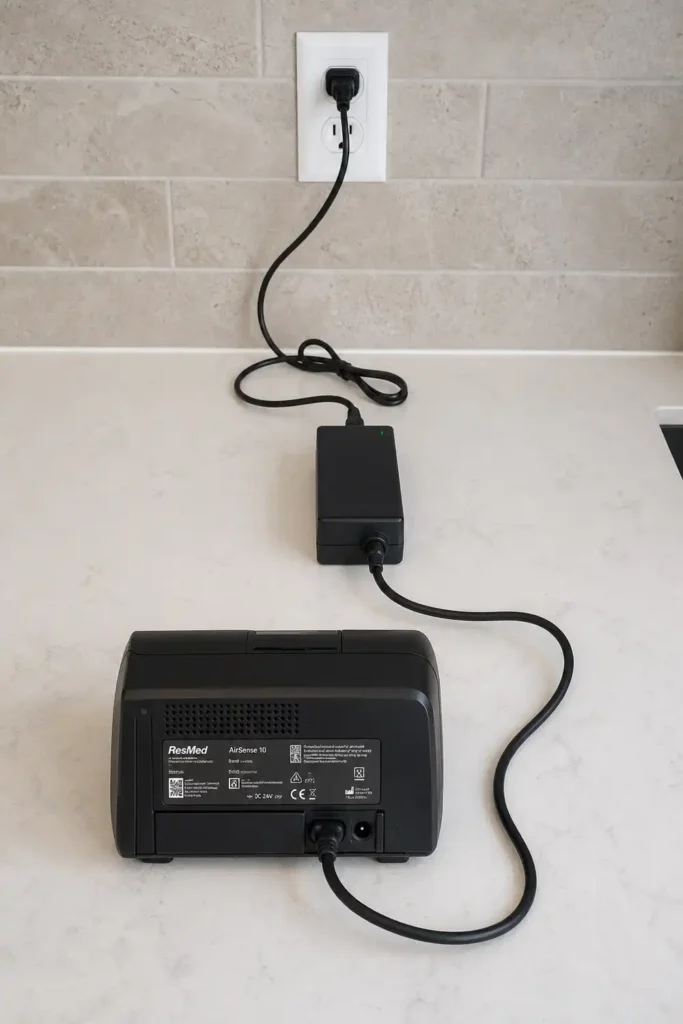
The wall outlet runs AC. Your CPAP needs DC. The adapter converts AC to DC. That wastes 10-20% as heat. A backup station adds another conversion step. Station battery DC → AC → then adapter converts back to DC. Two losses.
A DC cord skips the second conversion. The station feeds DC directly. Runtime improves meaningfully.
The DC path wins for overnight backup. The AirSense 11, AirSense 10, DreamStation 2, and Luna G3 support DC.
A DC cord skips the AC conversion entirely. The machine runs on direct DC power. Runtime improves 20-30%. For backup battery use, the DC cord is always the better choice.
How to Calculate Your Overnight Watt-Hours
This is the number that sizes your battery correctly.
Step 1: Find your machine’s typical draw from the table above.
Step 2: Multiply by your hours of sleep.
Step 3: Add 20% buffer for battery inefficiency.
Formula: Watts × Hours × 1.2 = Watt-hours needed
Example 1: AirSense 11, humidifier at level 3, 8 hours. 55W × 8 × 1.2 = 528Wh needed. A 600Wh station covers one night comfortably.
Example 2: DreamStation 2, no humidifier, DC cord, 8 hours. 22W × 8 × 1.2 = 211Wh needed. A 300Wh station covers one full night.
Example 3: AirMini, no humidifier, 8 hours. 7W × 8 × 1.2 = 67Wh needed. Even a 100Wh power bank runs the AirMini one night.
AC vs DC: The Wattage Difference Explained
The wall outlet runs AC. Your CPAP needs DC. The adapter handles that conversion. It wastes 10-20% as heat.
A DC cord skips the second conversion. The station feeds DC directly. Runtime improves meaningfully.
The DC path wins for overnight backup. The AirSense 11, AirSense 10, DreamStation 2, and Luna G3 support DC.
A DC cord skips the second conversion. The station feeds DC directly. Runtime improves meaningfully.
The DC path beats AC for overnight backup. The AirSense 11, AirSense 10, DreamStation 2, and Luna G3 support DC.
How to Find Your Own CPAP Wattage
Three reliable methods.
Method 1: Check your adapter label Turn over the adapter. The output rating (e.g., 24V / 2.71A) tells you the maximum draw. Multiply volts × amps for max watts. This overstates actual draw but gives a useful ceiling.
Method 2: Check the manufacturer’s specifications ResMed, Philips Respironics, and Fisher & Paykel each publish spec sheets. Search “[your machine model] technical specifications” on the manufacturer’s website. Look for “typical power consumption” rather than adapter output rating.
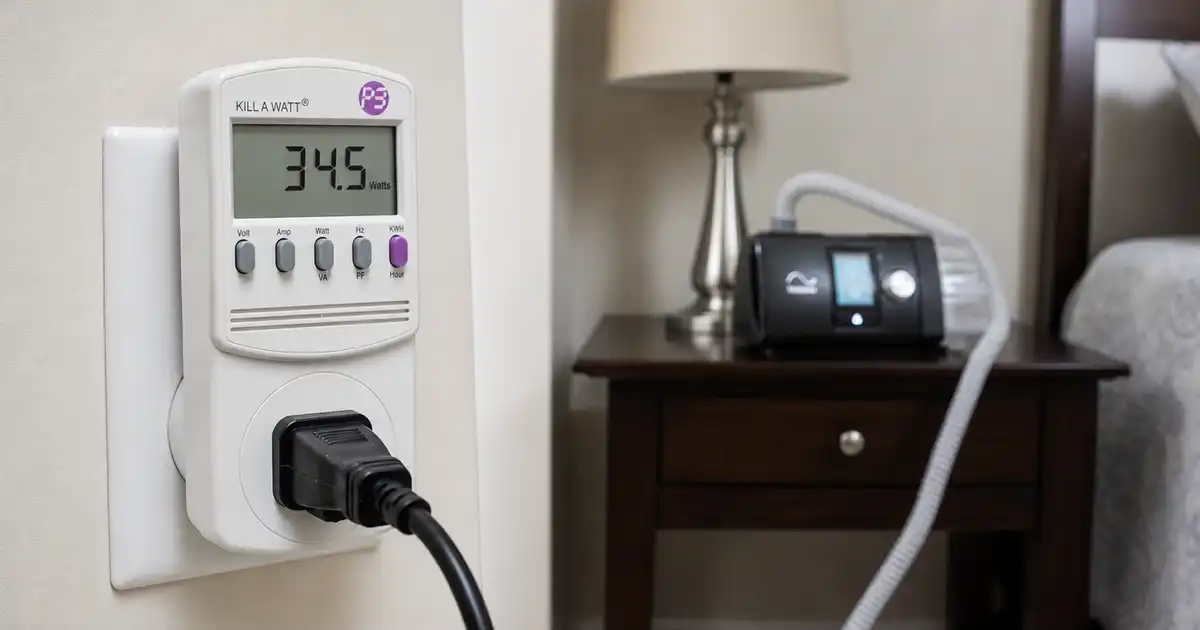
Method 3: Measure directly A plug-in power meter (Kill-a-Watt, ~$25) shows your machine’s real draw. Run it overnight and check the watt-hour total in the morning. This gives the most accurate number for your exact machine and settings.
Quick Reference: Battery Size by CPAP Draw
| CPAP Draw | 1 Night | 2 Nights | 3 Nights |
|---|---|---|---|
| 6-20W (travel CPAP, no HH) | 100-200Wh | 200-400Wh | 400-600Wh |
| 20-40W (CPAP, no HH) | 200-400Wh | 400-800Wh | 600Wh-1.2kWh |
| 40-65W (CPAP + humidifier) | 400-650Wh | 800Wh-1.3kWh | 1.2-2kWh |
| 65-90W (CPAP + HH + heated hose) | 650Wh-900Wh | 1.3-1.8kWh | 2-2.7kWh |
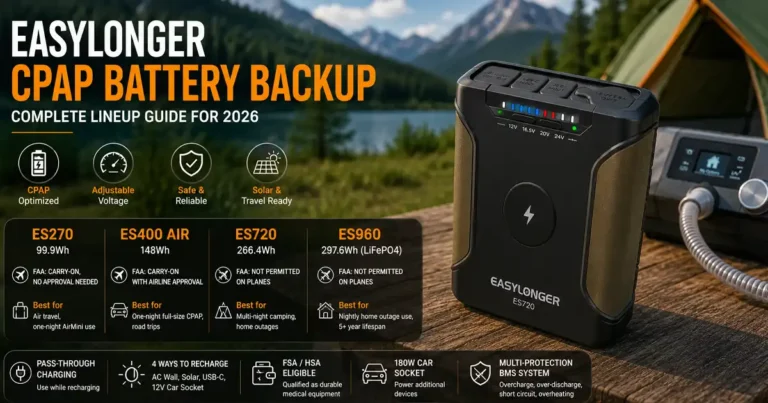
For battery picks by capacity, see my cpap battery backup guide.
For the full outage action plan, see my cpap power outage guide.
FAQs on CPAP Wattage
Does my CPAP draw full wattage all night?
No. The motor adjusts with each breath. APAP machines vary pressure and draw throughout the night. Average draw is typically 30-50% lower than the adapter’s maximum rating.
My adapter says 90W. Do I need a 720Wh battery for 8 hours?
No. That’s the adapter’s maximum capacity, not your typical draw. An AirSense 10 with a 90W adapter typically draws 43-57W overnight. A 500Wh battery covers one night comfortably for most users.
Does higher CPAP pressure mean higher wattage?
Yes. Each additional cmH2O typically adds 2-3W to motor draw. A patient on 15cmH2O draws noticeably more than one on 8cmH2O. APAP machines reflect your average nightly pressure in their draw numbers.
Does the AirSense 11 draw less than the AirSense 10?
Slightly, yes. The AirSense 11 uses a 65W adapter. The AirSense 10 uses a 90W adapter. Measured overnight draw is similar under matched conditions. The efficiency gains are real but modest in practice.
Can I run my CPAP off a car battery?
Yes, with a DC adapter matching your machine’s voltage. Most car batteries hold 40-80Ah at 12V, equaling 480-960Wh. A 30W CPAP via DC uses roughly 20Ah per night at 12V. Most car batteries handle that well. Start the car periodically to prevent full battery drain.
How much does my CPAP cost to run per month?
A CPAP drawing 40W for 8 hours uses 320Wh (0.32kWh) per night. At the 2025 average U.S. rate of $0.178/kWh, that’s $0.057 per night or roughly $1.70 per month. Even at 80W draw, monthly cost stays under $4.
Will my CPAP wattage change over time?
The motor draw stays stable. Dirty filters make the motor work harder and increase draw slightly. Replace disposable filters monthly to keep draw at baseline. Worn motor bearings in aging machines can also increase consumption.
Bottom Line
CPAP wattage ranges widely by machine, humidifier use, and pressure setting. The adapter label overstates your actual draw. Real overnight draw for most CPAP users falls between 30W and 80W.
Use measured draw — not adapter rating — to size your battery. Multiply your watts by your sleep hours. Add 20% buffer. That’s your target watt-hours.
Turn off the humidifier and heated hose during outages. That single change can double your runtime on a given battery.
For battery picks by wattage, see my cpap battery backup guide. For solar generator pairings, see my cpap generator guide. For full outage preparedness, see my medical device power outage preparedness guide.