CPAP Insurance Coverage: What Your Plan Pays in 2026
 By Lee Arnold
Medical Solar Power Backup Specialist | 8+ years in the field
Quick Answer:
Medical device insurance coverage works through the same process regardless of device: prior authorization, an in-network supplier, and a formal appeal, backed by a letter of medical necessity, if you’re denied. For CPAP specifically, that means Medicare Part B pays 80% after your deductible through a 13-month rental, with a sleep study, a prescription, and 90 days of documented compliance required upfront.
Other devices follow different coverage math under that same process. Power wheelchairs use a different capped-rental rate (15% then 6%, instead of CPAP’s 10% then 7.5%), oxygen equipment is a rental-only category for up to 36 months, and insulin pumps split between Part B and Part D depending on whether it’s a traditional or disposable patch pump.
One exclusion holds across every device: backup power sources, spare batteries bought separately, and precautionary duplicate equipment aren’t covered under any of these categories, whichever device they’re powering.
Table of Contents
The Short Answer: Yes, CPAP Is Covered
CPAP therapy is medically recognized treatment for obstructive sleep apnea (OSA). That diagnosis makes CPAP equipment eligible under every major insurance plan type.
The coverage pathway is called Durable Medical Equipment (DME). CPAP machines, masks, tubing, filters, and humidifiers all fall under this category. Your insurer or Medicare pays a portion of each item. Your DME benefit sets the rate.
The key conditions for coverage are listed below.
- A qualifying sleep study diagnosing OSA
- A physician prescription for CPAP therapy
- An in-network DME supplier
- Meeting any compliance requirements your plan sets
Medicare Part B CPAP Coverage
Medicare covers more CPAP patients than any other single payer.
Who qualifies
Medicare Part B covers CPAP for patients who meet all three conditions.
- Enrolled in Medicare Part B
- Have a sleep apnea diagnosis from a sleep study
- Have a physician prescription for CPAP therapy
What Medicare pays
Medicare pays 80% of the approved amount. You pay the remaining 20% coinsurance after your annual Part B deductible.
The 2024 Part B deductible was $240. Check Medicare.gov for the current 2026 figure.
The 13-month rental system
Medicare does not cover CPAP as a direct purchase. Instead, Medicare rents the machine.
For the first 13 months, Medicare pays monthly rental to your supplier. Medicare pays 80%. You pay 20% each month. At month 13, ownership transfers to you. No additional cost.
After month 13, Medicare continues to cover supplies on an ongoing schedule.
The 90-day compliance requirement
This is the piece most new CPAP patients miss.
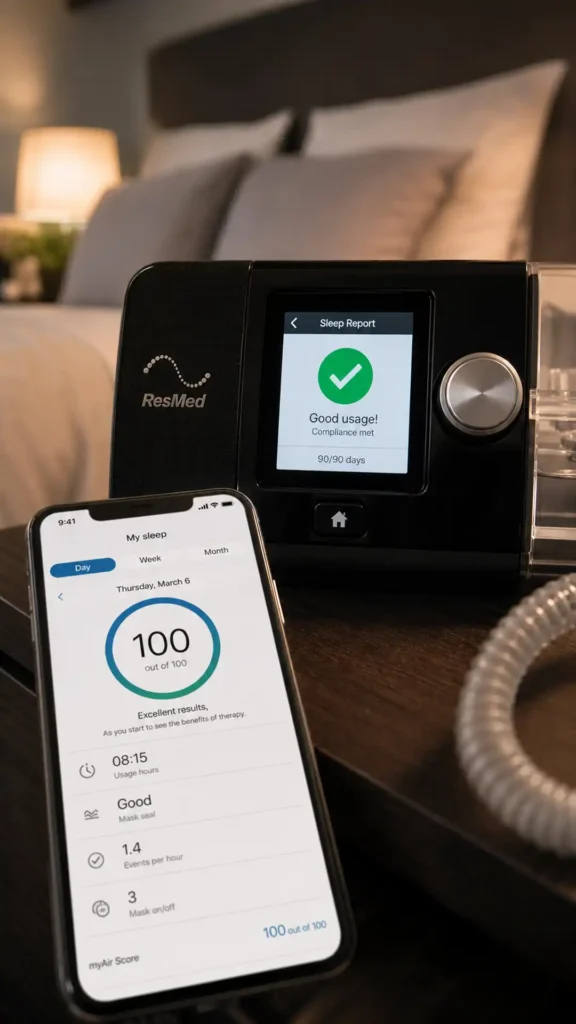
Medicare requires proof of compliance during the first 90 days of therapy. The threshold. Four hours per night on 70%+ of nights in any 30 days. Within the first 90 days.
Modern CPAP machines (AirSense 11, DreamStation 2) record usage automatically. Your DME supplier downloads this data around day 31. Then submits it to Medicare.
If compliance is met: Medicare continues covering the machine and supplies.
If compliance is not met: Medicare stops rental payments after 90 days. You may be responsible for the machine cost.
Patients struggling with compliance should call their physician before day 31. Mask fit issues, pressure settings, and humidifier settings are all adjustable. Early adjustments protect your coverage.
What Medicare covers on an ongoing schedule
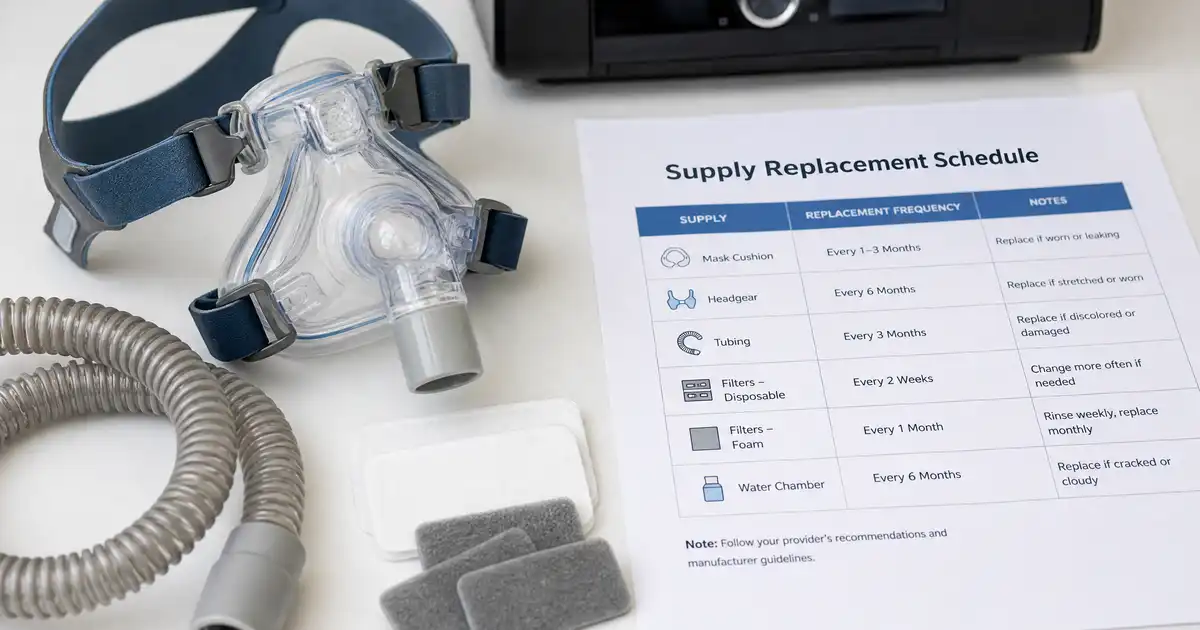
After the 13-month rental period, Medicare covers replacement supplies on this schedule.
| Item | Replacement Schedule |
|---|---|
| CPAP mask system | Every 3 months |
| Mask cushion/pillow | 2 per month |
| Tubing | Every 3 months |
| Filters (disposable) | 2 per month |
| Filters (reusable) | 1 every 6 months |
| Humidifier chamber | Every 6 months |
| Headgear | Every 6 months |
| Chinstrap | Every 6 months |
Contact your DME supplier when items are due. They verify eligibility and ship replacements directly.
Private Insurance CPAP Coverage
Most private insurance plans cover CPAP under their DME benefit. The details vary significantly by plan.
Prior authorization
Most plans require prior authorization before they cover a CPAP machine. Your physician submits prior authorization with your sleep study, diagnosis, and prescription.
Do not purchase or accept a machine before prior authorization is approved. Without it, your claim may be denied.
In-network vs out-of-network
An in-network DME supplier dramatically reduces your cost. Out-of-network suppliers may require full price and reimbursement at a lower rate.
Confirm your DME supplier is in-network before accepting a machine.
Deductibles and out-of-pocket costs
Most private plans apply CPAP costs to your annual deductible. Before the deductible is met, you pay full price. After that, you pay a copay or coinsurance of 10-30%.
Compliance requirements
Many private plans mirror Medicare’s compliance requirements. They may require 90 days of usage data before approving ongoing coverage.
Check your specific plan documents for compliance thresholds. Call your insurer’s DME benefit line if the policy language is unclear.
Supply schedules
Private plans often follow Medicare’s supply replacement schedules. Some have shorter windows. Check your plan’s DME benefit schedule for exact timelines.
Medicaid CPAP Coverage
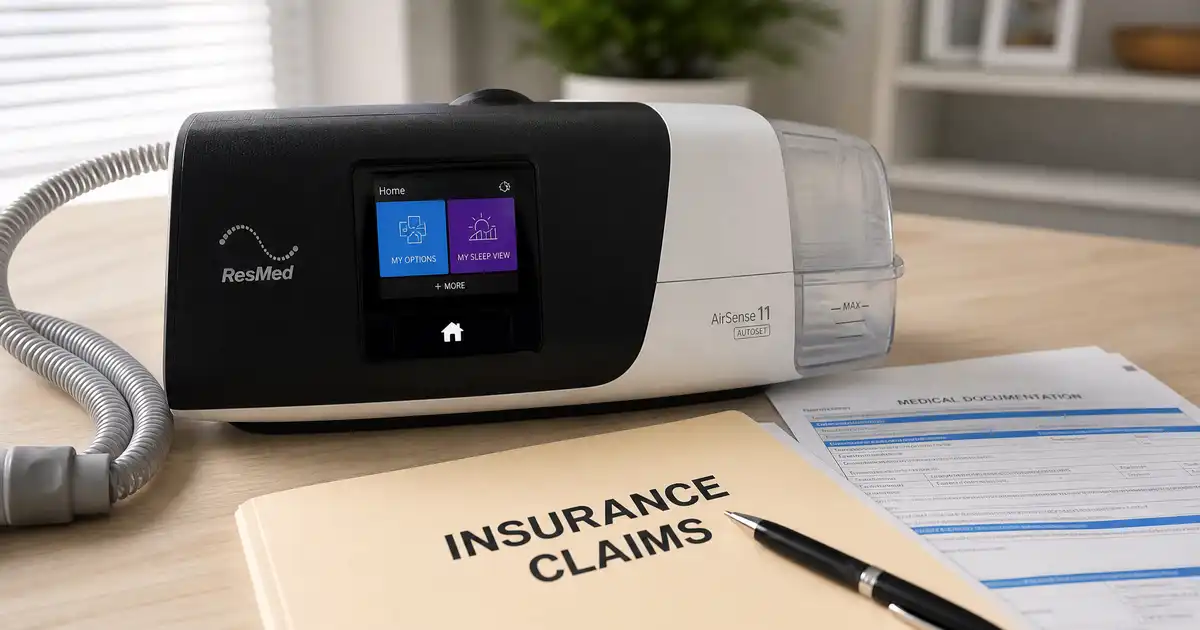
Medicaid covers CPAP in most states. Coverage rules and qualification thresholds vary widely by state.
Most state Medicaid programs require these documents.
- Sleep study confirming OSA diagnosis
- Physician prescription
- Medicaid-enrolled DME supplier
- Periodic compliance reviews (varies by state)
Contact your state Medicaid office to confirm your state’s CPAP DME benefit. Your DME supplier’s billing team knows your state’s program.
What Insurance Covers (and What It Doesn’t)
Typically covered with DME benefit
- CPAP machine (AutoCPAP, CPAP, BiPAP)
- Standard CPAP mask system
- CPAP tubing
- Disposable and reusable filters
- Heated humidifier (attached to machine)
- Humidifier chamber/water tank
- Headgear and chinstraps
Usually covered with prior authorization
- BiPAP or ASV machines (for complex sleep apnea)
- Travel CPAP (see section below)
- Replacement machines after documented failure
- Upgraded masks for clinical necessity
Typically NOT covered
- Premium or specialty mask upgrades chosen for comfort only
- CPAP cleaning devices (SoClean, Lumin)
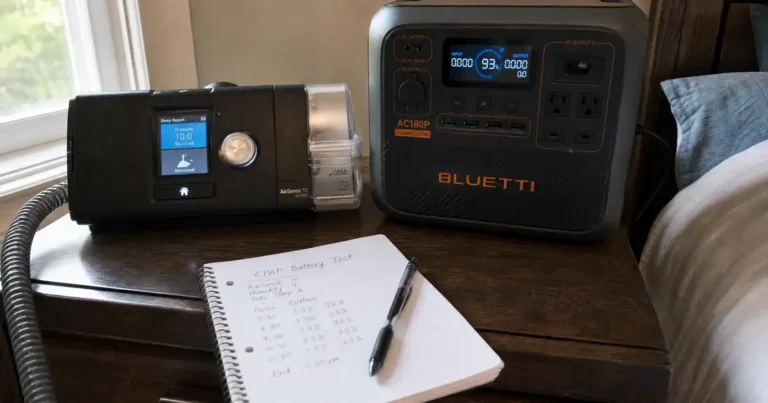
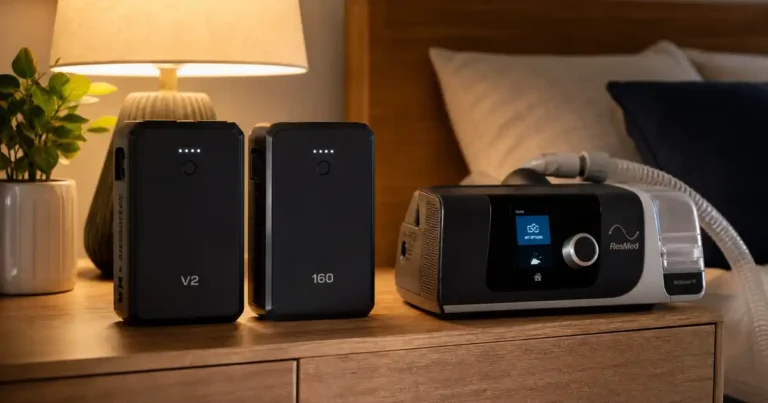
- CPAP travel batteries and backup power stations
- Travel bags and carrying cases
- Distilled water for humidifier
The backup power gap
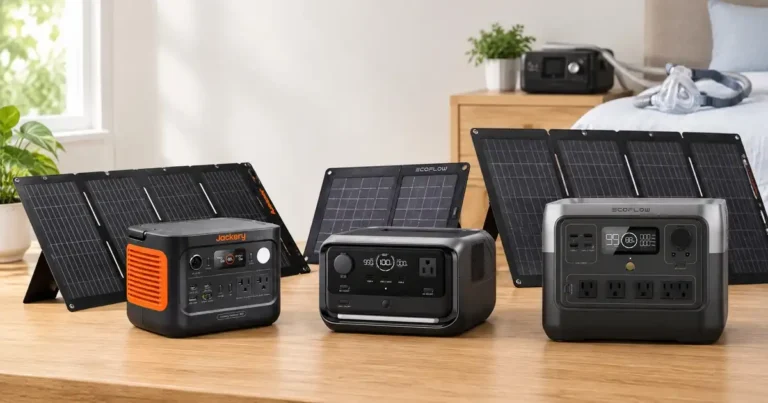
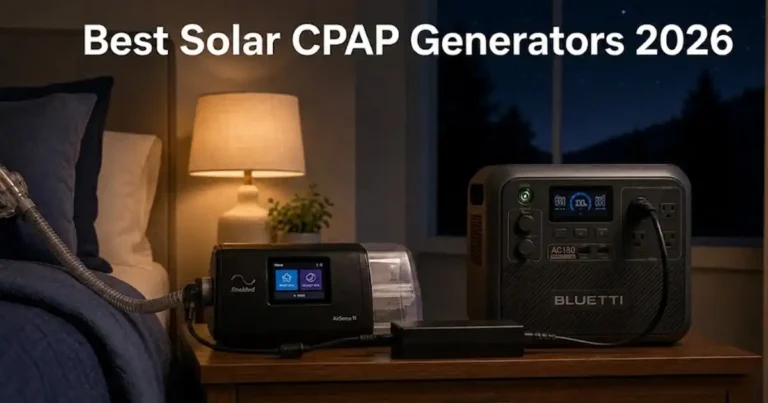
Insurance does not cover backup power stations for CPAP machines. Neither Medicare nor most private plans classify portable power stations as DME.
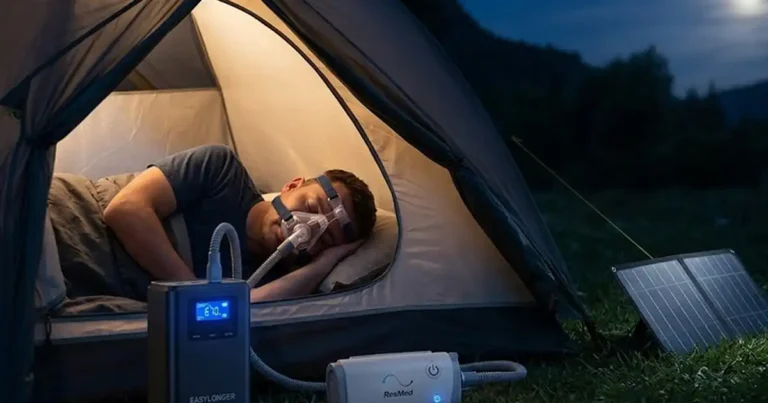
Your cpap battery backup options are typically self-pay. HSA and FSA funds may reimburse that cost. A Letter of Medical Necessity is required. See my hsa eligible portable power station guide for the documentation process.
How to Get Your CPAP Covered: Step by Step
Step 1: Get a sleep study
Insurance requires objective evidence of OSA. A sleep study — lab-based or at-home — qualifies for most plans.
Your physician orders the study. The sleep lab bills insurance. Results typically return within 1-2 weeks.
Step 2: Get a prescription
Your physician reviews the sleep study results. An AHI (apnea-hypopnea index) of 5 or higher typically qualifies as OSA. An AHI of 15+ usually qualifies as moderate-to-severe.
The physician writes a CPAP prescription specifying pressure or authorizing auto-titrating therapy.
Step 3: Contact an in-network DME supplier
Your physician’s office often handles referrals to DME suppliers. Confirm the supplier is in-network before proceeding.
The supplier will verify your insurance coverage and prior authorization status.
Step 4: Complete prior authorization (if required)
Your physician’s office submits prior authorization with sleep study, diagnosis, and Rx. Most process in 3-10 business days.
Step 5: Receive and start therapy
The DME supplier sets up the machine with your prescription settings. They may schedule a follow-up around day 30-31 to verify compliance data.
Step 6: Confirm compliance
Use your CPAP every night. The machine records your data automatically. Meet the 4-hour / 70% threshold before the 90-day window closes.
If Insurance Denies CPAP Coverage
Denials happen. Most are reversible with the right response.
Common denial reasons
- Missing or incomplete sleep study documentation
- AHI below plan’s threshold for coverage
- Prior authorization not submitted before purchase
- Out-of-network DME supplier
- Compliance not met during the trial period
How to appeal
Every plan has a formal appeals process. Request the denial in writing. Your denial letter must state the specific reason.
Your physician can write a Letter of Medical Necessity supporting the appeal. The letter needs your diagnosis, clinical CPAP basis, and medical necessity statement.
Submit the appeal with your physician’s letter, sleep study results, and prescription. Most insurers respond to appeals within 30-60 days.
External appeals
An internal appeal denial isn’t the end. Most states allow an external appeal to an independent reviewer. Your state insurance commissioner’s office can explain the process.
For Medicare denials, the appeal process runs through the Medicare Appeals process. Your DME supplier can help navigate it.
Travel CPAP Insurance Coverage
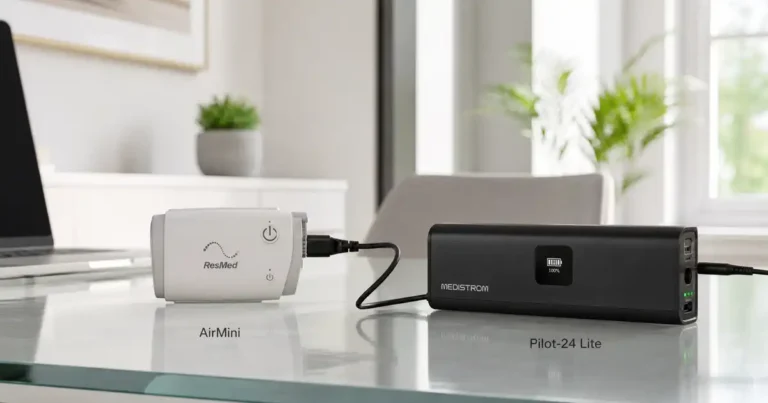
Travel CPAP machines (like the ResMed AirMini) qualify as Durable Medical Equipment. Most plans cover them the same way they cover standard machines.
Key conditions for travel CPAP coverage.
- The machine must be clinically necessary (physician prescription required)
- Most plans treat it as a second machine and require documentation of medical necessity
- Medicare covers travel CPAPs only as a replacement for a primary machine, not as an additional unit
- Some private plans cover a travel unit separately with prior authorization
Contact your insurer before purchasing a travel CPAP. Ask if they cover a second machine or need the primary unavailable.
Using HSA and FSA for Remaining Costs
Insurance rarely covers 100% of CPAP costs. Deductibles, coinsurance, and non-covered items leave gaps.
HSA and FSA funds cover those gaps.
CPAP machines, masks, and supplies are HSA and FSA eligible. No Letter of Medical Necessity required. The FDA classifies CPAP as a Class II Medical Device. That classification makes it eligible directly under IRS Publication 502.
HSA and FSA funds cover these CPAP-related costs.
- The machine itself (coinsurance or self-pay)
- Replacement masks, tubing, and filters beyond insurance limits
- Backup power stations (with Letter of Medical Necessity)
- CPAP power cord and DC cord accessories
- Premium mask upgrades not covered by insurance
See my hsa eligible portable power station guide. For the AirSense 11 cord, see my airsense 11 power cord guide.
Medical Device Insurance Coverage Beyond CPAP: What Patients Can Claim
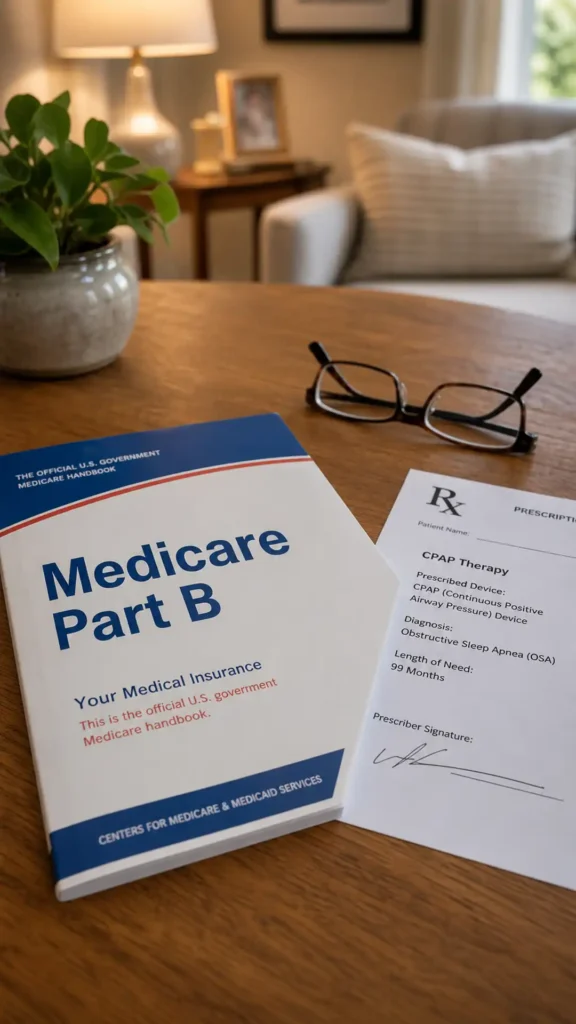
Everything above about prior authorization, in-network suppliers, and appeals applies whether you’re claiming a CPAP machine, an oxygen concentrator, a wheelchair, an insulin pump, or dialysis equipment — that process doesn’t change by device.
What does change, meaningfully, is what’s actually covered and at what rate. Medicare treats these device categories differently enough from CPAP and from each other that assuming CPAP’s rules apply across the board leads to real surprises at claim time.
Oxygen Concentrators
Oxygen equipment isn’t a capped-rental item like CPAP. Medicare’s own oxygen equipment coverage page puts it in its own rental-only category, capped at 36 months, after which the supplier keeps ownership for another 24 months while still covering maintenance.
The monthly rental bundles “any supplies, accessories, and services necessary for use of the oxygen and oxygen equipment” — but that language doesn’t itemize batteries specifically, which is a real gray area worth confirming directly with your supplier. We cover this gap in more depth in our Medicare solar generator DME coverage guide.
Wheelchairs and Mobility Devices
Power wheelchairs fall under Medicare’s capped rental category, same as CPAP — but the math inside that category isn’t the same. CGS Medicare’s own DMEPOS fee schedule sets power wheelchair rental at 15% of the purchase price for the first three months, instead of the standard 10%, then 6% for months 4 through 13, instead of the usual 7.5%.
That’s a meaningfully different payment curve than the CPAP rental structure described above, even though both fall under “capped rental” on paper.
Insulin Pumps
This is the device category with the most easily missed distinction. Medicare’s own guide to diabetes supplies coverage states that a traditional, non-disposable external insulin pump is covered as DME under Part B, at the standard 20% coinsurance after your deductible.
Insulin used with that pump is also covered under Part B, capped at no more than $35 a month with no deductible required. Disposable patch pumps work differently — those fall under Part D instead, with their own separate cost rules for the pump itself.
One more detail worth knowing before you shop: Medicare’s own guidance notes that in certain areas of the country, competitive bidding rules mean you may have to use a specific supplier for Medicare to pay for a durable insulin pump at all.
Home Dialysis Equipment
Medicare’s own dialysis services and supplies page confirms Part B covers the home dialysis machine, a water treatment system, and listed consumable supplies. Training services carry a clear 20% coinsurance after your deductible.
Medicare’s own page doesn’t isolate a distinct coinsurance figure for the equipment and supplies themselves, separate from training — so we won’t assume it simply follows the standard 80/20 DME split. Confirm your specific cost-sharing directly with your ESRD facility or supplier rather than assuming either way.
What Stays Excluded, Regardless of Device
One pattern holds across every device category above, the same one covered in our Medicare Part B DME emergency backup guide and insurance coverage for medical power backup equipment guide: backup power sources, spare or extended-capacity batteries bought separately, and precautionary duplicate equipment aren’t part of any of these coverage categories.
That exclusion isn’t CPAP-specific — it’s structural to how Medicare and most private insurers define durable medical equipment in the first place.
FAQs From CPAP Patients
Does Medicare cover CPAP automatically?
Not automatically. You need a sleep study, OSA diagnosis, prescription, and Medicare DME supplier. Medicare covers rental and supplies after that.
What AHI score qualifies for Medicare coverage?
Medicare requires an AHI of 5+ with documented symptoms (sleepiness, fatigue). Or AHI of 15+ without other symptoms.
How long does prior authorization take?
Most private insurers process CPAP prior authorization in 3-10 business days. Medicare does not require prior authorization for CPAP. The 90-day compliance review serves that function.
Can I get a better mask than what insurance covers?
Your insurer covers a standard mask system. Upgrade to a premium mask and pay the difference yourself. HSA and FSA funds cover any FDA-classified CPAP mask at full cost.
What happens if I miss the 90-day compliance window?
Contact your physician and DME supplier immediately. Document any medical reasons for low compliance (mask fit issues, illness, travel). Some plans allow exceptions with clinical documentation. An appeal may succeed.
Does insurance cover CPAP supplies indefinitely?
Yes. Keep your prescription active and keep using the machine. Most plans require annual prescription renewal to continue the supply benefit.
What if I change insurance plans?
A new plan may restart the coverage clock. Your new insurer may require a new prior authorization and compliance review. Ask your new insurer’s DME benefit line before assuming coverage continues.
Can I buy my CPAP out of pocket and get reimbursed?
Yes, but it is riskier. Buy out of pocket only after your insurer confirms reimbursement in writing. Otherwise, use an approved DME supplier to avoid claim denials.
How do I contact my insurer’s DME benefit line?
Call the member services number on the back of your insurance card. Ask specifically for the DME (durable medical equipment) benefit department. They can quote your coverage percentage, deductible status, and prior authorization requirements.
Does insurance cover a power wheelchair the same way it covers a CPAP machine?
Not quite. Both fall under Medicare’s capped rental category, but power wheelchairs are paid at a different rate — 15% of the purchase price for the first three months and 6% for months 4 through 13, versus the standard 10%/7.5% split that applies to CPAP.
Is my insulin pump covered differently than my insulin itself?
Yes, and it depends on the pump type. A traditional external insulin pump is covered as DME under Part B at 20% coinsurance, with the insulin used in it also covered under Part B and capped at $35 a month. Disposable patch pumps fall under Part D instead, with different cost rules.
Does Medicare cover the machine used for home dialysis?
Yes — Medicare Part B covers the home dialysis machine, a water treatment system, and listed supplies. Training services carry a standard 20% coinsurance after your deductible, though Medicare’s own guidance doesn’t spell out a separate rate for the equipment itself, so confirming directly with your facility is worth doing.
Bottom Line
CPAP insurance coverage is available through Medicare, Medicaid, and most private plans. Most patients qualify with a sleep study, prescription, and compliant DME supplier.
Three mistakes sink most claims. Prior auth skipped before purchase. Out-of-network supplier selected. The 90-day compliance window missed.
Get the sleep study. Get the prescription. Call your insurer’s DME line. Confirm prior authorization before you accept any equipment.
Your insurance likely covers more than you realize. The Ohio reader almost spent $1,200 on equipment he received for $48.
Know your coverage. Use it.
For outage preparedness, see my medical device power outage preparedness guide. For quarterly battery testing, see my test cpap backup battery guide.