CPAP UPS Guide: Best Uninterruptible Power Supply for CPAP
 By Lee Arnold
Medical Solar Power Backup Specialist | 8+ years in the field
Quick Answer:
A UPS for CPAP must use pure sine wave output — not simulated or modified sine wave. Budget UPS units under $100 use simulated sine wave — unsafe for CPAP. A 1000VA pure sine wave UPS runs a CPAP for 2-3 hours. For multi-hour coverage, pair the UPS with a dedicated CPAP battery. The CP1000PFCLCD ($130-150) is the right CPAP UPS for most home users.
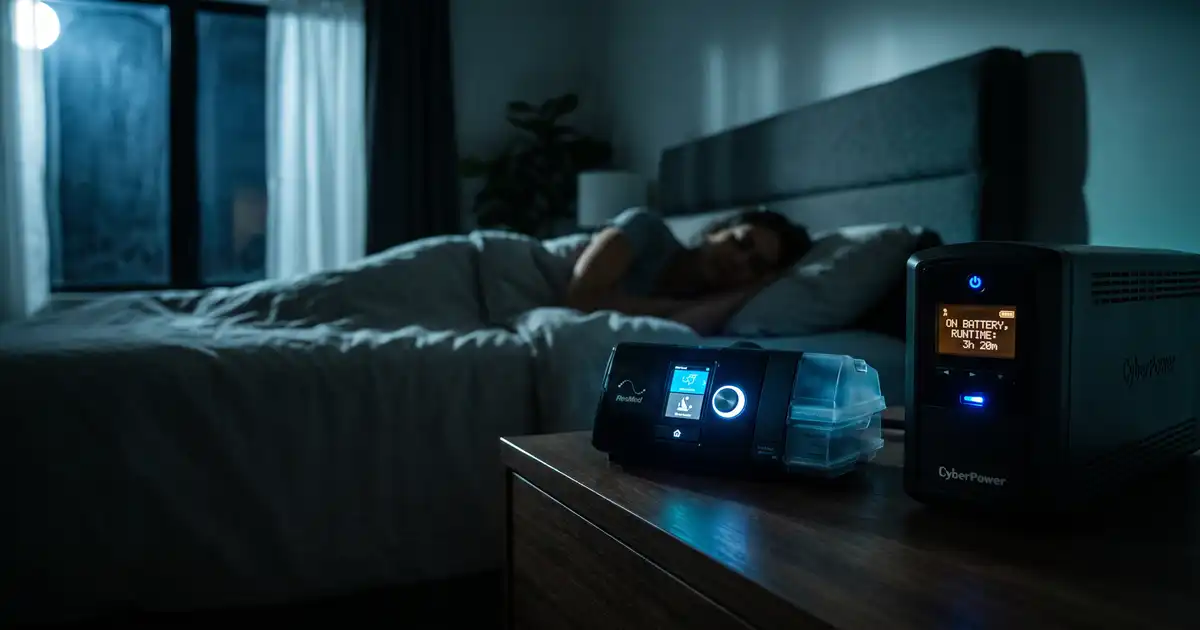
A CPAP UPS is the simplest automatic power protection available. Grid power drops. The UPS switches to battery in under 20 milliseconds. Therapy continues without interruption. A CPAP UPS covers the 90% of outages under 2 hours.
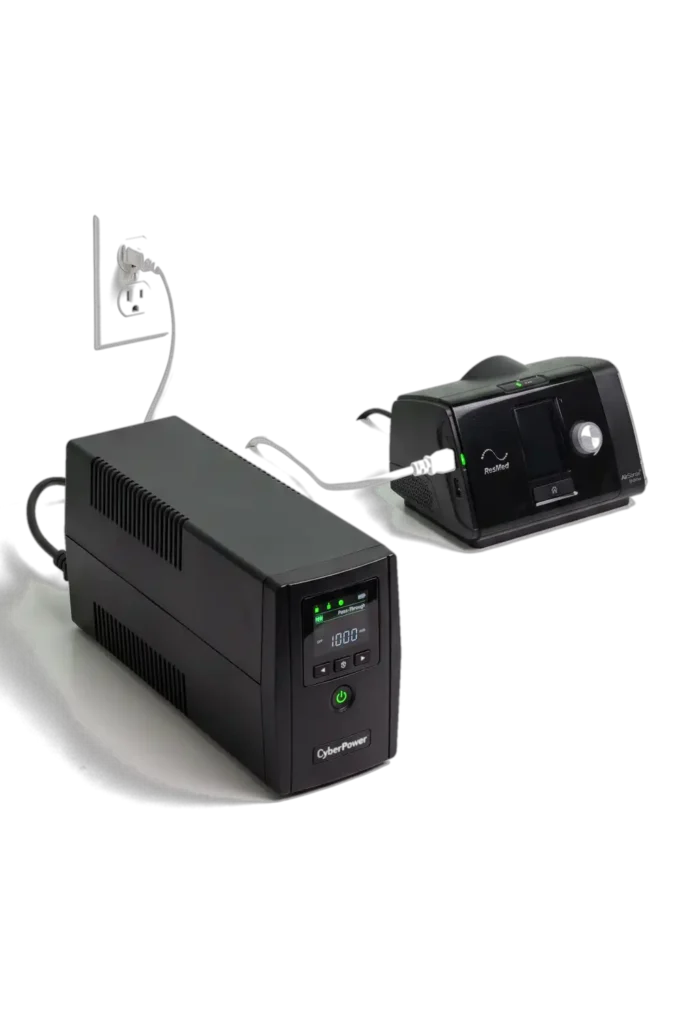
Table of Contents
Why Pure Sine Wave Is the Only Option for CPAP
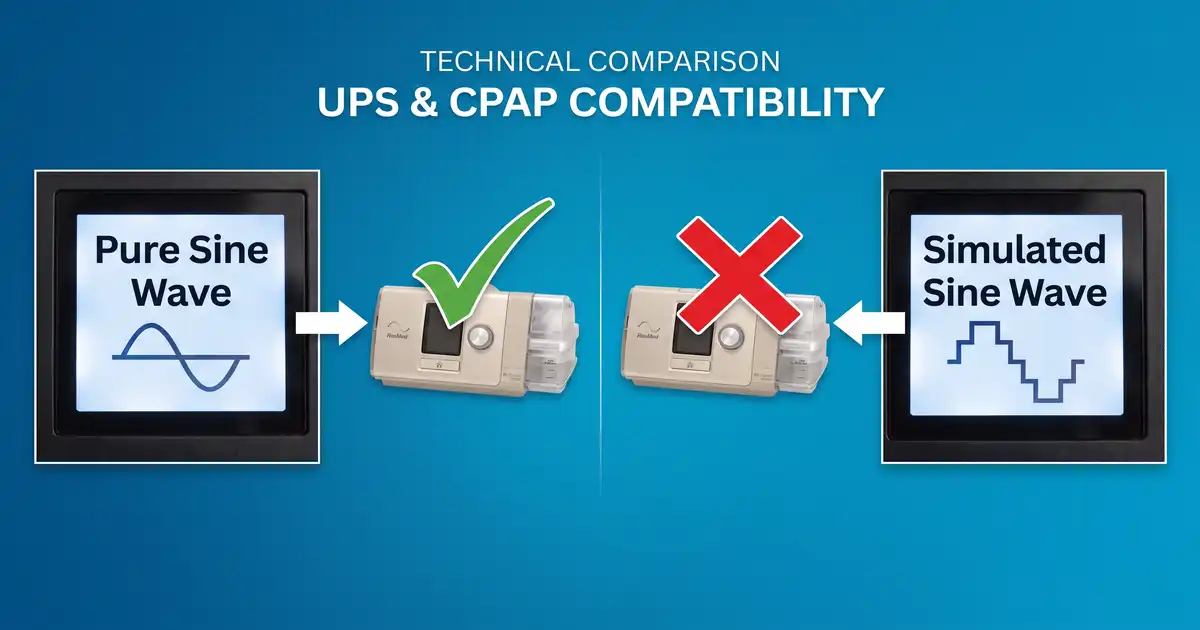
CPAP machines use Active Power Factor Correction (APFC) power supplies. These power supplies require a smooth, sinusoidal AC waveform to operate correctly.
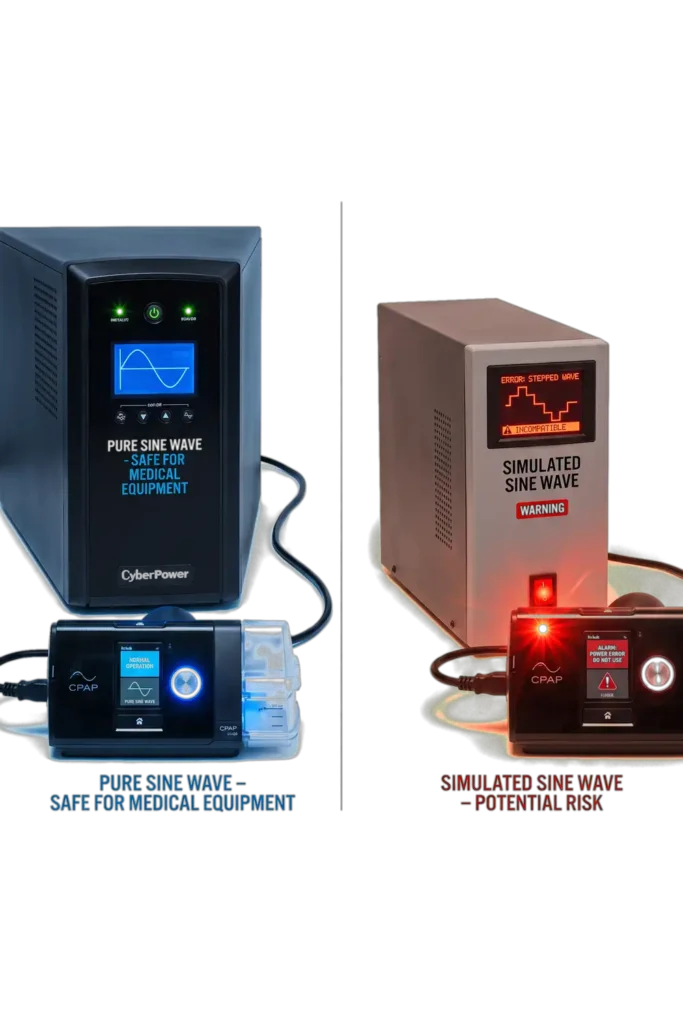
Simulated sine wave (also called modified sine wave): A stepped, rectangular waveform that approximates a sine curve. Cheaper to produce. Fine for simple resistive loads like lights and fans.
Pure sine wave: A smooth, sinusoidal waveform identical to grid power. Required for CPAP machines with APFC power supplies.
A simulated sine wave UPS on battery sends distorted power to the CPAP — causing these problems: The results:
- CPAP alarms and shuts down
- Motor runs hot and under increased stress
- Pressure accuracy degrades
- Premature power supply failure with repeated exposure
Budget UPS units — APC BX series, CyberPower value lines — use simulated sine wave. The NSF links power outage interruptions to poor CPAP sleep outcomes. These are the units sold for computers, TVs, and routers. They are wrong for CPAP.
CyberPower PFCLCD and APC BR1500MS2 output pure sine wave for CPAP. Always verify “pure sine wave” in specifications before purchasing.
How Long a UPS Runs a CPAP
This is the most important number for CPAP users. Many people are surprised by the answer.
A typical 1000VA UPS contains a 12V/9Ah sealed lead acid battery (about 108Wh). At 50% discharge (the lead acid safe limit), 55Wh is usable.
CPAP power draw by setting:
- Pressure 8-10, no humidifier: ~25-35W
- Pressure 10-15, no humidifier: ~35-55W
- Pressure 8-10, humidifier at level 2: ~60-80W
- Pressure 10-15, humidifier at level 3+: ~80-100W
At 35W draw with 85% inverter efficiency: 55Wh / 35W × 0.85 = ~1.3 hours
At 25W draw (pressure 8, no humidifier): 55Wh / 25W × 0.85 = ~1.9 hours
The practical takeaway: a 1000VA UPS runs a CPAP for 1-2 hours without humidification. That covers most brief outages — grid dips lasting under one hour.
Per the AASM, consistent nightly therapy is essential. This UPS setup covers most outages. It is not, however, an all-night solution.
For overnight coverage (6-8 hours), a dedicated CPAP battery is needed. See my cpap battery backup guide for that comparison. For wattage draw by machine and pressure, see my cpap wattage guide.
Transfer Time: The Milliseconds That Matter
A UPS switches from wall power to battery when grid power fails. The speed of that switch is the transfer time. It determines whether your CPAP detects a power event.
| Transfer Time | CPAP Effect |
|---|---|
| ≤10ms | Machine never detects the power event |
| 10-20ms | Most CPAPs continue without alarm |
| 20-30ms | Some machines may briefly alarm |
| 30ms+ | Risk of therapy interruption |
The CyberPower CP1000PFCLCD transfers in approximately 12ms. The APC BR1500MS2 transfers in under 10ms. Both are within the safe range for any modern CPAP.
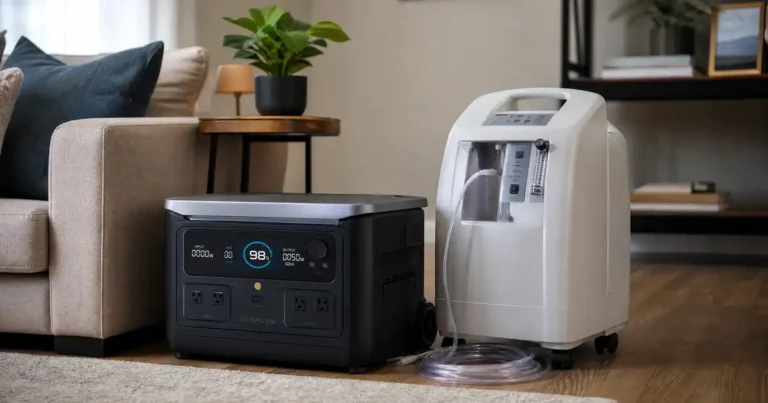
Modern portable power stations with UPS mode achieve sub-10ms switchover. The BLUETTI Elite 30 V2 and EcoFlow RIVER 3 Plus are top examples. Sub-10ms means zero detectable interruption for sensitive CPAP electronics.
The CyberPower CP1000PFCLCD for CPAP
The best compact CPAP UPS for most home users. At 1000VA and $130-150, it provides pure sine wave protection and AVR.
Check the CyberPower CP1000PFCLCD on Amazon.
Key specs for CPAP use:
- 1000VA/600W capacity — handles any CPAP at any setting
- Pure sine wave output — confirmed APFC-safe
- 12V/9Ah sealed lead acid battery (108Wh)
- Automatic Voltage Regulation (AVR) — corrects minor fluctuations without switching to battery
- 5 battery backup outlets + 5 surge-only outlets
- USB-A and USB-C charge ports
- ~$130-150 new
- User-replaceable battery (CyberPower RB1290) for long-term use
CPAP runtime estimate: 1.5-2 hours at pressure 10, humidifier off. 45-60 minutes with humidifier running.
What it does not do: It does not cover multi-hour or overnight outages. For extended coverage, use this UPS for automatic switchover protection and add a CPAP battery or portable power station as a secondary source.
Modern Alternative: LiFePO4 UPS Units
Traditional UPS units use sealed lead acid (SLA) batteries. SLA degrades to 60-70% capacity after 300-500 charge cycles. At nightly CPAP use, that is under 2 years.
A newer option: UPS units with LiFePO4 batteries. The GOLDENMATE 1000VA uses LiFePO4 — 5,000+ cycles and 10+ year lifespan. For nightly CPAP use, LiFePO4 vastly reduces long-term replacement cost.
The trade-off: LiFePO4 UPS units cost $40-80 more than equivalent SLA units. Over 5-8 years of nightly use, the extra cost pays for itself.
For Higher Capacity: The 1500VA Option
The CP1500PFCLCD and APC BR1500MS2 extend CPAP runtime to 2.5-3.5 hours. See my medical grade ups guide for the full comparison.
At $180-220 versus $130-150, the 1500VA units suit patients with longer outages.
Setting Up a CPAP UPS
Step 1: Place the UPS between the wall outlet and the CPAP machine. The CPAP’s AC adapter plugs into one of the battery backup outlets on the UPS.
Step 2: Leave the UPS plugged into the wall and turned on at all times. It charges continuously and switches to battery automatically on power loss.
Step 3: Run the CPAP from the UPS during normal operation. The UPS passes wall power through to the CPAP without interference — the battery only activates on grid failure.
Step 4: Replace the UPS battery every 3-5 years. Most sealed lead acid UPS batteries degrade to 60-70% capacity after 3 years. Most CyberPower and APC units have user-replaceable batteries. A replacement costs $20-40.
UPS vs CPAP Battery vs Solar Generator — Quick Guide
| Scenario | Best Option |
|---|---|
| Home outage protection (automatic) | UPS |
| 1-2 hour home outage coverage | UPS |
| Multi-hour home outage (3-8 hours) | Portable power station with UPS mode |
| All-night camping coverage | CPAP battery (Medistrom, EXP48 Pro) |
| Extended evacuation or travel | Portable power station |
| FAA carry-on air travel | CPAP battery <160Wh |
| Solar recharging capability | Portable power station |
See my best portable power station for cpap guide for all options.
FAQs on CPAP UPS
What happens if I use a simulated sine wave UPS with my CPAP?
At best, the CPAP alarms and stops delivering therapy during the outage. At worst, repeated exposure causes premature CPAP power supply damage. ResMed and Philips both require pure sine wave during UPS backup.
Can the UPS power my CPAP humidifier during an outage?
Yes, but it significantly reduces runtime. A heated humidifier typically adds 30-60W to the CPAP’s draw. The humidifier drops 1000VA UPS runtime from 1.5 hours to 45 minutes. Most patients turn off the humidifier during outages to extend battery coverage.
How do I know when my UPS battery needs replacing?
The UPS alerts when battery health drops — via audible alarm and LCD indicator. Most UPS units display battery capacity percentage. When battery test mode shows capacity below 60%, plan a replacement. Most batteries last 3-5 years with normal use.
Is a CPAP UPS HSA or FSA eligible?
Pure sine wave UPS units may qualify for HSA/FSA reimbursement. See my hsa eligible portable power station guide for the documentation process.
My CPAP machine is a BiPAP. Does the same advice apply?
Yes. BiPAP also uses APFC power supplies and requires pure sine wave output. BiPAPs draw more power than CPAPs (typically 40-80W) — reducing UPS runtime. A 1500VA UPS fits BiPAP users better than the 1000VA option.
Bottom Line
A pure sine wave UPS is the simplest automatic CPAP therapy protector. Most outages last under 2 hours — exactly the 1000VA UPS’s range.
The CP1000PFCLCD is the right starting point for most home CPAP users. See my medical grade ups guide for 1500VA options and detailed comparisons.
For overnight backup, pair the UPS with a dedicated CPAP battery. The UPS handles the automatic home protection. The battery handles extended coverage.