How to Run Oxygen Concentrator on Solar Power: The Real Sizing Math
 By Lee Arnold
Medical Solar Power Backup Specialist | 8+ years in the field
Quick Answer:
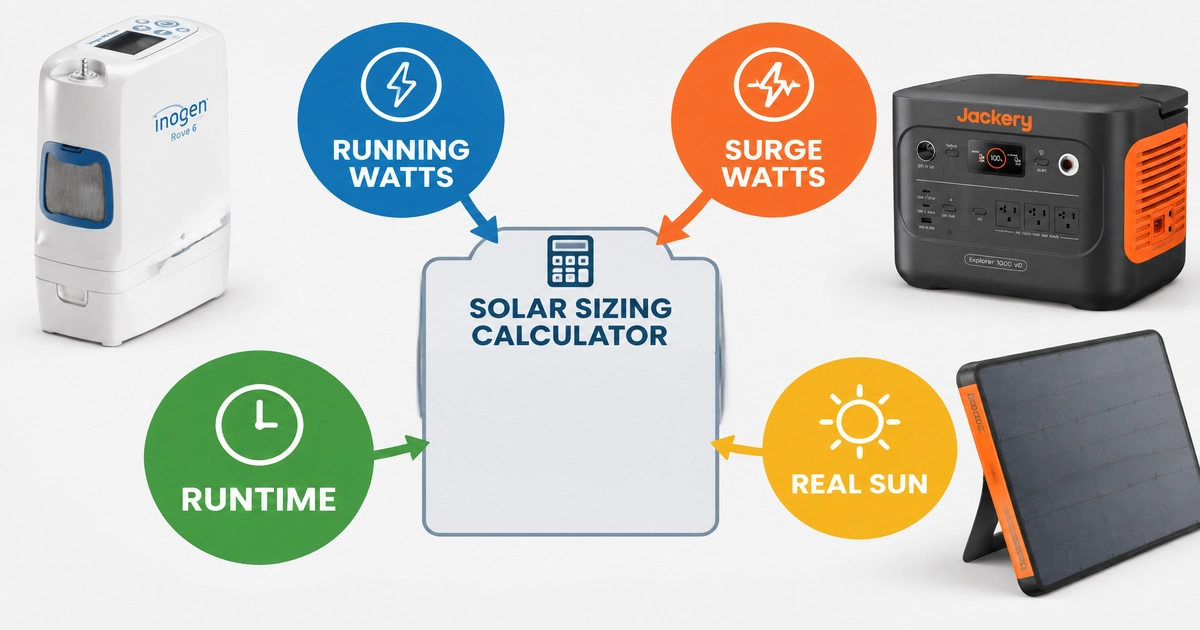
Running any oxygen concentrator on solar power comes down to four numbers: your device’s running watts, its startup surge watts, how many hours you need it to run, and how much sun you actually get. Get those four right and sizing a system is straightforward math. Get any one wrong — especially surge, which is the mistake I see constantly — and you end up with a system that looks right on paper and fails the first time you turn the concentrator on. This guide is the general methodology; for an exact step-by-step build using specific verified gear, see my Inogen Rove 6 solar charging guide.
I went looking at what’s actually out there for this exact question, and most of it lives in DIY solar forums — real people asking for help, getting answers that range from reasonable to wildly off. One thread sizes a battery bank without accounting for startup surge at all. Another ends up recommending a 3,000-pound, $9,000 battery system for a stationary concentrator that was probably oversized from a bad wattage assumption in the first place. Nobody’s wrong on purpose — this is genuinely confusing math if you haven’t done it before. Here’s the version that gets it right.
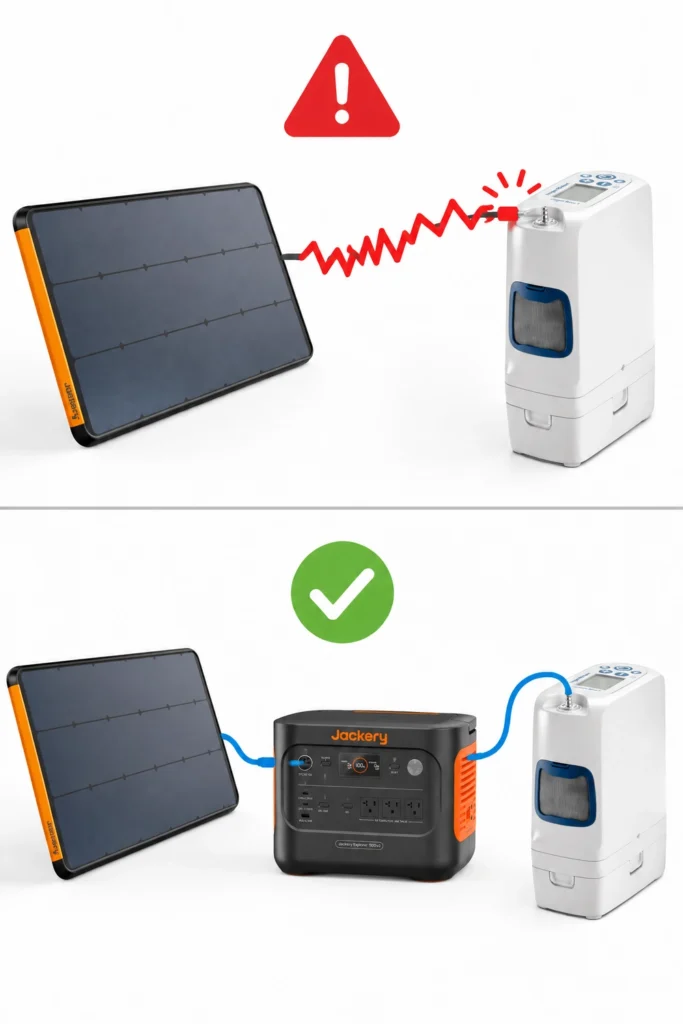
Table of Contents
The Four Numbers That Actually Matter
1. Running watts. How much power your specific concentrator draws while operating normally. This varies enormously by device type — I cover the full breakdown in my continuous vs pulse dose power draw guide, but as a starting reference: portable pulse dose units run 40–130W, portable continuous flow units run 120–300W, and stationary units run 200–800W depending on size and flow rate. Don’t guess this number or use a generic “oxygen concentrators use about 400W” estimate from a forum post — check your specific model’s spec sheet or the label on the device itself.
2. Startup surge watts. The number almost every DIY forum thread skips, and the one most likely to cause a real failure. A compressor motor draws 1.5 to 2 times its running wattage for the first one to three seconds after switching on. Size your inverter or power station’s surge rating for this, not just the continuous rating — a system that handles the running load fine but can’t clear that first-second spike won’t start the concentrator at all.
3. Runtime goal. How many hours you need covered, and whether that’s overnight, a full day, or a multi-day outage. This is a personal planning decision, not a technical one — be honest about the actual outage lengths in your area rather than planning for best-case scenarios.
4. Real solar generation, not nameplate wattage. A panel rated at 100W generates that number only under close-to-ideal conditions. Real-world generation, accounting for angle, cloud cover, and panel losses, typically lands at 60–80% of the rated number for a sustained period. Plan around the lower, real number — treating the nameplate rating as guaranteed output is the single most common overestimate I see.
The Actual Formula
Battery capacity needed (Wh) = running watts × hours of runtime goal. A 60W pulse dose unit running 8 hours needs roughly 480Wh of stored capacity — round up for a margin, since real-world draw fluctuates above the average.
Inverter or power station surge rating needed = running watts × 1.5 to 2. For that same 60W unit, a rating of 90–120W surge clears it easily; most power stations have surge ratings well above this even at modest sizes, so this rarely becomes the limiting factor for pulse dose units specifically. It becomes much more relevant for larger continuous-flow and stationary units, where running watts — and therefore surge — climb into the hundreds.
Solar panel wattage needed = (battery Wh ÷ real-world generation ratio) ÷ target charge hours. If you want a 480Wh battery fully recharged within 6 hours of good sun, and you’re getting roughly 70% of nameplate output, you need panels rated around 480 ÷ 0.7 ÷ 6 ≈ 115W. Round up to the nearest common panel size — 100W won’t quite hit a same-day recharge at that math, so 200W gives real margin.
Worked Examples by Device Category
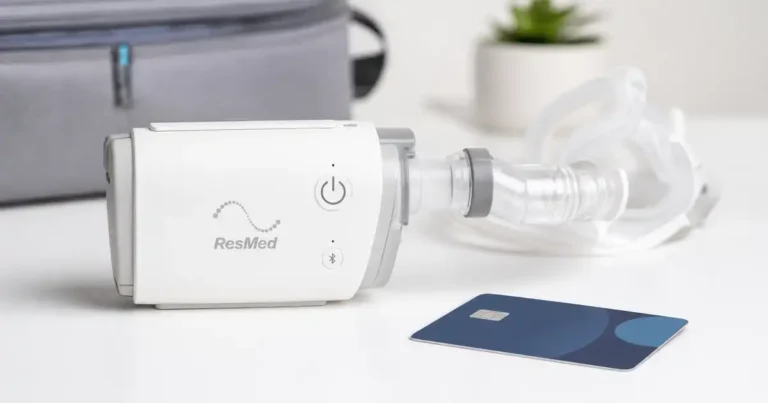
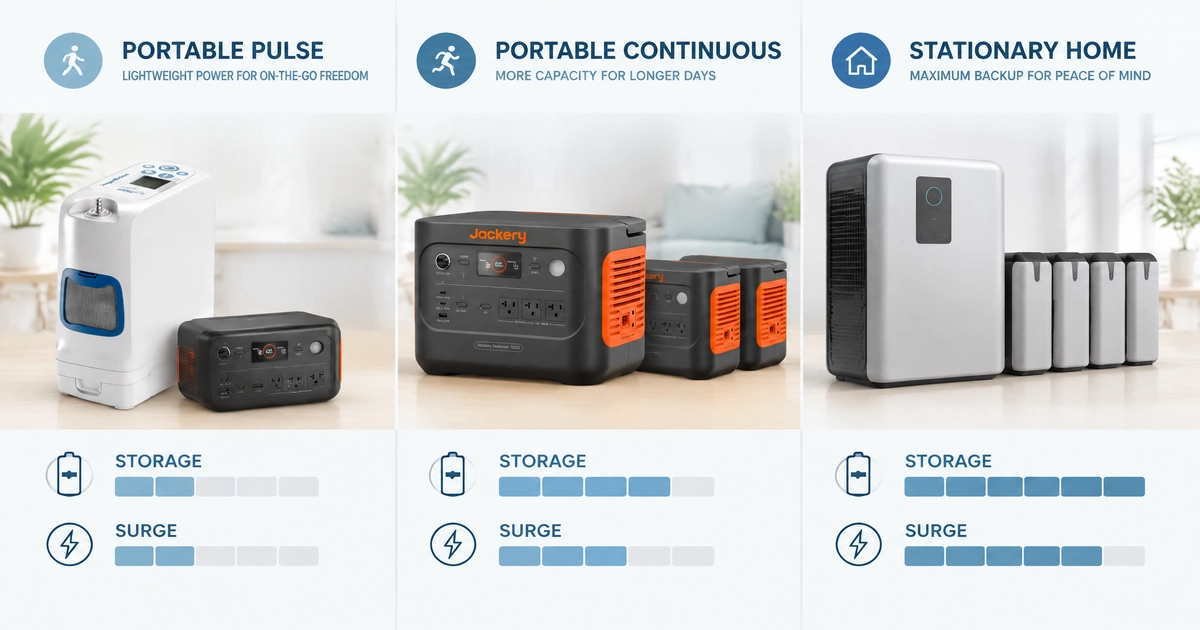
Portable pulse dose (e.g., Inogen Rove 6, CAIRE Freestyle Comfort): roughly 40–130W running. An 8-hour runtime goal needs 320–1,040Wh of storage — a power station in the 300–1,000Wh class comfortably covers this, and a single 100–200W panel keeps pace with typical daily use even if a full recharge from empty takes a day or two. This is the category the Rove 6 guide walks through with specific verified products.
Portable continuous flow (e.g., CAIRE Eclipse 5, O2 Concepts Oxlife Liberty 2): roughly 120–300W running, meaning surge in the 180–600W range. An 8-hour goal needs 960–2,400Wh — you’re now looking at a larger power station (1,000–2,000Wh class) and likely two 100–200W panels rather than one to keep same-day recharging realistic.
Stationary (e.g., a 5-liter home concentrator): roughly 200–800W running depending on flow rate, with surge potentially reaching 1,200–1,600W for the larger units. This is where the DIY forum threads I read were running into real trouble — a 24/7 runtime goal at these wattages needs several kWh of storage and a genuinely large panel array, not a single portable power station. Trying to run a stationary unit off-grid for extended periods rather than as short-term outage backup? That’s a system-level home solar conversation, not a portable-power-station one — sizing it wrong here isn’t just inconvenient, it’s the scenario where people end up with a battery bank that costs thousands and still isn’t quite enough.
Common Mistakes Worth Naming Directly
Ignoring surge and only sizing for running watts. Covered above, but worth repeating because it’s the most common failure mode: a system that’s technically correctly sized for continuous operation can still fail to start the device.
Using someone else’s wattage number instead of your own device’s. Concentrator power draw varies by a factor of 20 across the full range of devices on the market. A number from a forum post about a different model tells you very little about yours.
Treating nameplate solar wattage as guaranteed output. Covered above — plan around 60–80% of the rated number, not 100%.
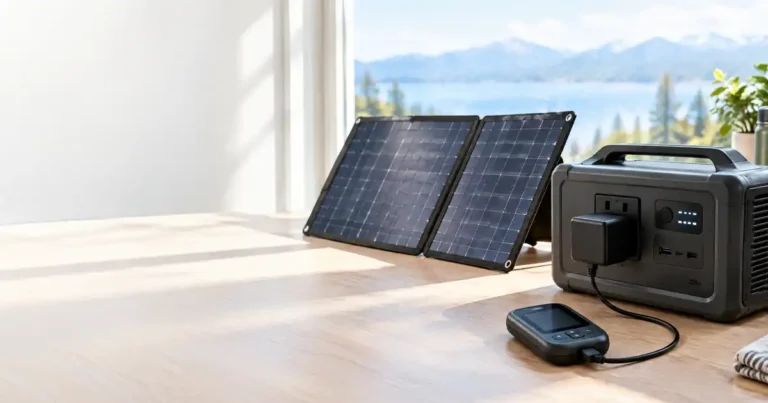
Trying to wire a solar panel directly to the concentrator instead of through a power station. Direct wiring means the concentrator’s power supply fluctuates with the sun — clouds, angle changes, anything. A power station buffers that into steady, regulated output, which matters considerably more for a device tied to your oxygen supply than it would for, say, charging a phone.
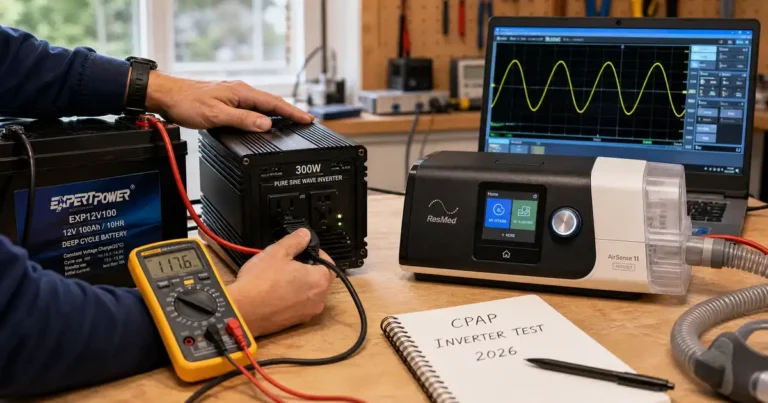
Skipping pure sine wave. A compressor motor is a demanding load. Modified sine wave power can cause it to run hot, run inefficiently, or trip its own protection circuit. This isn’t a nice-to-have spec — treat it as a hard requirement when choosing a power station or inverter for this purpose.
When This Becomes a Bigger Project Than a Power Station
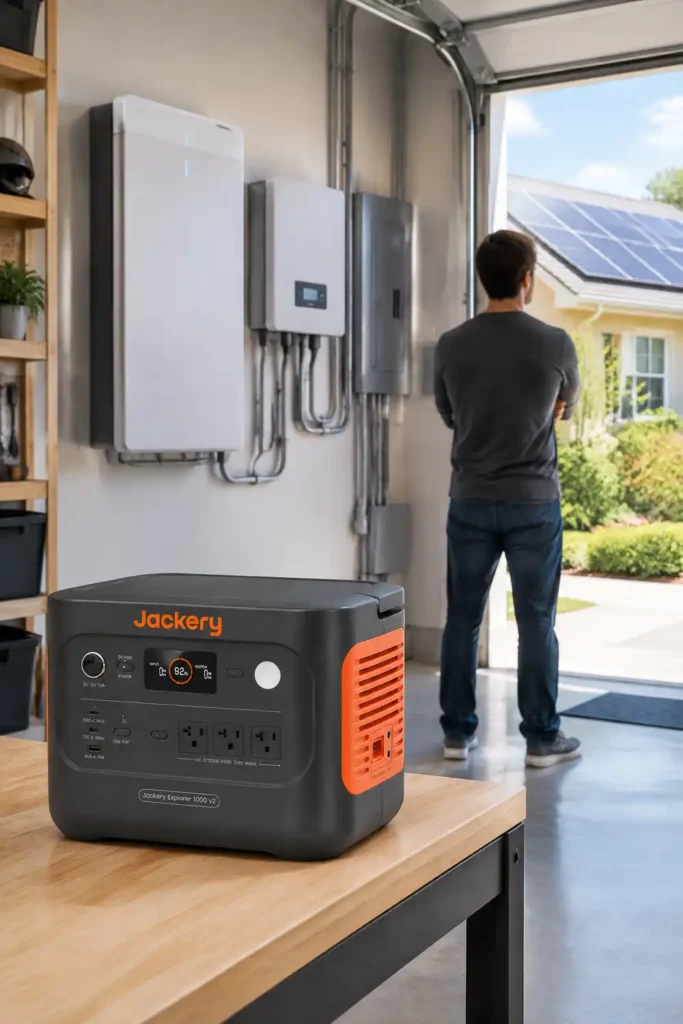
Everything above assumes a portable power station and one or two foldable panels — the right scope for a portable concentrator or as outage backup for a stationary one. For the fuller picture on pairing any oxygen concentrator with backup power for outages specifically, not just the solar-sizing math covered here, see my battery for oxygen concentrator guide. If your goal is running a stationary concentrator off-grid full-time, or covering multi-day outages for a high-draw continuous-flow setup, the math above still applies, but the hardware moves into home battery bank and fixed solar array territory, which is a different kind of project with its own installation and electrical-code considerations. Worth knowing where that line is before you buy a stack of portable power stations trying to brute-force a problem a proper system would solve more cleanly.
FAQs
Can I run any oxygen concentrator on solar power?
Technically yes, with the right sizing — but “right sizing” varies enormously by device. A portable pulse dose unit is a straightforward portable power station project; a stationary continuous-flow unit running 24/7 is a much bigger undertaking. Match the scope of your solution to your specific device and runtime goal rather than assuming one setup fits all.
What size solar generator do I need for an oxygen concentrator?
There’s no single answer — it depends entirely on your device’s running watts and your runtime goal, both covered in the formula above. A 300–1,000Wh power station with a 100–200W panel handles most portable pulse dose units; larger continuous-flow or stationary units need proportionally more.
Is battery power alone enough, or do I need solar specifically?
A sufficiently large battery or power station covers you without any solar input at all, for as long as its stored capacity lasts. Solar becomes relevant when you’re planning for outages that might outlast your stored capacity — it’s what lets you keep recharging rather than running down a fixed reserve.
How do I find my specific concentrator’s actual wattage?
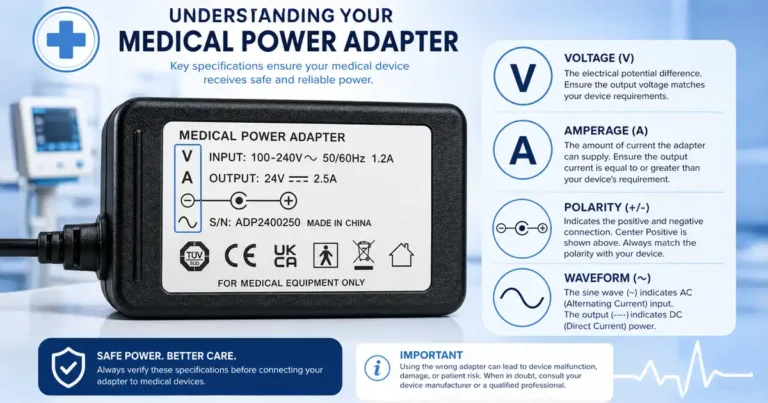
Check the label on the device itself or the manufacturer’s spec sheet — most portable units list this directly. If it’s not listed, the AC adapter’s rated output (printed on the adapter itself) is a reasonable proxy, since it’s sized to cover the device’s maximum draw.
Bottom Line
An oxygen concentrator running on solar power is genuinely simple math once you have the right four inputs: running watts, surge watts, runtime goal, and realistic solar generation. Most of the confusion out there comes from skipping surge entirely or trusting a generic wattage number instead of checking the specific device. Get those inputs right and the rest is arithmetic — get them wrong and you end up with an expensive system that still doesn’t reliably start the concentrator.
For a complete, specific build using verified gear, see my Inogen Rove 6 solar charging guide, and for the full wattage breakdown by device type, my continuous vs pulse dose power draw guide.