Is a Travel CPAP Covered by FSA? What You Need to Know (2026)
 By Lee Arnold
Medical Solar Power Backup Specialist | 8+ years in the field
Quick Answer:
Yes. A travel CPAP is covered by FSA. The IRS classifies all CPAP machines, AirMini included, as eligible medical expenses. A valid prescription is required. Your FSA card pays at checkout.
A patient in my network called her FSA administrator last fall. She’d bought the ResMed AirMini for a camping trip. Her administrator said it might not qualify. Travel machine, she said.
That administrator was wrong. The IRS does not separate full-size CPAPs from travel CPAPs. Both are Class II Medical Devices under FDA classification. Both qualify under FSA and HSA rules.
This guide covers what qualifies, what doesn’t, and how to pay correctly.
Table of Contents
What the IRS Says About Travel CPAPs
The IRS governs FSA eligibility through IRS Publication 502. Under Pub 502, equipment prescribed to treat a disease qualifies.
Sleep apnea is a chronic medical condition. The FDA classifies CPAP equipment as Class II Medical Devices. The IRS follows that classification directly.
The IRS makes no distinction based on machine size or intended use. A travel CPAP is a CPAP. The same rule applies.
What Travel CPAP Equipment FSA Covers
Your FSA pays for all of the following:
Machines:
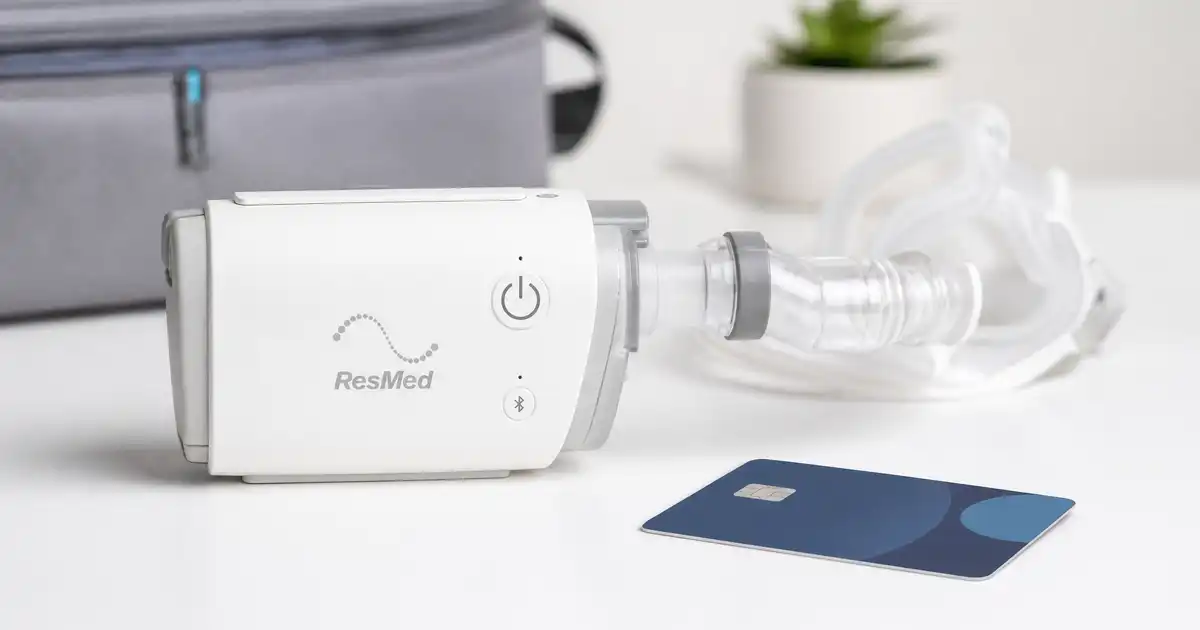
- Travel CPAPs (ResMed AirMini, Breas Z2, Transcend Micro)
- Full-size CPAPs and BiPAP machines
- Auto-adjusting (APAP) machines
Masks and accessories:
- Full face masks, nasal masks, nasal pillow masks
- Headgear, cushions, seals, and chin straps
- Filters, tubing, humidifier chambers
Replacement parts:
- Replacement masks, tubing, filters
- Water chambers and accessories
CPAP cleaning supplies:
- Cleaning wipes and sprays (most plans)
- Ozone/UV sanitizers (some plans require a Letter of Medical Necessity first)
Travel power accessories:
- Dedicated CPAP battery packs (most plans, with LMN)
- DC power cords for travel use (most plans)
For FSA-eligible portable power stations specifically, see my hsa eligible portable power station guide.
What FSA Does NOT Cover for Travel CPAP
Not every account type covers CPAP equipment.
Limited-Purpose FSA (LPFSA): Covers only dental and vision expenses. A travel CPAP is not eligible under an LPFSA.
Dependent Care FSA (DCFSA): Covers childcare and dependent care only. Not eligible for CPAP equipment.
Standard FSA or HSA: Both cover travel CPAPs with a valid prescription.
One other exclusion: expenses already paid by insurance. You cannot double-claim the same expense through FSA and insurance. Pay with FSA only for the portion insurance did not cover.
The Prescription Requirement
Here is the part that trips up most buyers. A valid prescription is required to buy any CPAP machine or mask.
The prescription requirement comes from the FDA. It applies whether you pay with cash, credit, insurance, HSA, or FSA. It is not a retailer-specific policy. It is federal.
Most CPAP retailers (CPAP.com, Sleeplay, The CPAP Shop) keep prescriptions on file. Your FSA card pays at checkout after they verify the prescription. No prior authorization from your FSA administrator is needed.
Expired prescriptions can be renewed through most authorized CPAP retailers.
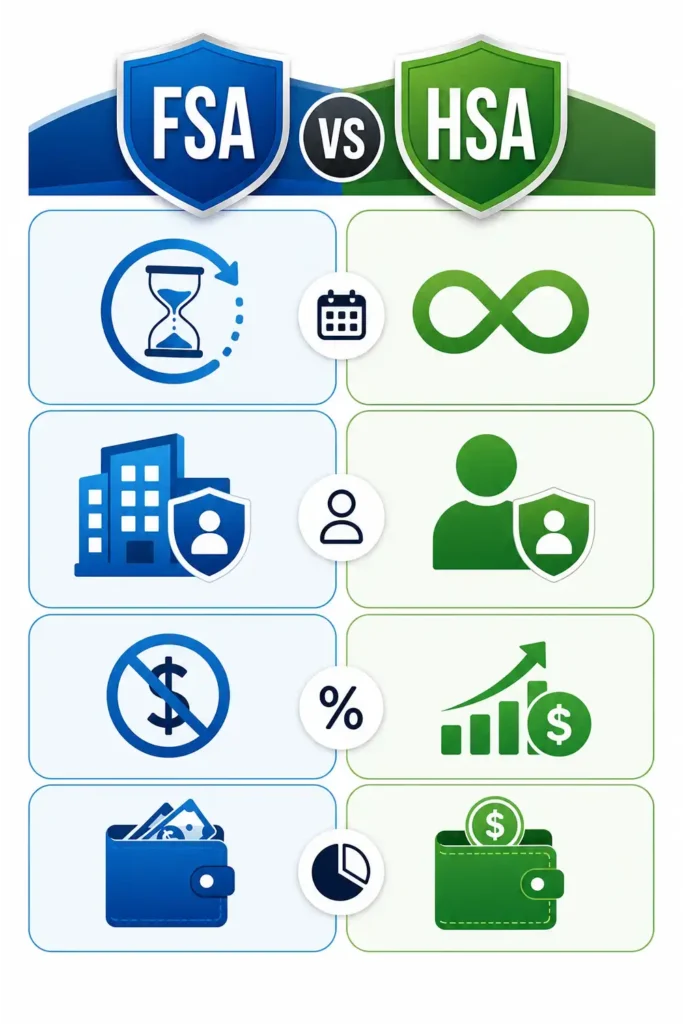
FSA vs HSA for Travel CPAP: Key Differences
Both FSA and HSA cover travel CPAP equipment with a valid prescription. The differences matter for planning.
| Feature | FSA | HSA |
|---|---|---|
| 2026 contribution limit | $3,300/year | $4,300 individual / $8,550 family |
| Rollover | $660 max into 2027 | Unlimited — funds never expire |
| Account ownership | Employer-owned | Yours forever |
| Eligible if unspent | Forfeited above $660 | Rolls over indefinitely |
| HDHP required | No | Yes |
| Available immediately | Yes (full year amount) | Only as contributed |
The use-it-or-lose-it rule is the most important FSA detail for travel CPAP buyers. FSA funds do not carry over beyond $660. Unspent funds above that disappear December 31st.
The best FSA strategy: buy a travel CPAP before December 31st. Most travel CPAPs run $700-$1,200. One purchase covers a full year of FSA contributions.
HSA funds roll over indefinitely and earn interest. Full HSA rules are in IRS Publication 969. HSA is the better long-term tool. FSA is best used aggressively before year-end.
How to Pay for a Travel CPAP With FSA
The process is straightforward.
Step 1: Have a valid CPAP prescription from your treating physician or sleep specialist. The prescription must specify the device type or pressure settings.
Step 2: Choose an authorized CPAP retailer. Major options: CPAP.com, Sleeplay, The CPAP Shop, Lofta, GoLightly CPAP. All accept FSA payment and keep prescriptions on file.
Step 3: Add the travel CPAP to your cart. Use your FSA debit card at checkout. The retailer processes it like a standard purchase. No prior authorization needed in most cases.
Step 4: Keep your receipt. Some FSA administrators request documentation. Save the receipt and any explanation of benefits.
Step 5: Submit documentation if asked. Most modern FSA administrators approve CPAP purchases automatically. A few require you to submit a receipt or Letter of Medical Necessity. Your plan documents will specify this.
Does Your Existing FSA Cover Travel CPAP Batteries?
The answer depends on the battery type and your plan.
Dedicated CPAP battery packs are medical accessories for CPAP therapy. Most administrators cover them with a Letter of Medical Necessity (LMN).
General power stations used for multiple devices are harder to approve. Some administrators approve them with an LMN. Others do not.
For a detailed breakdown of which power accessories qualify and how to file the claim, see my hsa eligible portable power station guide.
2026 FSA Limits and Key Deadlines
FSA contribution limit (2026): $3,300 per person per year. Employer may contribute additional amounts.
FSA carryover maximum: $660. Any FSA balance above $660 on December 31st is forfeited. Some plans offer a grace period to March 15th of the following year — check your plan documents.
HSA contribution limit (2026): $4,300 for individual coverage. $8,550 for family coverage. Age 55+ can add a $1,000 catch-up contribution.
Year-end strategy: FSA funds expire. Plan your travel CPAP purchase before December 31st. A replacement AirMini mask system ($60-120), a replacement travel CPAP ($700-1,200), or a new CPAP battery ($150-300) all make effective year-end FSA purchases.
For more on using tax-advantaged accounts for CPAP backup equipment, see my cpap insurance coverage guide and hsa eligible portable power station guide.
FAQs: Travel CPAP and FSA
Does the AirMini qualify for FSA reimbursement?
Yes. The ResMed AirMini is a Class II Medical Device. The IRS treats it identically to any full-size CPAP under Publication 502. You need a valid prescription.
Can I buy a travel CPAP on Amazon with my FSA card?
Generally, no. Amazon’s FSA store has a limited CPAP selection. Use an authorized CPAP retailer that accepts FSA cards and holds prescriptions.
Do I need a Letter of Medical Necessity for a travel CPAP?
Not for the machine itself. A valid CPAP prescription is sufficient. LMNs are more commonly required for accessories like CPAP battery packs.
Can I use FSA for a second travel CPAP as a backup?
Most plans cover a second machine with physician documentation of medical need. Ask your FSA administrator before purchasing.
What if my FSA card is declined at checkout?
Contact your FSA administrator. Some purchases trigger automatic holds. Provide the receipt showing a CPAP machine purchase. Cite IRS Publication 502. Most disputes resolve quickly with documentation.
Can I use HSA for travel CPAP while also having FSA?
You cannot contribute to both an HSA and a standard FSA simultaneously. A Limited-Purpose FSA (dental/vision only) is compatible with an HSA. Ask your benefits administrator.
Bottom Line
A travel CPAP is 100% FSA eligible. The IRS Publication 502 covers it. The FDA classifies it as a Class II Medical Device. The only requirement is a valid prescription.
Use your FSA card at any authorized CPAP retailer. Keep your receipt. Know your December 31st deadline.
For CPAP insurance coverage details, see my cpap insurance coverage guide. For help powering your travel CPAP away from an outlet, see my battery powered cpap guide and air mini cpap battery guide.