Medical Device Power Outage Patient Rights: What You’re Owed
 By Lee Arnold
Medical Solar Power Backup Specialist | 8+ years in the field
Quick Answer:
If you depend on a CPAP, oxygen concentrator, dialysis machine, or another powered medical device, you likely qualify for a utility “Medical Baseline” or critical care customer program — and it’s worth registering for.
But be clear about what patient rights during a medical power outage actually mean in practice. Registration typically buys you a discounted energy rate, a flag on the utility’s priority-restoration list, and advance notice of planned shutoffs. It does not guarantee your power stays on during a storm, a grid failure, or a Public Safety Power Shutoff.
Separately, if unpaid bills are the threat, medical certification can delay a disconnection — a different protection from outage priority, and one people frequently confuse. Neither replaces having your own backup power plan.
Most guides about medical devices and power outages jump straight to batteries and generators. That’s useful, but it skips a question a lot of readers ask us directly: what am I actually entitled to here — legally, or through my utility — before I spend money on backup equipment?
This guide answers that specifically. For the physical prep side — device wattage, the 72-hour kit, seasonal planning — our medical device power outage preparedness guide covers that in depth. This one stays focused on the rights and registration side it only touches on.
Table of Contents
Two Different Protections People Mix Up
This is the single biggest point of confusion we hear from readers, so it’s worth untangling first. There are two separate things utilities and states offer to medically vulnerable customers, and they solve different problems:
Disconnection protection applies when a bill goes unpaid. A physician can certify that cutting off service would be dangerous, and many states require the utility to delay disconnection for a defined period as a result.
Outage priority applies when the grid itself goes down — a storm, equipment failure, or a planned Public Safety Power Shutoff. Registering as a medical or critical-care customer can put you on a list utilities consider when restoring service, and can qualify you for advance notice of planned outages.
Neither one is the other. A medical certification that stops a shutoff for nonpayment does nothing during a hurricane. A spot on a utility’s critical-care list does nothing if you fall behind on your bill. Most people only find out which protection they actually have — or don’t — after something goes wrong.
Utility Registration: What a Medical Baseline or Critical Care Program Actually Gets You
Nearly every major U.S. electric utility runs some version of a program for customers who depend on powered medical equipment. The name varies — Medical Baseline, Critical Care Customer, Medical Necessity, Critical Load.
California’s Medical Baseline program, overseen by the California Public Utilities Commission, documents the pattern well. It covers people using equipment like respirators, dialysis machines, suction devices, nerve stimulators, nebulizers, and motorized wheelchairs. It provides an extra allowance of electricity — and gas, where applicable — billed at the utility’s lowest rate.
What it does not do is guarantee your power stays on. The CPUC’s own program materials are explicit: Medical Baseline does not prevent outages or Public Safety Power Shutoffs. It can include advance notification if a planned shutoff is coming, so you have lead time to act. But the shutoff itself still happens.
Outside California, the pattern repeats under different names. Ohio’s investor-owned utilities maintain a critical-needs registry that gives restoration preference to customers relying on life-support devices. Ohio’s own consumer guidance is direct about it: there’s “no guarantee” of immediate restoration, registration or not.
Utilities including CenterPoint Energy and Kerrville Public Utility Board run comparable critical-care or medical-necessity programs with the same basic shape — register, get flagged, get considered first. Nothing is promised in a major event.
Registration typically requires:
- A direct call to your utility (there’s no single national portal — each utility runs its own program)
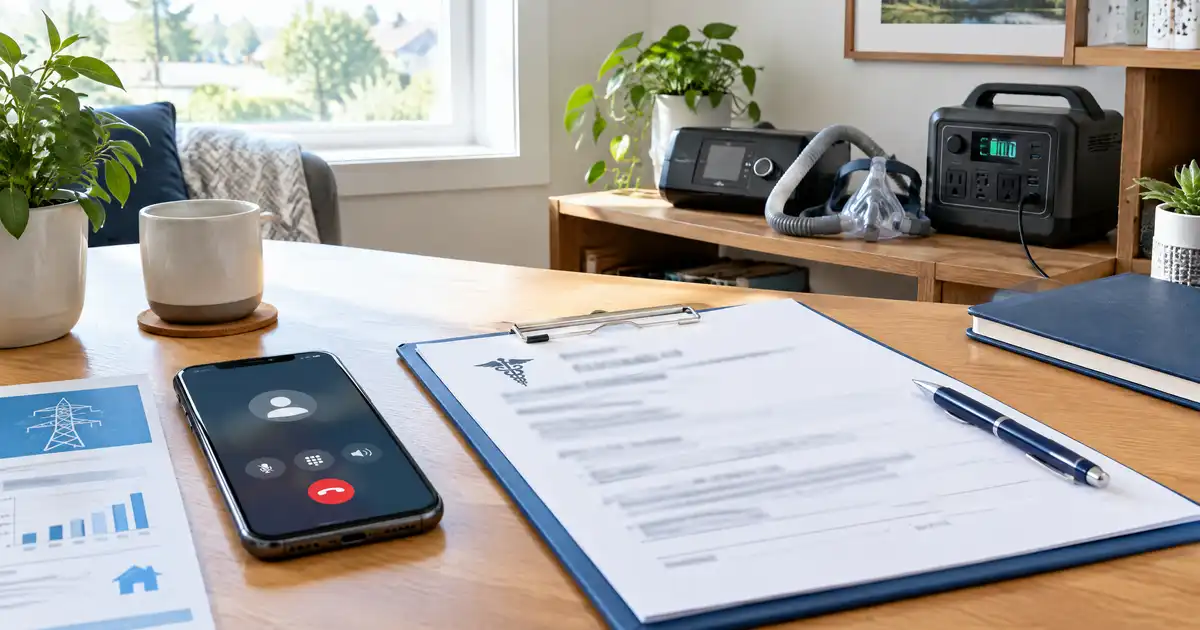
- A physician’s certification of your medical need for powered equipment, submitted on the utility’s own form
- Periodic renewal — most programs aren’t permanent and expect updated documentation
It costs nothing to register and the downside is essentially zero, so if you use powered medical equipment and haven’t done this, it’s worth a phone call to your utility this week.
If You Have to Evacuate: Accessibility Rights at Emergency Shelters
Registration programs cover your home service. A different set of protections applies if a disaster forces an evacuation to a public shelter.
Emergency shelters operated by state or local government fall under Title II of the Americans with Disabilities Act. The U.S. Department of Justice has published specific guidance for it, including “The ADA and Emergency Shelters: Access for All in Emergencies and Disasters” and an accompanying emergency shelter checklist.
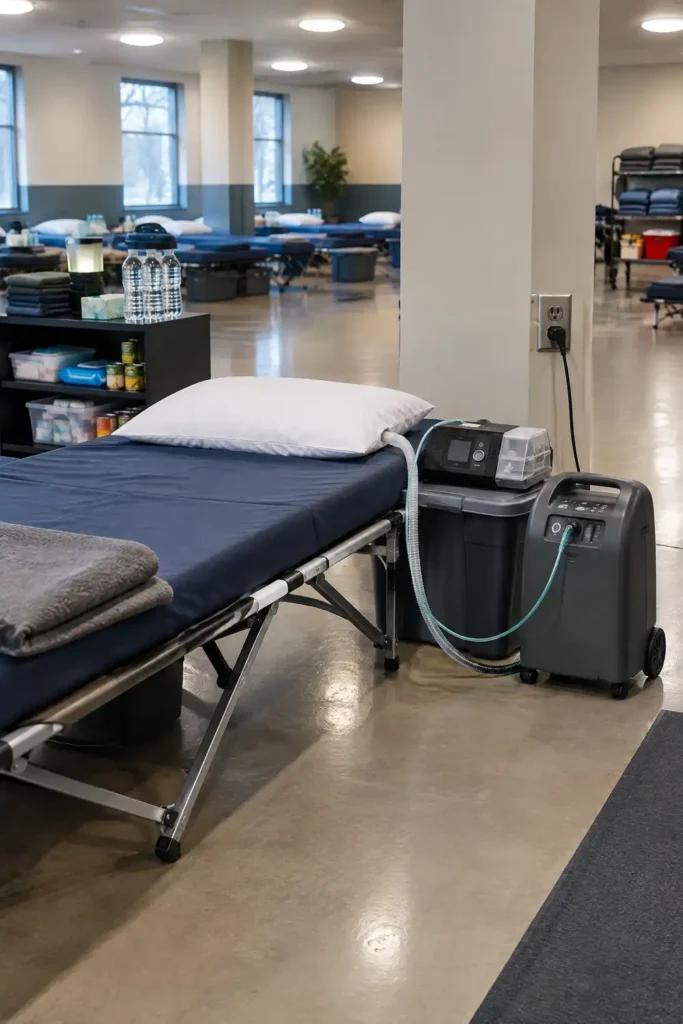
In practice, a government-run shelter is expected to provide reasonable accommodation rather than turn away someone whose CPAP or oxygen concentrator needs a working outlet. It doesn’t mean every shelter shows up perfectly equipped — real-world conditions vary by disaster scale and local resources.
But it does mean you have a documented basis to ask for accommodation. Organizations like Disability Rights Florida and the Disability Rights Education & Defense Fund publish practical, state-specific guides on exercising it.
LIHEAP: Bill Help, Not Outage Protection
The Low Income Home Energy Assistance Program, LIHEAP, comes up constantly in the same conversations as medical baseline programs, and it’s worth being clear about what it is: a federal block grant, administered state by state, that helps income-qualifying households pay heating and cooling bills, including past-due amounts through crisis assistance. States are directed to prioritize households with elderly, disabled, or very young members.
It’s a genuinely useful program if utility bills are a strain — but it’s bill assistance, not an outage-prevention or priority-restoration program, and it has no specific provision written around medical equipment dependency the way a Medical Baseline program does. Don’t confuse applying for LIHEAP with registering as a critical-care customer; they solve different problems, and you may well want to do both.
What None of This Covers — Why Backup Power Is Still on You
Here’s the part that’s easy to miss in the fine print of every program above: not one of these protections keeps your CPAP running, your oxygen concentrator compressing, or your insulin cold during an actual multi-hour or multi-day outage.
Disconnection protection stops a bill-related shutoff. Critical-care registration improves your odds in the restoration queue and can buy you advance warning. Shelter accessibility rights matter if you have to leave home. None of them are a power source.
That’s a hard truth utilities themselves are upfront about — the CPUC and Ohio’s consumer counsel both say so in their own materials, not just us. If a device failure is a real medical risk for you or someone in your household, your own backup power plan is what actually closes that gap, not paperwork. Our medical power needs wizard can help size what you’d actually need.
How This Fits With Our Other Outage-Prep Content
This guide is specifically about the legal and registration side — what utilities, states, and federal programs actually promise, and where those promises stop.
For the physical side of getting ready — device-by-device wattage numbers, a 72-hour kit checklist, and seasonal timing — see our medical device power outage preparedness guide, which goes deep on planning and equipment rather than rights and registration. If insulin cold-chain is your specific concern during an outage, our insulin cold-chain outage guide covers that separately.
FAQs
Does registering with my utility as a medical or critical-care customer guarantee my power won’t be shut off?
No. It typically gets you a discounted rate, a flag for priority consideration during restoration, and in many cases advance notice of planned outages like Public Safety Power Shutoffs. Both California’s CPUC and Ohio’s Consumers’ Counsel are explicit that none of this guarantees uninterrupted power, especially during a major storm or grid event.
What’s the difference between disconnection protection and outage priority?
Disconnection protection stops your utility from cutting off service over an unpaid bill, usually with a physician’s certification and often for a limited, renewable period. Outage priority is about restoration order after the grid itself fails — a completely separate issue that the same certification doesn’t address.
How do I actually sign up for a medical baseline or critical care program?
Contact your electric utility directly — there’s no single national registration system, since each utility runs its own version. You’ll typically need a physician to complete a certification form, and most programs require periodic renewal rather than one-time registration.
Does LIHEAP help if my power gets shut off because of a storm?
No. LIHEAP is a federal program that helps income-qualifying households pay heating and cooling bills, including catching up on past-due amounts. It doesn’t provide outage priority or protection against storm-related or planned shutoffs — that’s a separate set of programs.
What are my rights if I need to evacuate to an emergency shelter?
Shelters run by state or local government are covered under Title II of the ADA, which the Department of Justice has published specific guidance and a checklist around, including reasonable accommodation for people who rely on medical equipment. Real conditions vary by shelter and disaster scale, but you have a documented basis to request accommodation.
If I’ve registered as a critical-care customer, do I still need a backup battery or generator?
Yes. Every program covered here — utility registration, disconnection protection, shelter accessibility rights — improves your position or buys you time, but none of them is a power source. If a device failure would be medically risky, your own backup plan is what actually prevents that, not registration status.
Bottom Line
Medical device power outage patient rights are real, but narrower than most people assume. A utility Medical Baseline or critical-care registration can get you a lower rate, a spot on the priority-restoration list, and advance notice of planned shutoffs — worth doing, and free.
Separately, physician certification can delay a disconnection over an unpaid bill, which is a different protection entirely. If you’d need to shelter during a disaster, ADA-covered accessibility rights apply at government-run shelters. None of it guarantees your equipment keeps running through an actual outage — that part is still on you, which is exactly what backup power planning is for.
HSA/FSA Note
Backup power equipment purchased specifically to keep a prescribed medical device running during an outage can often qualify as a deductible medical expense under IRS Publication 502, typically with documentation tying it to the underlying prescribed device. This is separate from any utility program discussed above — check with your HSA/FSA administrator for your plan’s specific requirements.
This article reflects CPUC, Ohio Consumers’ Counsel, DOJ, and ACF/LIHEAP program information current as of October 2026. Utility program names, eligibility rules, and state protections vary by location and change over time — confirm current details directly with your utility and state utility commission before relying on any program described here.