Solar Battery Backup in Extreme Cold: What Medical Users Need
 By Lee Arnold
Medical Solar Power Backup Specialist | 8+ years in the field
Quick Answer:
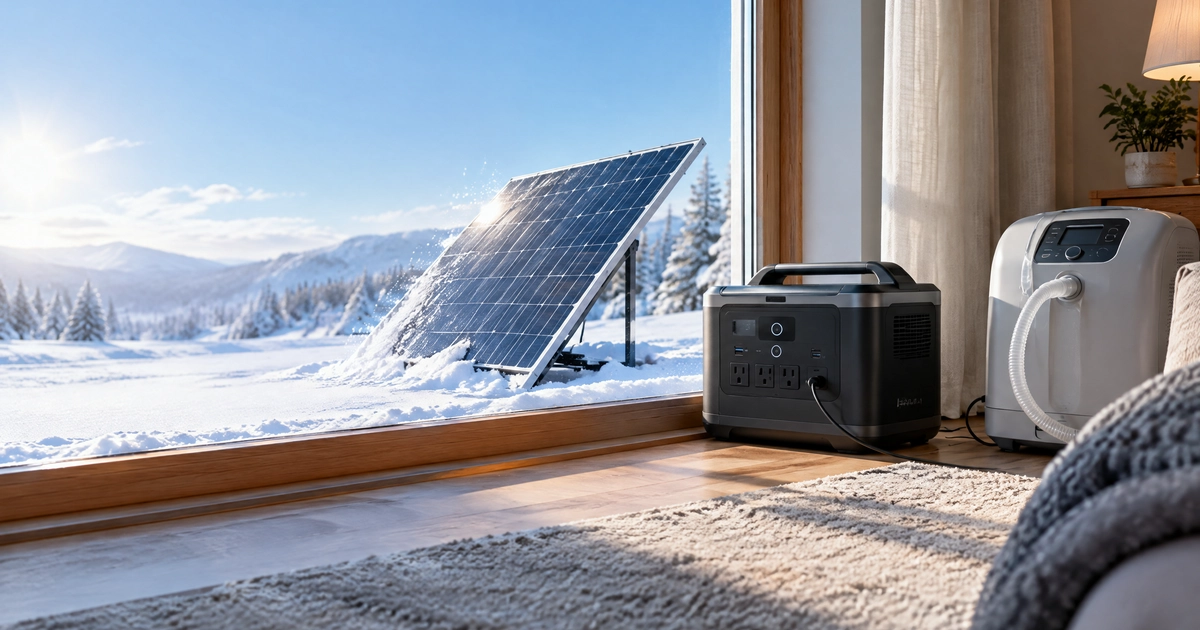
Cold weather doesn’t hurt solar panels — it actually helps them. Panel efficiency rises in cold air, and snow usually slides off an angled panel on its own.
The real cold-weather limit is the battery, not the panel. Most LiFePO4 power stations stop accepting a charge somewhere around 25 to 32°F, even though they can still discharge power down to about -4°F.
Your medical device has its own cold floor too — many portable oxygen concentrators struggle below 41°F. Plan around the battery’s charging limit and your device’s operating range, not the panel.
Most cold-weather solar content is written for RVs and off-grid cabins. This one is built around what actually changes when the load is a medical device and the outage is happening during a winter storm.
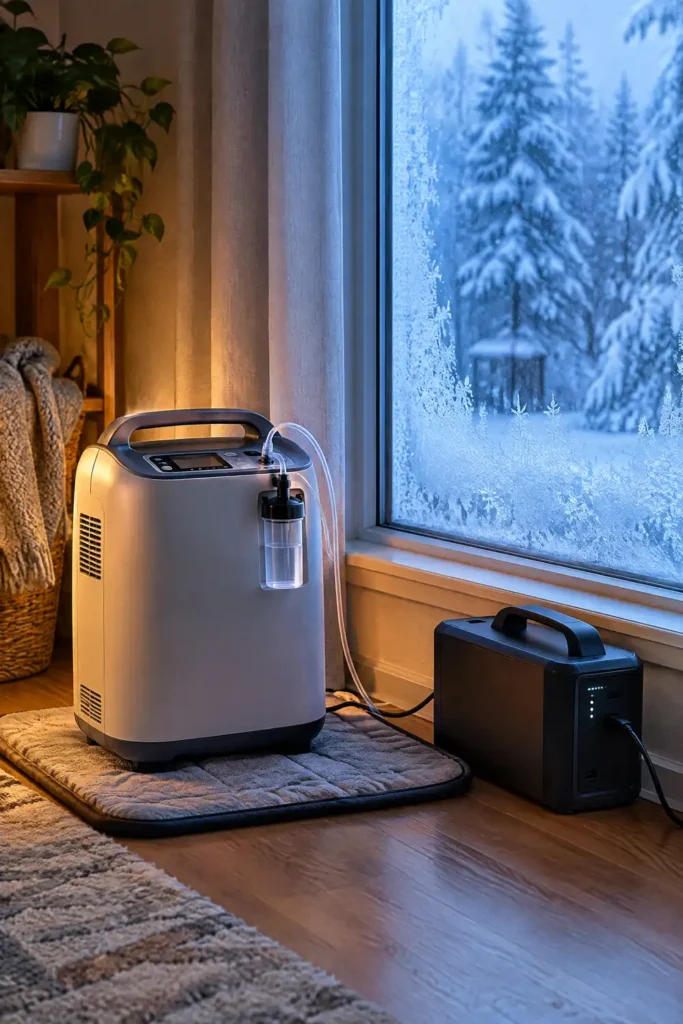
Table of Contents
The Surprising Part: Cold Doesn’t Hurt Solar Panels
This runs against most people’s intuition, but it’s well documented: solar panels actually get more efficient in cold air, not less. Panel output starts degrading once the panel itself warms above about 77°F (25°C) — heat is the enemy of panel efficiency, not cold.
Real manufacturer data backs this up. Some panel models lose roughly a quarter of a percent of efficiency for every degree above that 77°F mark. EnergySage puts it plainly: the best conditions for solar generation are cold, sunny days — not hot ones.
Snow is a separate question from cold. A heavy snow layer does block sunlight and stops generation, but most panels sit at an angle specifically so snow slides off on its own. Light snow cover can even boost output slightly, since white snow on the ground reflects extra light back onto the panel.
The Real Limit Is the Battery, Not the Panel
Here’s where cold weather actually causes problems: charging a lithium battery below freezing.
LiFePO4 batteries — the chemistry in most modern portable power stations — can discharge (power your device) down to roughly -4°F (-20°C). But charging is a different story.
Most manufacturers cut off charging somewhere between 25°F and 32°F (roughly -4°C to 0°C), and for good reason. Charging a lithium battery below freezing can cause permanent internal damage — specifically lithium plating on the anode, which a battery management system is built to prevent.
That’s why a quality power station’s BMS automatically blocks charging outside its safe temperature window, rather than letting you damage the cells. This is a protection working correctly, not a defect — but it means a power station left charging outside in a cold garage overnight may simply refuse to accept a charge until it warms up.
The practical takeaway: you can run your device off a cold battery, but you generally can’t recharge one until it’s back above freezing.
Your Medical Device Has Its Own Cold Floor Too
The battery isn’t the only piece of equipment with a temperature limit. Portable oxygen concentrators commonly struggle to operate reliably below 41°F, and prolonged cold exposure can cause internal components to wear or the unit to stop working correctly.
Insulin pumps carry similar floors — Tandem’s t:slim X2 recommends staying within 41–99°F, and Medtronic’s MiniMed 780G specifies a 41–98.6°F operating range, both of which we cover in more depth in our insulin pump temperature safety guide.
The pattern across medical devices is consistent enough to plan around: most sensitive electronics, batteries included, start having real problems somewhere in the 32–41°F range. Treat that as your practical planning floor, not just the battery’s spec sheet number.
A Practical Cold-Weather Setup
A few adjustments make a real difference during a winter outage:
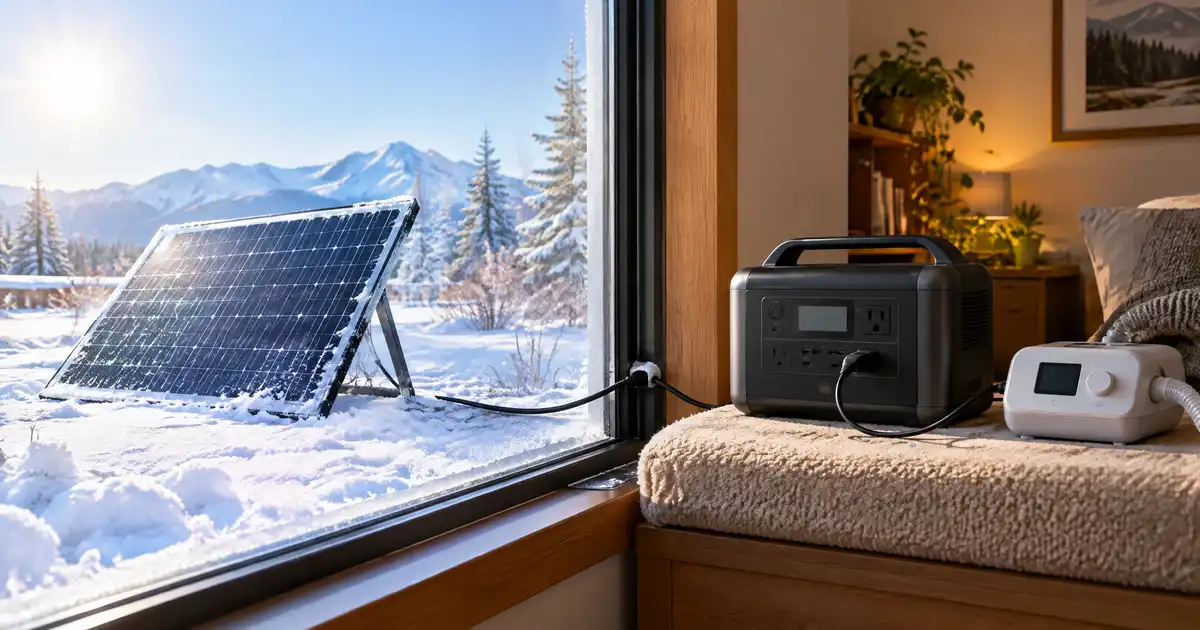
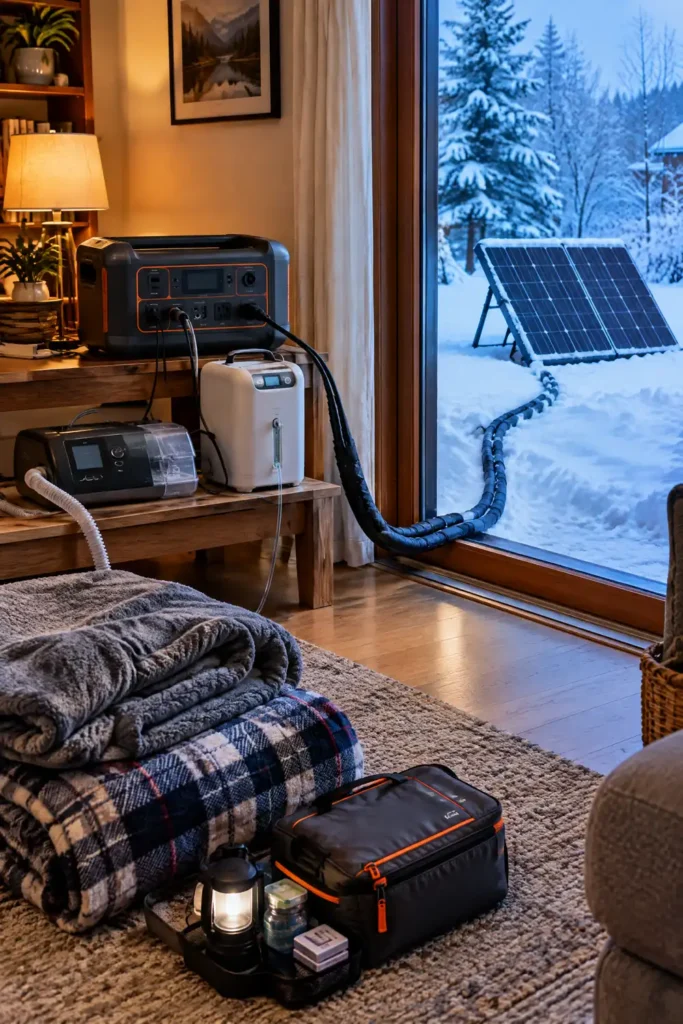
- Keep the power station itself indoors when possible. It can run your device from inside while panels outside feed it, or you can bring it in to recharge once temperatures allow.
- Never leave a battery charging overnight in an unheated garage, shed, or car — if it’s below the charging cutoff, nothing happens anyway, and repeated cold-charging attempts can shorten battery life even when the BMS mostly prevents damage.
- Insulate exposed cable runs where panels connect to the unit, since cold makes some cable jacketing stiffer and more prone to cracking with repeated flexing.
- Keep the medical device itself in its normal operating temperature range, even if the battery powering it is elsewhere. A CPAP or concentrator sitting near a drafty window can drop below its own floor even in a heated house.
What This Means for Backup Planning
Real winter storms change the standard advice to “just get a solar generator.” Size it so you’re not depending on recharging during the coldest stretch of the outage. A larger battery that can run your device through the cold snap on stored charge is more reliable than a smaller one you’re counting on to recharge at 20°F.
For extended multi-day cold-weather outages, this is also where registering as a utility critical-care customer matters most — see our guide to medical power outage patient rights for what that registration does and doesn’t guarantee.
FAQs
Can I charge my solar generator in freezing weather?
Usually not directly — most LiFePO4 power stations stop accepting a charge somewhere between 25°F and 32°F. The battery management system blocks it automatically to prevent internal damage. Bring the unit somewhere warmer to charge, then move it back if needed.
Will cold weather damage my solar panels?
No — cold weather actually improves panel efficiency. The panels themselves aren’t the cold-weather concern; the battery they’re charging is.
How cold can a LiFePO4 battery get and still work?
It can typically discharge (power a device) down to about -4°F (-20°C), well below the point where you can recharge it. Running is fine in serious cold; recharging isn’t, until temperatures climb back up.
Does snow on my solar panels ruin my backup power plan?
Rarely for long. Panels are angled so snow tends to slide off on its own, and light snow can even slightly boost output by reflecting extra light onto the panel. Heavy, prolonged snow cover is the real exception.
What temperature should I worry about for my medical device itself, separate from the battery?
Many portable oxygen concentrators and insulin pumps have their own operating floors in the low-40s°F. Keep the device itself, not just the battery, within a reasonably heated space — a device near a cold window can drop below its floor even indoors.
Bottom Line
Solar battery backup in extreme cold isn’t really a panel problem — panels do fine, even better than usual, in cold weather. The real constraints are the battery’s charging cutoff, typically somewhere between 25°F and 32°F, and your medical device’s own operating floor, often in a similar range.
Plan for running on stored charge through the coldest stretch rather than counting on recharging mid-cold-snap. Keep both the battery and the device itself somewhere reasonably heated, and you’ve addressed the actual cold-weather risk instead of the one most guides focus on.
HSA/FSA Note
Backup power equipment purchased to keep a prescribed medical device running during a winter outage can often qualify as a deductible medical expense under IRS Publication 502, typically with a letter of medical necessity. Our letter of medical necessity template walks through that document and process.
This article reflects manufacturer battery temperature specifications and oxygen equipment cold-weather documentation current as of October 2026. Exact temperature thresholds vary by specific model — confirm your unit’s rated operating and charging range with its manufacturer before relying on it through a cold-weather outage. This is not medical advice; consult your care team about equipment-specific cold-weather precautions.