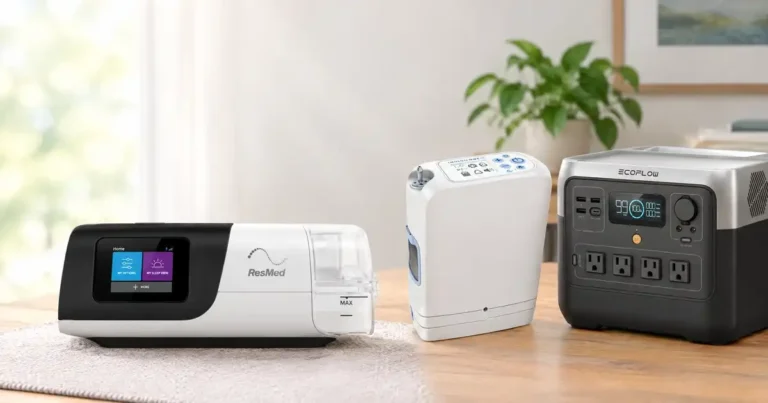
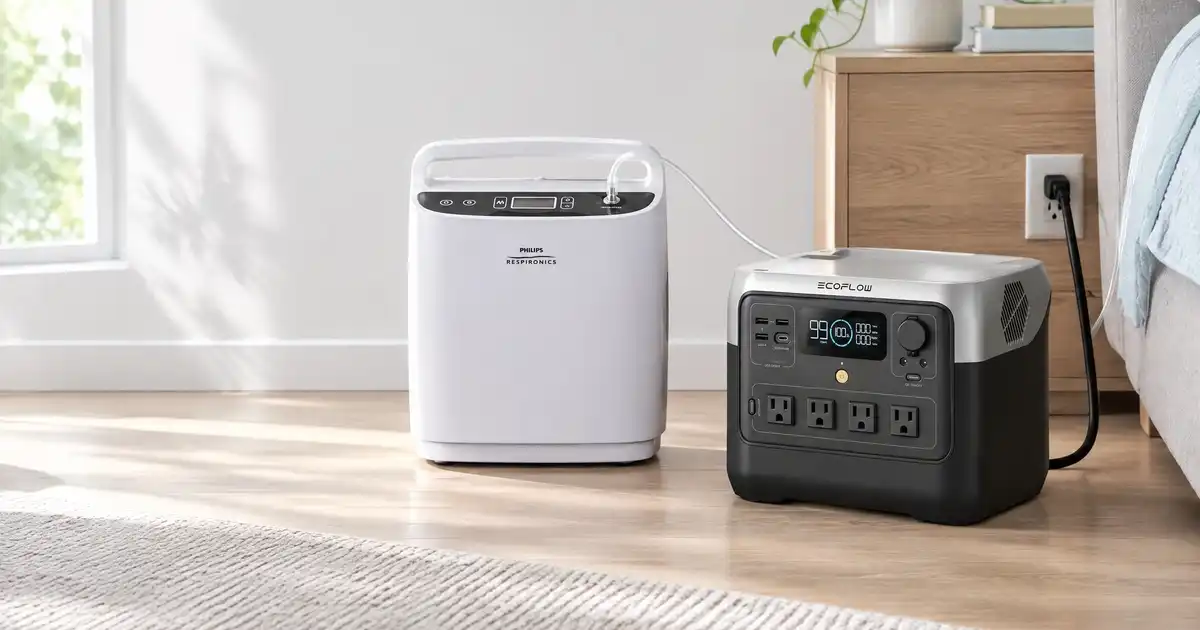
Solar Generator Distance From Medical Equipment: Safe Placement
 By Lee Arnold
Medical Solar Power Backup Specialist | 8+ years in the field
Quick Answer:
There’s no single official “X feet from the power station” rule, and any guide that gives you one made-up number for every situation is oversimplifying. The real answer depends on which hazard you’re actually managing.
For heat and open-flame sources near oxygen equipment, the widely cited consumer guidance is 5 to 10 feet — but a battery-based power station isn’t a flame or heat source the way a space heater is.
The real concern with a power station near oxygen equipment is electrical. Any connection point — a plug, a worn cord, a loose port — can spark under a fault condition, and oxygen-enriched air makes sparks more dangerous than they’d be in normal room air.
Keep cords and connection points away from concentrated oxygen flow, inspect cables regularly, and give the unit itself the ventilation clearance its manual specifies.
Most searches on this topic land on generic “is a solar generator safe indoors” content, including our own guide to that broader question. This one is narrower and more specific: actual placement distances, broken down by the hazard they’re managing, not a single number treated as one-size-fits-all.
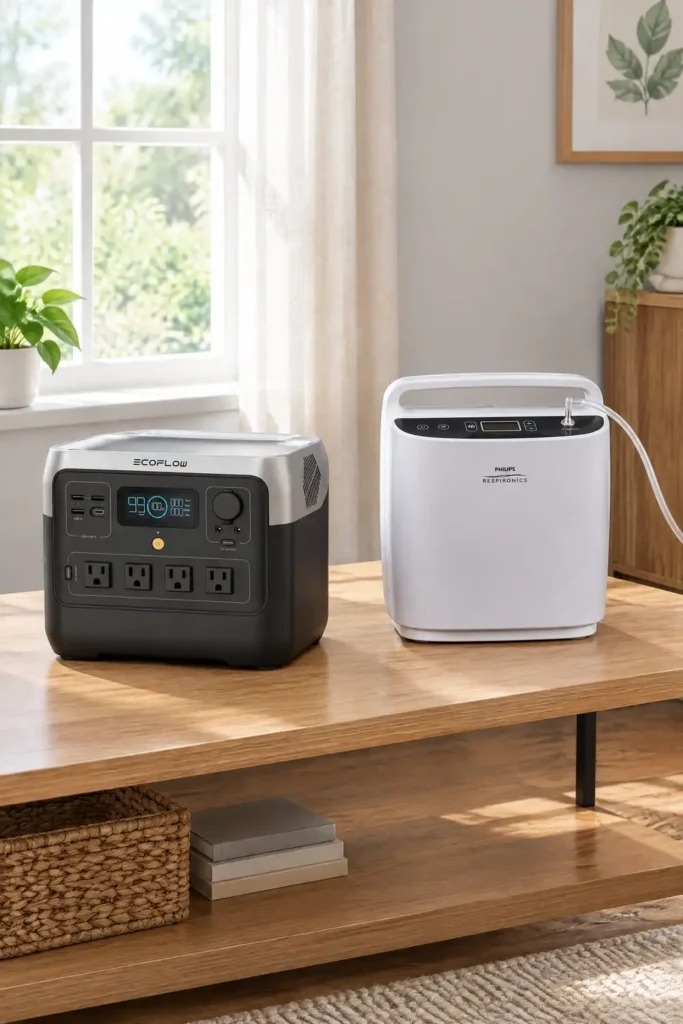
Table of Contents
Why “How Far” Doesn’t Have One Answer
Three separate hazards get lumped together under “safety distance,” and they call for different handling:
Fire and heat — relevant near open flames, space heaters, stoves, and other combustion sources, especially around oxygen.
Electrical fault risk — relevant near any electrical connection point, worse in oxygen-enriched air.
Ventilation and heat buildup — relevant to the power station itself, regardless of what’s nearby.
Treat them as one number and you end up with advice that’s either needlessly restrictive or dangerously vague. Here’s each one separately.
Oxygen Equipment: The Real Fire-Risk Distance
Oxygen itself doesn’t burn, but it dramatically lowers the energy needed to ignite nearby materials and makes fires that do start burn faster and hotter. That’s why oxygen-specific fire guidance exists separately from general electrical safety.
The consumer-facing figure repeated across oxygen safety guides is 5 to 10 feet of separation between oxygen equipment and open flames or heat sources — gas stoves, fireplaces, wood stoves, candles, and space heaters. Oxygen Concentrator Store’s safety guide states this directly.
That figure applies to actual heat and flame sources. A battery-based power station running normally doesn’t produce open flame and isn’t a meaningful heat source from a few feet away, so it isn’t governed by the same 5-to-10-foot rule.
Larger commercial or facility-scale oxygen storage systems follow separate, more conservative codes. Kansas’s own fire marshal guidance specifies 20 feet of separation from combustible materials in non-sprinklered areas.
That’s a facility installation code, not a home-use rule — don’t apply it directly to a portable concentrator and a power station in your living room. It does show how seriously oxygen-adjacent fire risk is taken at scale.
The Real Risk With a Power Station: Electrical Connections, Not the Unit Itself
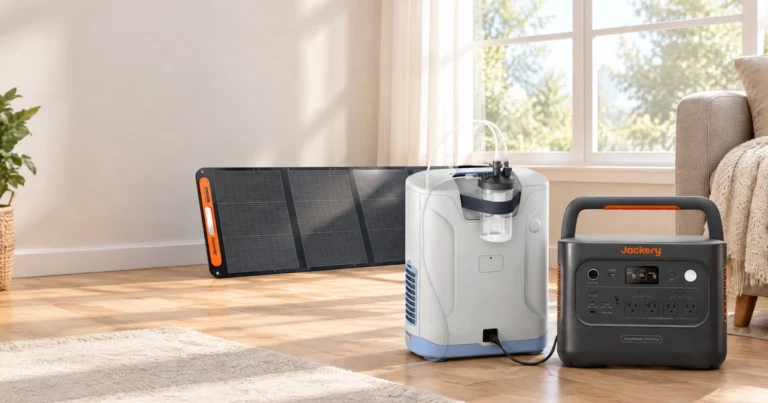
Here’s the distinction most guides skip. The power station’s battery isn’t a fire hazard sitting near oxygen the way an open flame is. The actual risk is at connection points — the plug, the outlet, a worn or damaged cord, a loose port — any of which can produce a small spark under a fault condition.
In normal room air, that kind of spark is often harmless. In oxygen-enriched air, it doesn’t take much to ignite nearby materials. This is a real, physics-based concern, but it doesn’t reduce to one clean number the way “stay 10 feet from a candle” does.
Practical guidance that actually addresses this:
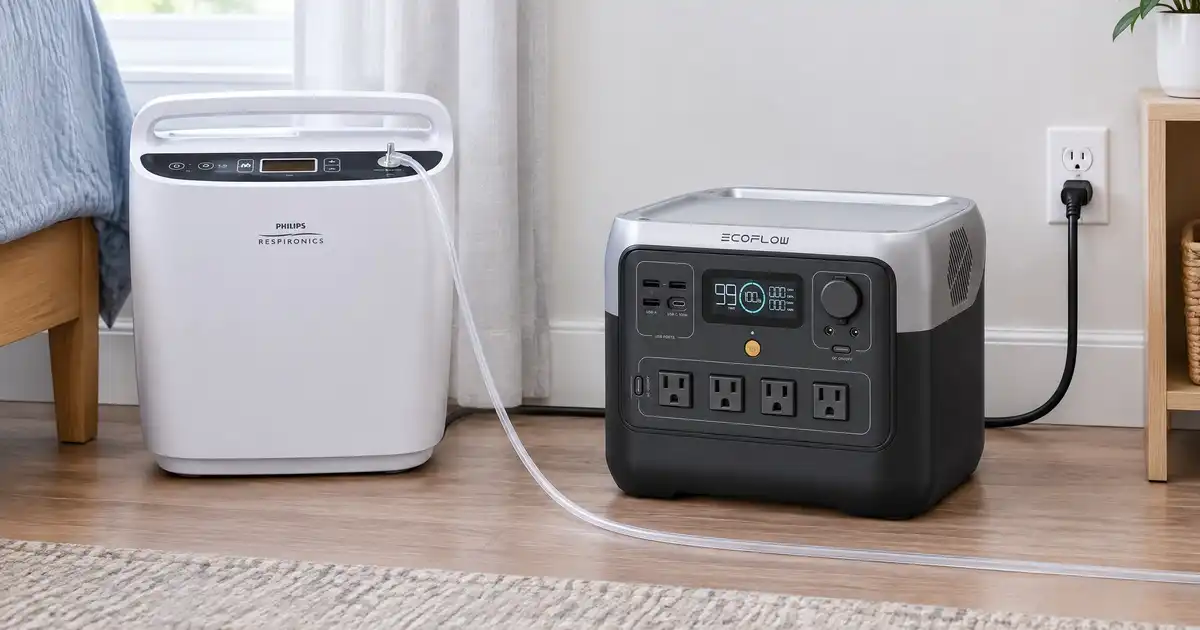
- Don’t run oxygen tubing directly across or touching a power cord or outlet strip
- Inspect cables and connectors for wear or damage before each use — a damaged cord is the actual spark risk, not the equipment sitting nearby
- Avoid plugging or unplugging equipment while oxygen is actively flowing nearby when you can reasonably avoid it
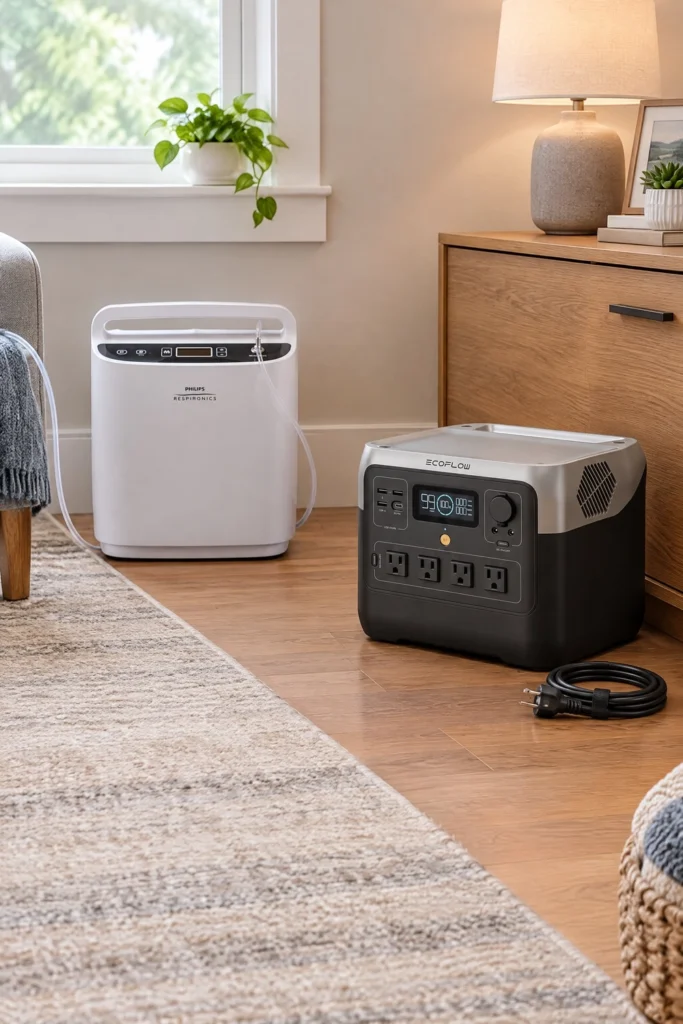
- Keep the power station’s own connection points a few feet from where oxygen tubing routes, as a matter of practical layout rather than a hard rule
Ventilation Clearance for the Power Station Itself
Separate from oxygen risk entirely, a power station needs airflow around it regardless of what else is in the room. Manufacturer manuals commonly specify keeping at least 6 inches of clearance on all sides for heat dissipation during charging and heavy use.
This isn’t a medical-equipment-specific rule — it’s basic electronics safety, the same clearance you’d give any device that generates some internal heat during operation. Check your specific unit’s manual, since clearance requirements vary slightly by model and battery capacity.
CPAP, BiPAP, and Oxygen Concentrators: Device-Specific Notes
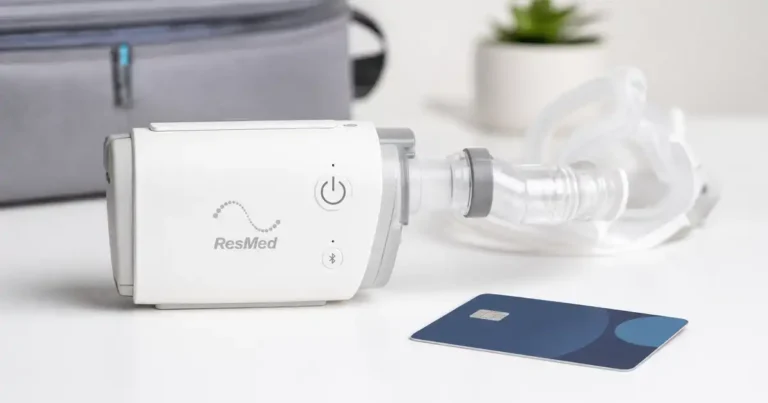
CPAP and BiPAP machines don’t carry the oxygen-enrichment fire risk unless supplemental oxygen is bled into the circuit, which some patients do under a doctor’s direction. If that applies to you, treat the setup like any other oxygen-enriched environment for placement purposes.
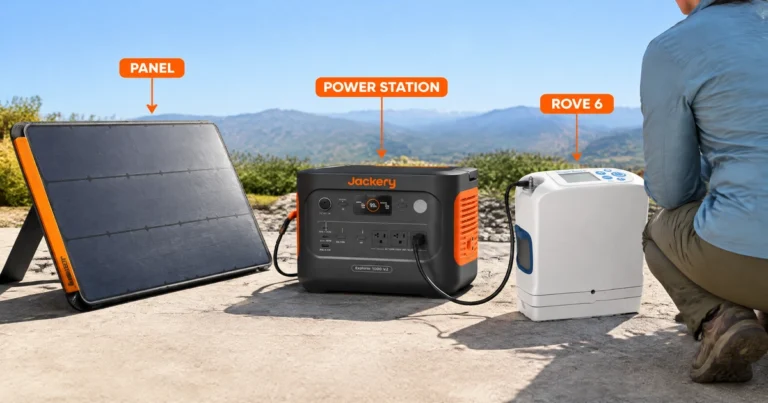
Portable oxygen concentrators draw in room air and concentrate the oxygen internally, so the enriched-air zone is mainly right at the outlet and tubing, not the whole room. Placement distance matters most right around that output point.
Stationary home oxygen concentrators run continuously for longer stretches and often sit in a fixed spot, which makes it worth deliberately routing cords and outlets away from the unit’s output when you first set up the room, rather than working around it later.
How This Differs From Our Indoor Safety Guide
Our indoor solar generator safety guide answers the bigger question — is it safe to run a power station indoors near medical equipment at all. It covers carbon monoxide (gas generators only), heat, and device-by-device indoor use.
This guide goes narrower: the actual distances and placement logic once you’ve already decided indoor use is fine, broken down by which hazard you’re managing rather than treated as one number.
FAQs
Is there an official rule for how far a solar generator should be from an oxygen concentrator?
No single official distance figure exists for battery-based power stations near home oxygen equipment. The sourced 5-to-10-foot rule applies to open flames and heat sources, not to a power station’s battery itself. The real precaution is around electrical connection points, not a fixed number of feet.
Can a portable power station cause a fire near oxygen equipment?
Not from normal operation of the unit itself. The real risk is a spark at a damaged cord, worn connector, or fault condition — which is more dangerous in oxygen-enriched air than normal room air. Inspecting cables regularly matters more than measuring distance in feet.
Do I need to keep my power station away from my CPAP machine?
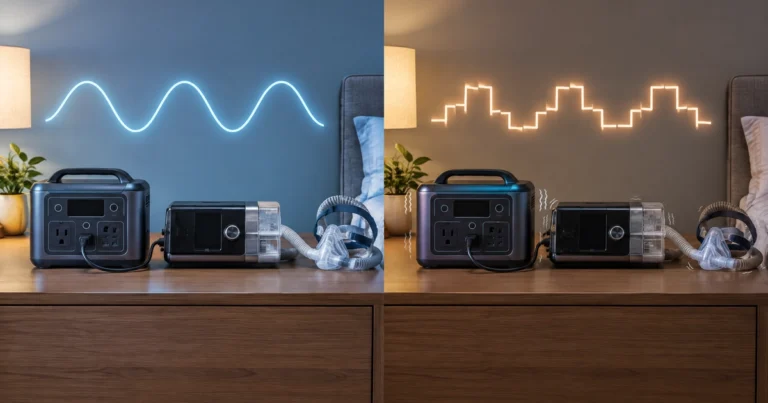
Not for fire-risk reasons, unless you’re running supplemental oxygen through the circuit. Give the power station its manufacturer-specified ventilation clearance (commonly around 6 inches), which is a heat-dissipation requirement, not an oxygen-safety one.
How far should oxygen tubing be from electrical cords?
There’s no single cited figure for this specific pairing, but the practical guidance is to avoid routing tubing directly across or touching cords and outlet strips, and to keep connection points out of the direct oxygen flow path when arranging the room.
Does this apply to gas generators the same way?
No — gas generators carry a separate and more serious hazard, carbon monoxide, which requires roughly 20 feet of distance from any structure per CPSC guidance regardless of medical equipment. That’s a different hazard from the oxygen-ignition and electrical-fault risks this guide covers for battery-based power stations.
Bottom Line
Solar generator distance from medical equipment isn’t one number — it’s three separate hazards that get conflated. Open flames and heat sources near oxygen call for 5 to 10 feet of real separation.
The power station itself isn’t a flame or heat source, so that rule doesn’t apply to it directly. The actual risk is a spark at a damaged cord or connection point in oxygen-enriched air, which calls for careful cable placement and inspection rather than a fixed distance.
And the unit needs basic ventilation clearance — commonly 6 inches — for its own heat dissipation, unrelated to anything medical. Treat these as three separate questions, and you’ll end up with a safer setup than any single rule of thumb provides.
This article reflects Kansas Office of the State Fire Marshal guidance and consumer oxygen-safety documentation current as of October 2026. Always follow your specific power station’s manufacturer manual and your oxygen equipment provider’s safety instructions, which take precedence over general guidance here. This is not medical advice; consult your care team about oxygen safety specific to your equipment and home setup.