Medical Device Power Outage Preparedness Guide (2026)
 By Lee Arnold
Medical Solar Power Backup Specialist | 8+ years in the field
Quick Answer
Medical device power outage preparedness has five core steps. Know your device wattage. Register with your utility as a medical baseline customer. Build a tiered backup: battery, then solar, then generator. Build a communication plan. Test it quarterly. Most grid outages last under 4 hours. Prepare for 72 hours minimum.
A call came in at 6 a.m. last October. A daughter in Tampa. Her father was 74. He ran a CPAP and a home oxygen concentrator.
Hurricane Milton knocked out his grid at midnight.
She found him at the kitchen table six hours later. He was gasping for air. His concentrator sat silent. His CPAP sat dark on the nightstand.
He had no backup plan. No battery. No generator. No registered medical need with his utility.
That call ended in an ambulance.
Eight years of field work and reader calls taught me one truth about medical device power outage preparedness: patients who plan ahead survive outages comfortably, and patients who don’t plan survive them in ERs.
This guide builds your preparedness plan from scratch. It covers every medical device category. Every backup tier. Every utility program. Every government resource.
Work through it once. Test it quarterly. Pass it to your caregiver.
Table of Contents
Who This Guide Is For
This guide covers patients who depend on powered medical devices at home.
The device list is long.
- CPAP and BiPAP machines for sleep apnea
- Home oxygen concentrators (stationary and portable)
- Suction machines for airway management
- Nebulizers and respiratory therapy equipment
- Feeding pumps for enteral nutrition
- Insulin coolers and medication refrigeration
- Infusion pumps for IV therapies
- Home dialysis equipment
- Power wheelchairs and mobility scooters
- Powered hospital beds
- Ventilators (home mechanical ventilation)
- Stair lifts and patient lifts
- Apnea monitors and bradycardia monitors
- TENS and neurostimulation devices
You may run one device. You may run eight. The same preparedness framework covers all of them.
The Five-Tier Preparedness Framework
Think of preparedness as a stack. Each tier adds reliability. Skip a tier and the plan has a gap.
Tier 1: Know Your Devices
Start here. Write down every device in your home that requires power.
For each device, record these four numbers.
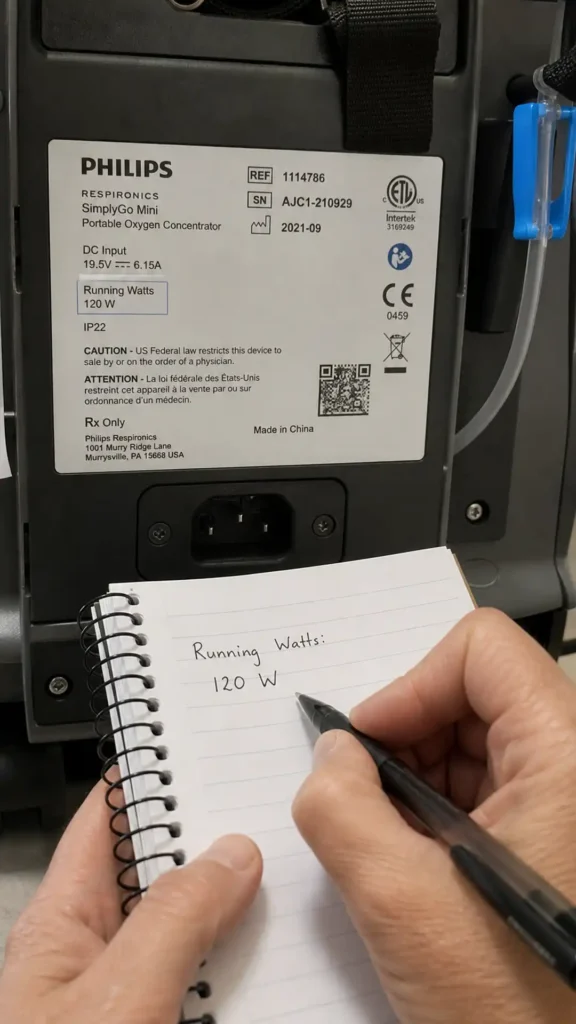
- Running watts (find this on the label or manual)
- Surge watts (startup spike — usually 1.5x to 2x running watts)
- Critical or non-critical (does life depend on this device tonight?)
- How long you need it per day (hours per night, hours per day)
Real numbers from common home medical equipment.
| Device | Running Watts | Surge Watts | Daily Hours |
|---|---|---|---|
| CPAP (no humidifier) | 30-60W | 100W | 8 hrs |
| CPAP (with humidifier) | 55-105W | 150W | 8 hrs |
| Home O₂ concentrator (5L) | 350W | 700W | 24 hrs |
| Portable O₂ concentrator | 40-200W | 400W | varies |
| Suction machine | 30-100W | 200W | as needed |
| Nebulizer | 60-180W | 200W | 3-4x daily |
| Feeding pump | 5-15W | 30W | 12-18 hrs |
| Infusion pump | 10-30W | 60W | varies |
| Power wheelchair charger | 100-200W | 300W | 6-8 hrs |
| Home ventilator | 100-400W | 800W | 24 hrs |
Total your critical-device running watts. Multiply by your daily hours. That number is your minimum backup capacity in watt-hours.
Take this example. A 60W CPAP plus a 10W feeding pump totals 620Wh per day. A patient running a home concentrator (350W, 24hrs) needs 8,400Wh per day. Very different backup requirements.
Tier 2: Register With Your Utility
Every major U.S. utility offers a Medical Baseline or Life Support Equipment program. Most patients never sign up.
These programs provide:
- Priority restoration during grid repairs
- Advance notice of planned outages
- Reduced rate billing for high medical power use
- Direct line access to utility emergency teams
Contact your utility’s customer service. Ask specifically for their Medical Baseline or Life Support Equipment enrollment. They will ask for a physician letter documenting the medical need.
Most programs take 1-3 weeks to process. Do this before storm season.
Tier 3: Build Your Backup Power Stack
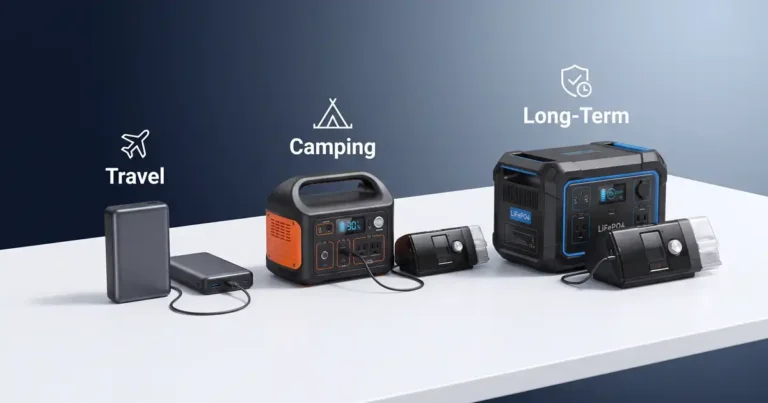
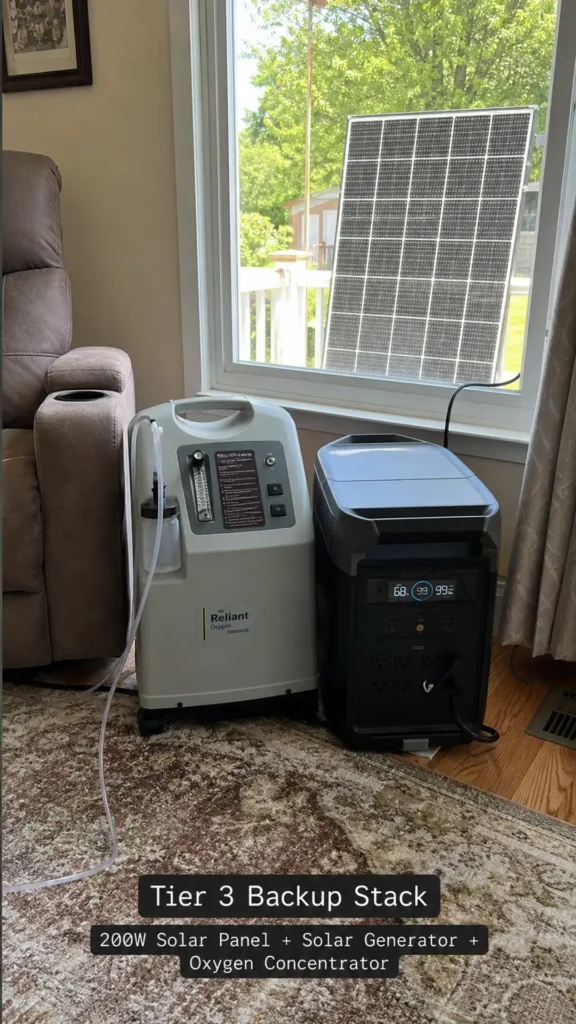
The backup stack has three tiers. Battery for short outages. Solar for medium outages. Generator for multi-day failures.
Battery backup (Tier 3A)
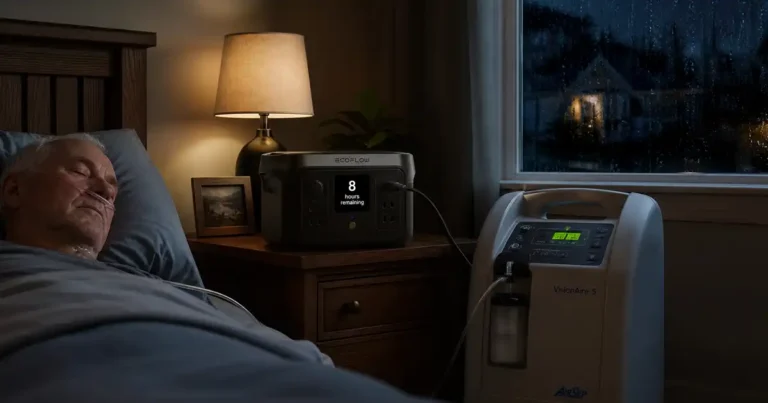
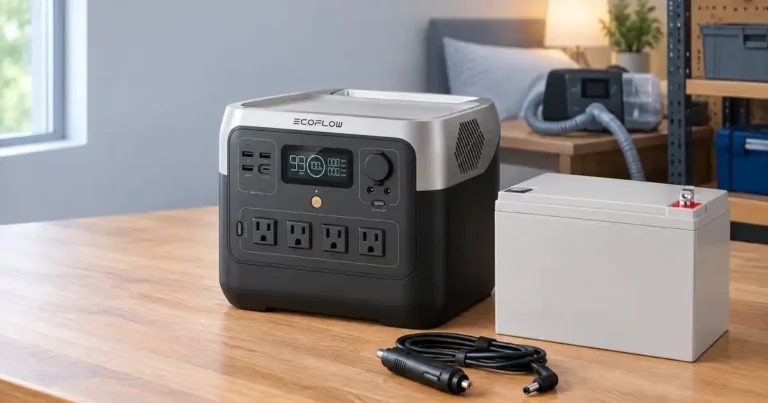
A LiFePO4 portable power station handles outages under 12 hours. Pure sine wave output only. Sub-30ms UPS switchover protects sensitive equipment.
For CPAP patients: a 1,000Wh unit covers 2 full nights with humidifier.
For oxygen patients: 1,000Wh covers 2-3 hours on a 350W unit. Not enough for overnight. But enough to bridge to a generator.
See device-specific guides below for product picks.
Solar input (Tier 3B)
A 200-400W solar panel kit extends your battery indefinitely during daylight outages. Pair panels with your power station. The station buffers for night.
Gas or solar generator (Tier 3C)
Multi-day outages need more than battery storage alone. A pure sine wave gas inverter extends runtime through multiple nights. So does a large solar generator.
Gas generators must run outdoors at least 20 feet from windows. Solar generators run safely indoors.
Tier 4: Communication Plan
Build a contact chain before any storm hits.
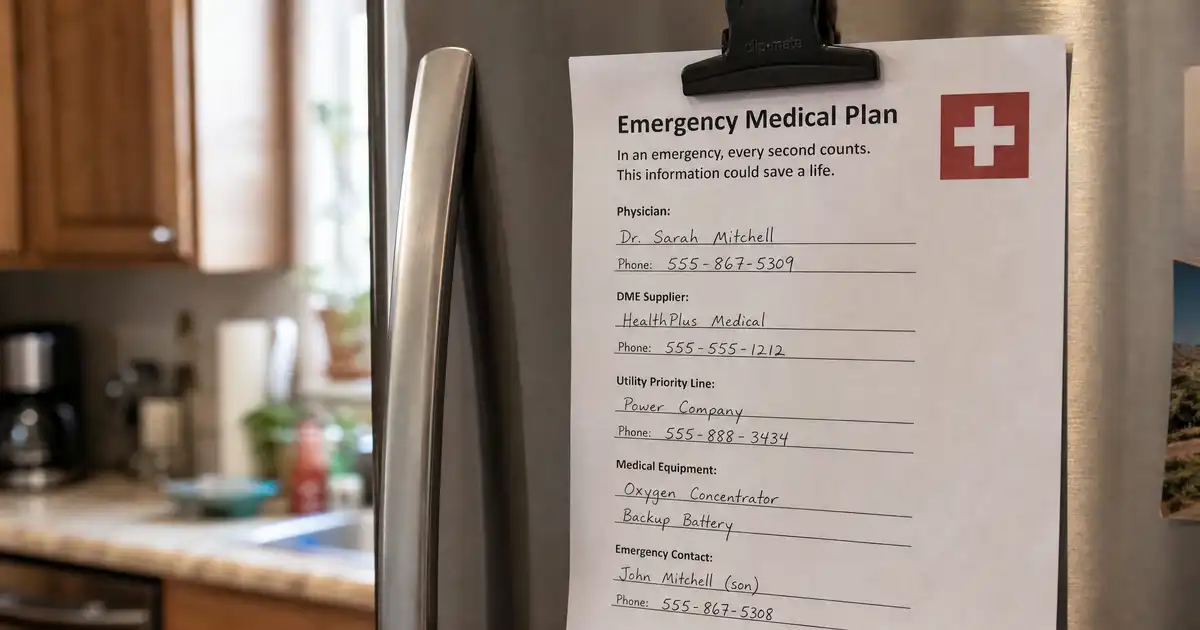
- Your physician’s emergency line and after-hours number
- Your DME supplier’s emergency line
- Your pharmacy’s after-hours refill number
- Your utility’s life support priority line
- Your local emergency management office (many track medical-need residents)
- A neighbor or nearby family member who can assist
Post this list on the fridge. Keep a paper copy in your emergency kit. Your phone battery dies. The paper list survives.
For oxygen patients, contact your supplier 48 hours before any named storm. Most will expedite emergency cylinder delivery.
Tier 5: Test and Practice
A plan never tested is a plan that fails when it matters.
Quarterly dry run schedule.
- Turn the power off to your backup setup
- Run your devices off battery
- Time how long backup lasts
- Check solar panel output
- Top off battery with solar during the test
- Start the generator if you have one
- Practice the full switchover sequence
Mark the calendar now. Most patients run their first test after their first outage. Do it before.
For CPAP-specific testing protocol, see my test cpap backup battery guide.
Device-Specific Quick Reference
Each device category has its own backup guide on MedicSolar. Use this section to find yours fast.
CPAP and BiPAP
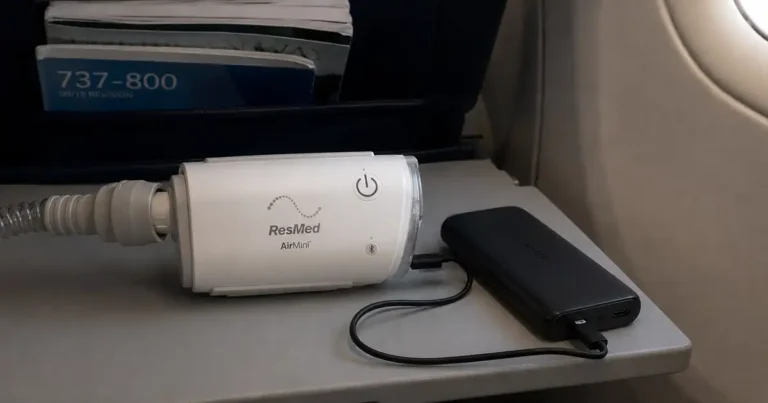
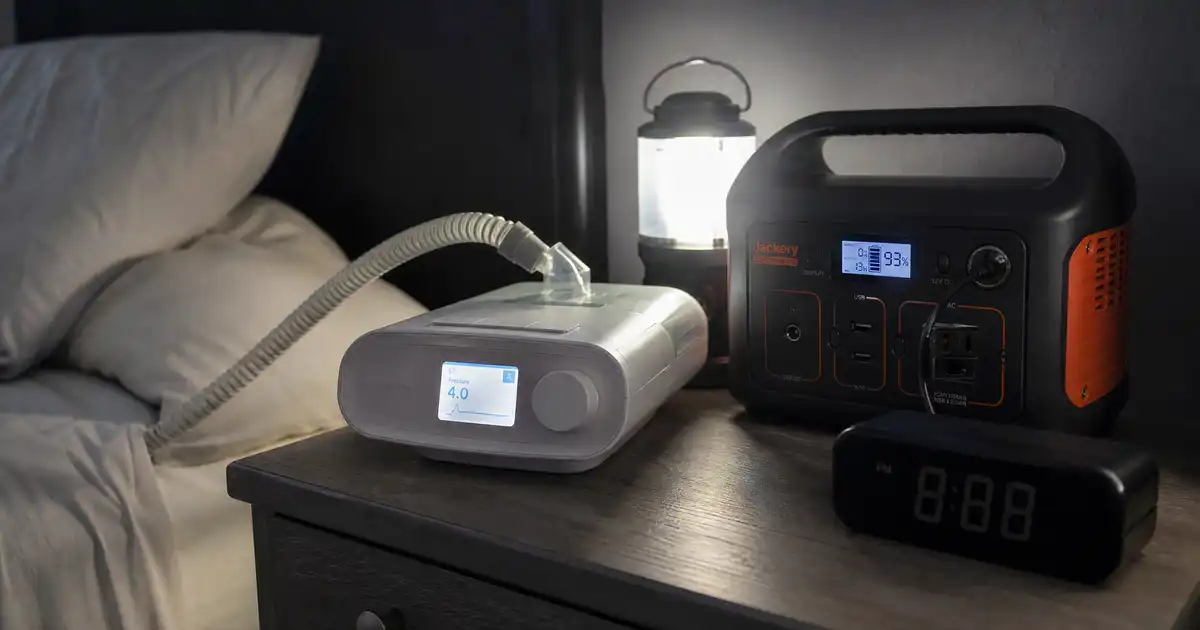
Draw: 30-105W. Low draw makes CPAP the easiest device to back up.
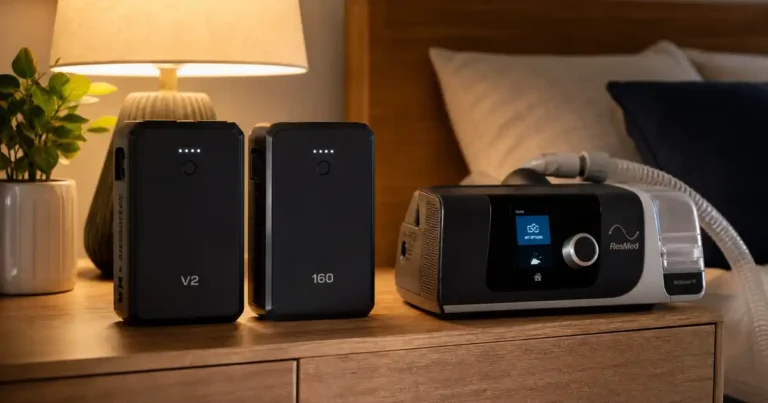
A 500Wh power station covers 2+ nights without humidifier. A 1,000Wh covers 2+ nights with humidifier. Add a DC cord for 20-30% better runtime.
For battery backup picks, see my cpap battery backup pillar.
For solar generator picks, see my cpap generator guide.
For the right power cord, see my airsense 11 power cord guide.
Home Oxygen Concentrators
Draw: 280-600W. The highest-draw home medical device. Requires serious backup.
A 1,000Wh power station covers 2-3 hours on a 350W unit. Multi-day outages need a solar generator or gas inverter.
For battery backup picks, see my battery for oxygen concentrator pillar.
For gas and solar picks, see my oxygen generator guide.
Insulin and Refrigerated Medications
Insulin storage is a different challenge. The goal is cold, not power.
A closed refrigerator holds cold for 4-6 hours. A hard cooler with ice packs extends that to 48 hours. An active medical cooler with battery runs indefinitely with power.
For the full protocol, see my insulin cooling guide.
For solar-powered insulin coolers, see my best solar powered insulin cooler guide.
Nebulizers
Draw: 60-180W. Most treatment sessions last only 5-15 minutes. Even a small battery backup covers multiple treatments.
A 300Wh portable station covers 10+ treatment sessions. Most nebulizer patients need less than 300Wh per day.
Suction Machines
Draw: 30-100W. Many models include internal batteries for 2-8 hours. Check your device manual first.
Most patients need suction for airway emergencies rather than continuous use. A 300-500Wh backup station covers most scenarios.
Feeding Pumps
Draw: 5-15W. Among the lowest-draw medical devices. Most pumps have 8-24 hour internal batteries.
Any 300Wh portable power station covers a feeding pump for multiple nights.
Power Wheelchairs and Scooters
The focus shifts. You’re not powering the chair. You’re charging its battery.
Chargers typically pull 100-200W for 6-8 hours. A 1,000-2,000Wh power station handles one or two full charge cycles. After that, the wheelchair runs on its own battery.
Keep the chair charged above 80% before any storm.
Home Ventilators
Draw: 100-400W. The highest-stakes device on this list. Patients on home ventilators need medical-grade UPS backup. Zero tolerance for switchover gaps.
Work directly with your pulmonologist and respiratory equipment company. They may provide a dedicated medical UPS for your specific ventilator model.
Register with your utility as a life support equipment customer. Contact your local emergency management office. Some counties keep ventilator registries. They provide direct support during declared emergencies.
Multi-Device Household Planning
Some households run 3, 4, or 5 medical devices. The planning math changes.
Add device loads realistically
A CPAP household and an oxygen household share a home. They need very different backup than two CPAP patients.
Total your combined running watts. Multiply by daily hours. Build backup for the sum.
CPAP + O₂ together = 8,880Wh per day minimum.
That daily load needs a large solar generator with expansion batteries. Or a whole-home standby generator. No portable station covers it indefinitely.
Prioritize critical devices
List devices in order of medical criticality. Allocate backup capacity to the most critical first.
Critical first: O₂ concentrator, ventilator, feeding pump, CPAP, nebulizer, wheelchair.
Your backup runs out? The most critical device stays powered.
Designate a backup captain
Every multi-device household needs one person who knows the full plan. Knows every device. Knows the switchover sequence. Knows the contact list.
That person is not always the patient. Designate a spouse, adult child, or neighbor who has rehearsed the plan.
Seasonal Preparedness
Outage risk changes by season. So does your preparation timeline.
Hurricane season (June 1 – November 30)
High-risk zone: Gulf Coast, Atlantic Coast, Caribbean, and inland flood paths.
Preparation timeline.
June 1: Test all backup equipment. Replace aging batteries. Order replacement supplies.
July-August: Refill all prescriptions to 90-day supply. Verify utility registration is active. Update your caregiver contact list.
August-September (peak season): Fill gas cans if you have a gas generator. Freeze additional ice packs. Charge all batteries to 100%.
Named storm approaching (72 hours out): Charge everything. Call oxygen supplier. Contact utility. Move insulin cooler into active use. Fill bathtub with water.
Winter storm season
Ice storms and blizzards knock out power for 3-10 days. Longer than most hurricane outages.
A second threat emerges as the house cools. As temperatures drop, medications near exterior walls may freeze. Move insulin and temperature-sensitive meds away from exterior walls.
A gas generator outdoor placement becomes harder in a blizzard. Plan for a large indoor-safe solar backup as your winter storm primary.
Heat dome events
West Coast heat domes in July and August kill medications fast.
Insulin above 86°F loses potency in hours. A house without AC at 105°F turns dangerous within an afternoon.
Active insulin cooling becomes critical even with grid power intact. See my insulin cooling guide for hot-weather storage.
Government and Insurance Resources
Most medical device patients leave significant resources on the table during emergencies.
FEMA and Ready.gov
FEMA maintains a dedicated resource for people with disabilities at Ready.gov. It covers emergency planning checklists, evacuation planning, and special needs registries.
State special needs registries
Most U.S. states maintain a Special Needs Shelter or Access and Functional Needs registry. Registration puts you on a priority list for declared disaster support.
Contact your county emergency management office to register. This is separate from your utility registration.
CMS and Medicare
Medicare Part B covers certain power-dependent medical devices. Backup batteries may also qualify with a physician Letter of Medical Necessity. Ask your plan about backup power coverage specifically.
Medicaid
Several state Medicaid programs cover backup power for ventilator-dependent patients. Rules vary widely by state. Your DME supplier’s billing team knows your state’s program.
HSA and FSA reimbursement
HSA and FSA plans may reimburse backup power stations and solar generators. Proper documentation is required. See my hsa eligible portable power station guide for the full walkthrough.
The 72-Hour Emergency Kit for Medical Device Patients
FEMA recommends preparing for 72-hour self-sufficiency during any major disaster. For medical device patients, the standard kit needs additions.
Power kit
- Primary backup battery or solar generator (fully charged)
- DC cord for each critical device
- Solar panel (20-400W depending on device)
- Spare power cords and adapters (OEM or UL-certified)
- Extension cords rated for medical load
- Surge protector with medical-grade rating
Device kit
- Paper copy of all device settings and prescription levels
- Spare CPAP mask, tubing, and humidifier water
- Spare oxygen cannula and tubing
- Spare nebulizer medication vials (enough for 72 hours)
- Spare wheelchair batteries (if applicable)
- Emergency contact sheet for DME suppliers
Medication kit
- 7-day supply of all critical medications
- Insulin cooler (fully operational and charged)
- Ice packs (frozen and ready)
- Frio cooling wallets as backup for active-use insulin
- Paper copy of all prescriptions
- Physician emergency contact number
Document kit
- Medical device prescriptions (paper copy)
- Insurance cards and Medicare/Medicaid ID
- Primary physician contact and after-hours line
- DME supplier emergency contact
- Utility account number and life support registration confirmation
- Emergency management registration confirmation
Store the document kit in a waterproof bag. Keep copies in two locations.
FAQs From Real Readers
How long should I prepare for?
FEMA recommends 72 hours as the minimum. Most U.S. power outages resolve within 4 hours. Major storms can last 3-10 days. Hurricane-zone medical patients should prepare for 7 days minimum.
Does registering with my utility guarantee faster restoration?
Registration puts you on a priority list. It does not guarantee a specific timeline. Utilities prioritize hospitals and emergency services first. Medical customers come next. It is better than no registration.
My device has a backup battery built in. Do I still need a power station?
Yes. Internal batteries last 2-24 hours depending on the device. A separate power station extends that window significantly. Internal and external backup layers are always better than one.
Should I evacuate or stay home during a long outage?
The answer depends on your device. CPAP and nebulizer patients can shelter in place with proper backup. Home ventilator patients should evacuate to medical shelter. Do this if the outage stretches past your backup capacity.
Can I use a whole-home standby generator instead?
A Generac or Kohler standby generator costs $5,000-$15,000 installed. It covers indefinite outages on natural gas or propane. For high-load multi-device households in severe outage zones, it may fit. For most patients, a portable solar generator is more cost-effective.
How do I find my device’s wattage?
Three places. The label on the back or bottom of the device. The user manual. The manufacturer’s website product page. Wattage is usually listed under “Specifications.”
Can my power station run two medical devices at once?
Yes. The combined watt draw must stay within the station’s output rating. A 1,800W station handles CPAP plus nebulizer plus small accessories.
What if I can’t afford backup power equipment?
Contact your state’s Low Income Home Energy Assistance Program (LIHEAP). Some states provide emergency equipment grants for medical-need households. Your DME supplier’s billing team knows local programs. Some nonprofit hospitals run medical emergency equipment programs as well.
Bottom Line
Medical device power outage preparedness is not a one-time purchase. It’s a living plan.
Know your devices. Register with your utility. Build your backup stack. Build your communication chain. Test it quarterly.
Patients who plan on a calm Sunday breathe through every storm season. Patients who skip it end up where that Tampa father ended up.
Your medical device keeps you alive. Your preparedness plan keeps your device running.
Build it today.