HSA Eligible Portable Power Station: The Complete 2026 Reimbursement Guide
 By Lee Arnold
Medical Solar Power Backup Specialist | 8+ years in the field
Quick Answer:
An HSA eligible portable power station must primarily operate a prescribed medical device.. Get a Letter of Medical Necessity from your doctor. Keep the receipt. Submit both to your HSA administrator. The IRS basis: Publication 502 covers costs to operate medical equipment. This guide covers the exact documentation process.
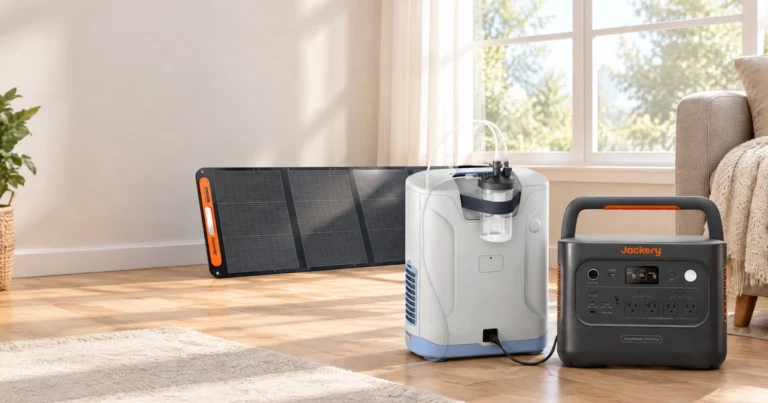
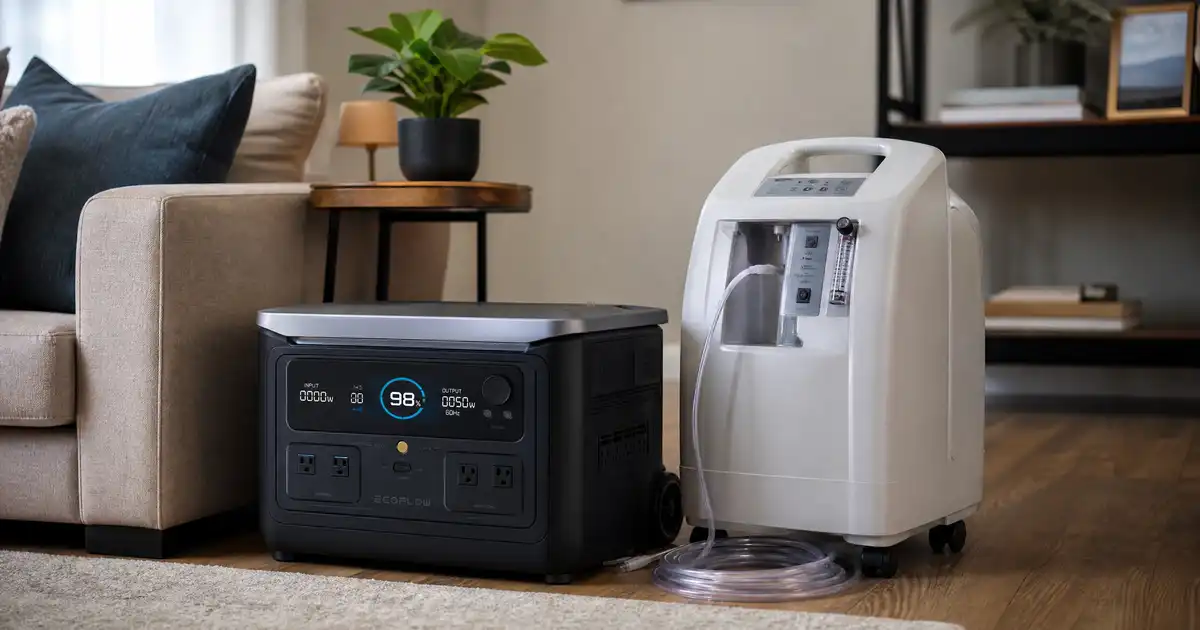
A reader in Georgia emailed me last May. She’d bought a 1,000Wh power station for her husband’s home oxygen concentrator. Spent $649.
Six months later, her accountant pointed out something she’d missed. Her HSA had been sitting with untouched contributions. The power station likely qualified for reimbursement.
She filed the claim with a Letter of Medical Necessity. Three weeks later, $649 landed back in her account.
That email is why I built this HSA eligible portable power station guide, since most medical device patients never ask the HSA question.
Most medical device patients never ask the HSA question. They buy the battery. They use it. They move on. Hundreds of dollars in tax-advantaged reimbursement sit unclaimed.
This guide covers everything. The legal basis. The documentation. The filing process. What qualifies. What doesn’t. And which power stations to buy when you’re filing an HSA claim.
One important note before we go further. This guide covers general information based on IRS Publication 502. It is not tax advice. Consult a qualified tax professional or HSA administrator before filing any claim. Rules can vary by plan and by year.
Table of Contents
What “HSA Eligible Portable Power Station” Actually Means
The IRS doesn’t publish a list of approved products. IRS Publication 502 defines the category. Medical equipment and costs to operate and maintain it.
Publication 502 covers medical equipment, supplies, and diagnostic devices. It also covers costs of operating and maintaining such equipment.
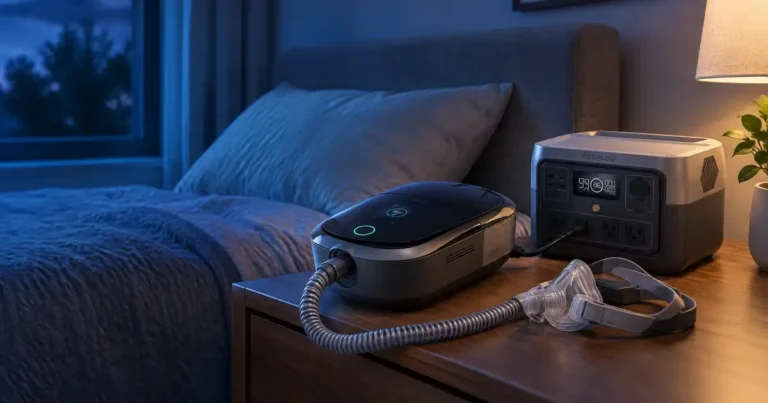
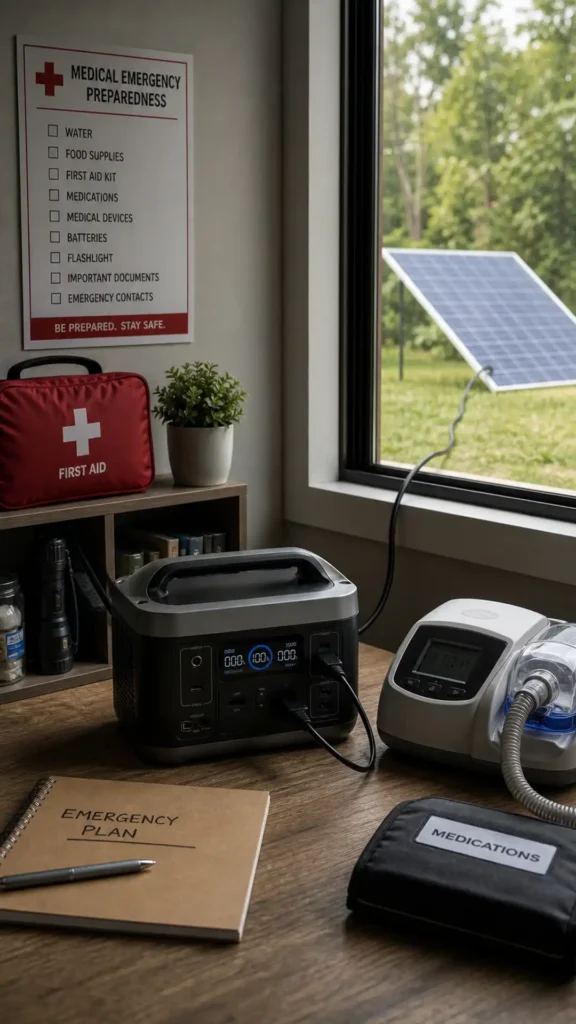
A portable power station backing up a CPAP or oxygen concentrator fits. The key word: “primarily.” The purchase must be primarily for medical use. Not general camping or home convenience.
A power station bought specifically for a CPAP patient passes that test. One bought for RV tailgating that also runs a CPAP does not.
The Legal Foundation: IRS Publication 502
Publication 502 governs qualified medical expenses for HSA, FSA, and tax deductions.
Key sections relevant to power stations.
Medical equipment and supplies: Any equipment prescribed by a physician for a diagnosed medical condition qualifies. CPAP machines, oxygen concentrators, nebulizers, ventilators, feeding pumps, and infusion pumps all fall under this category.
Operating and maintaining costs: The IRS explicitly covers costs to keep medical equipment running. This includes batteries, replacement parts, and supplies. A backup power station ensures continuous operation of life-sustaining equipment. That fits the operating-and-maintaining framework.
Dual-purpose purchases: Items used for both medical and non-medical purposes require a Letter of Medical Necessity and may only qualify in part. A power station used exclusively for medical backup has no dual-purpose issue.
The authoritative source is the IRS Publication 502 document itself. Your HSA administrator should also be familiar with these rules.
HSA vs FSA vs HRA: Key Differences
Three account types cover medical equipment. Each works differently.
HSA (Health Savings Account)
- Available only with a High-Deductible Health Plan (HDHP)
- 2025 contribution limit: $4,300 for individuals, $8,550 for families
- Funds roll over year to year — no deadline to use the money
- Account belongs to you, not your employer
- Triple tax advantage: contributions pre-tax, growth tax-free, withdrawals tax-free
- Best for planning large purchases (a $1,000 power station is easy to fund over time)
FSA (Flexible Spending Account)
- Available through employer-sponsored plans
- 2025 contribution limit: $3,300 per year
- Use-it-or-lose-it with limited carryover (maximum $660 carryover from 2025 to 2026)
- Employer owns the account
- Works well for planned purchases within the current plan year
- Act before December 31 — any FSA balance above $660 disappears
HRA (Health Reimbursement Arrangement)
- Employer-funded only (you don’t contribute)
- Employer sets the rules on what qualifies
- Reimbursement limits and categories vary by employer
- Contact your HR department to confirm power station eligibility
For most readers, HSA is the best path for large power stations. The rollover feature lets you save without a deadline.
Who Qualifies for Reimbursement
Three conditions must be true for a power station claim to pass.
1. You have a prescribed medical device
Your CPAP, oxygen concentrator, or nebulizer must be prescribed by a physician. The prescription establishes medical necessity.
CPAP machines require a prescription by FDA rule. Oxygen concentrators require a physician order. Most home medical devices already meet this requirement.
2. The power station primarily backs up that device
The power station must primarily operate your medical device during power failures. A written connection between the two establishes medical purpose.
3. You have a Letter of Medical Necessity
A physician-signed letter. It connects your medical condition, your device, and your backup power need. This document is the backbone of your claim.
The Letter of Medical Necessity: What It Must Say
The Letter of Medical Necessity (LMN) is your claim’s most important document. HSA administrators review it before approving reimbursement.
Who writes it
Your primary care physician, specialist, or any licensed prescriber. The best choice: the doctor who manages your medical device use.
What it must include
A complete LMN includes these elements.
Patient information: Your full name, date of birth, and insurance ID (if applicable).
Diagnosis: The specific medical condition requiring the device. Sleep apnea (ICD-10 code G47.33). Hypoxemia. Chronic respiratory failure. The specific diagnosis strengthens the claim.
Prescribed device: The exact device requiring power backup. “ResMed AirSense 11 CPAP machine” is better than “breathing device.”
Medical necessity statement: Why the device is medically necessary. Why power interruption poses a medical risk.
Backup power necessity statement: Why a portable power station is medically necessary. This is the key sentence. Something like: “Due to [diagnosis], this patient requires uninterrupted operation of [device]. A portable power backup station is medically necessary to maintain therapy during power outages.”
Physician signature and credentials: Signed and dated. With the physician’s NPI number if possible.
Date and duration: The date of the letter. Some administrators require annual renewal. Others accept a one-time letter.
Sample language for the power station section
Ask your physician to include this statement.
“The purchase of a portable power station for backup power supply is medically necessary to ensure continuous operation of the patient’s [device name] during power interruptions.”
Some physicians are unfamiliar with writing LMNs for power stations. Print this guide and bring it to your appointment. Explain that your HSA administrator needs a written link. Your diagnosis, your device, and the backup power need — all connected.
Recommended Power Stations for HSA Claims
Not every power station makes an equally strong HSA claim. LiFePO4 cells, pure sine wave, and UPS switching support the HSA claim.
These picks carry the specs HSA administrators look for.
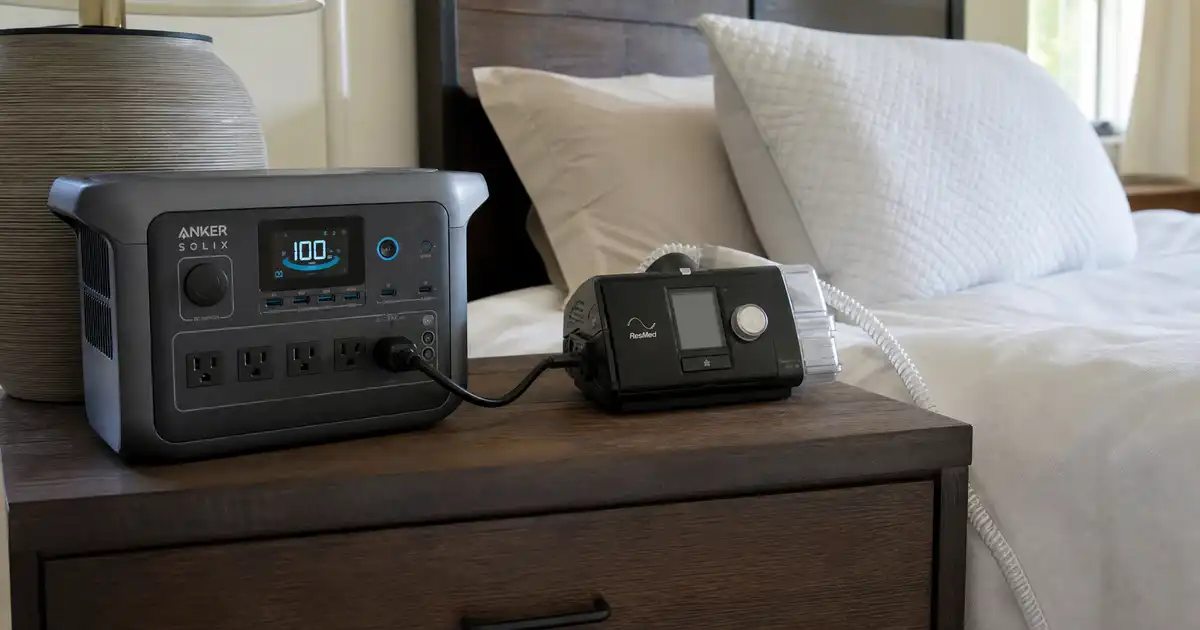
Best for CPAP Patients — Anker SOLIX C1000 Gen 2
The C1000 Gen 2 carries 1,024Wh of LiFePO4. It pushes 2,000W of clean pure sine wave AC. The 10ms UPS switchover means your CPAP never sees a gap. 4,000-cycle battery life spans over 10 years.
For a CPAP HSA claim, this unit’s specs reinforce medical necessity. A 10ms UPS and 10-year battery signal purpose-built medical use.
Price range: $429-$599. A single HSA claim recovers the full cost tax-free.
Best for Oxygen Patients — Bluetti AC200L
The AC200L starts at 2,048Wh and expands to 8,192Wh. It pushes 2,400W continuous with ≤10ms UPS. Expandable for multi-day outage scenarios.
For an oxygen patient, the larger capacity justifies a larger HSA claim. At $999-$1,499, the reimbursement covers a meaningful portion of annual HSA contributions.
The 1,200W solar input and expansion support a strong medical backup argument.
Best Budget HSA Claim — EcoFlow Delta 2
The Delta 2 packs 1,024Wh at $649-$749. It pushes 1,800W of pure sine wave AC. The 30ms EPS switchover covers CPAP safely. Expandable to 3,040Wh.
For HSA balances of $400-$800, the Delta 2 fits one year’s contribution. The expandability supports future claims for expansion batteries.
Step-by-Step: How to File Your HSA Claim
The process varies by administrator. Most follow this general sequence.
Step 1: Purchase the power station
Pay with your personal card, not your HSA card. You’ll reimburse yourself afterward. Keep the receipt. Note the model number, serial number, and purchase date.
Some administrators allow direct payment with the HSA debit card. Confirm with your specific plan before purchase.
Step 2: Get your Letter of Medical Necessity
Schedule an appointment with your physician. Bring a written request explaining you need an LMN for HSA reimbursement. Note the power station by name. Bring the device prescription.
Allow 5-10 business days for the letter to be prepared.
Step 3: Log into your HSA administrator portal
Major administrators include HealthEquity, Fidelity HSA, HSA Bank, and Optum Bank. All have online claim portals. Log in and locate the reimbursement request section.
Step 4: Submit the claim
Upload the following documents.
- Itemized receipt for the power station (showing model, date, and price)
- Letter of Medical Necessity from your physician
- Your medical device prescription (if the administrator requests it)
Some administrators have a specific category for medical equipment. Select “Durable Medical Equipment” or “Medical Equipment and Supplies” if prompted.
Step 5: Track the decision
Most administrators process claims within 5-10 business days. Some take up to 30 days.
Approved: Funds transfer to your bank account or stay in your HSA.
Denied: You can appeal. The denial letter explains why. Common reasons: missing documentation, unclear medical necessity, or plan policy differences. An appeal with a stronger LMN often reverses the decision.
Step 6: Keep everything for 7 years
The IRS can audit HSA withdrawals up to 6 years back. Keep these documents together.
- Purchase receipt
- Letter of Medical Necessity
- Device prescription
- Claim submission confirmation
- Reimbursement record
A simple folder labeled “HSA Medical Equipment 2026” works fine. Paper or digital.
What Documentation to Keep
This cannot be overstated. The IRS considers undocumented HSA withdrawals as non-qualified distributions. Undocumented HSA withdrawals trigger income tax plus a 20% penalty under 65.
Document everything.
| Document | Why It Matters |
|---|---|
| Device prescription | Establishes medical necessity of the device |
| Letter of Medical Necessity | Connects the power station to medical use |
| Purchase receipt with model number | Proves what was purchased and when |
| Claim submission record | Confirms you reported the withdrawal |
| Reimbursement confirmation | Shows the withdrawal matched a qualified expense |
| HSA account statement | Shows the transaction in your records |
Store digital copies in two places. A cloud folder and a local backup. Paper copies in a dedicated medical file.
What Does NOT Qualify
Some power station purchases will not pass HSA review.
General-purpose purchases without medical connection
A power station bought before a camping trip does not qualify. Neither does a unit bought as whole-home backup. The purchase must be primarily for medical device operation.
No Letter of Medical Necessity
Even a clearly medical-use purchase gets denied without the LMN. Administrators need the physician documentation.
Claims submitted after the FSA plan year ends
FSA funds must be claimed within your plan year. A grace period may apply. HSA claims have no deadline restriction. Know which account you’re using.
Power stations used primarily for non-medical loads
Such a setup fails the IRS primary-purpose test.
Generators for non-medical households
A whole-home standby generator purchased for general convenience does not qualify. A portable generator bought for medical backup may qualify with proper documentation.
Medicare and Private Insurance
HSA and FSA reimbursement are different from insurance coverage.
Medicare Part B
Medicare does not cover portable power stations or backup batteries. Coverage applies to the medical device itself, not its power backup.
Some Medicare Advantage plans have supplemental benefits that cover emergency preparation equipment. Call your plan and ask specifically.
Private insurance
Some private plans cover power backup for ventilator-dependent patients. Coverage for CPAP or oxygen backup is rare. Still worth asking about.
Contact your insurer before purchasing. Get any coverage confirmation in writing. Save the call reference number.
LIHEAP and state assistance
LIHEAP funds sometimes cover medical necessity energy costs. Your state’s program may offer grants for medical device power needs. Contact your state energy assistance office for details.
Can You Claim Multiple Items?
Yes. The LMN covers the medical necessity. Each purchase needs its own receipt.
Common HSA-eligible medical power purchases that often qualify together.
- The portable power station itself
- A DC cord for more efficient CPAP operation
- Solar panels primarily used for medical backup charging
- An insulin cooler with battery backup (for diabetic patients)
- Replacement batteries for the same power station
Each item needs a receipt. The LMN should cover all backup power gear. The LMN should also cover solar panels and accessories.
Common Mistakes
These errors get claims denied or create audit risk.
Mistake 1: Using the HSA card directly without checking
Some administrators flag direct purchases of non-traditional items. Call ahead. Many recommend personal card + self-reimbursement for large unusual purchases.
Mistake 2: Filing without an LMN
The single most common denial reason. Get the letter before filing.
Mistake 3: Buying a power station for multiple uses
A CPAP-plus-TV-plus-AC setup has a mixed-use issue. Allocate carefully. Only the medical portion may qualify.
Mistake 4: Ignoring FSA deadlines
FSA funds expire. Many readers lose $500-$3,300 in FSA funds every December. They never spent the money on qualifying purchases. A power station before year-end can save thousands.
Mistake 5: Not keeping records for 7 years
The IRS can audit 6 years back. Without documentation, a qualifying HSA withdrawal becomes a taxable distribution with penalties.
Mistake 6: Assuming denial means no
HSA administrator denials are not final IRS rulings. You can appeal. You can submit a stronger LMN. You can consult a tax professional who specializes in HSA disputes.
FAQs From Readers
Does a CPAP machine itself qualify for HSA?
Yes. CPAP machines, masks, and supplies are HSA and FSA eligible. No LMN required. IRS Publication 502 covers them directly. A power station requires an LMN. The CPAP does not.
Can I claim the power station and the CPAP in the same year?
Yes. Each is a separate claim with its own receipt. Both can be submitted in the same tax year.
My FSA plan ends December 31. Can I still buy a power station?
Yes, if you buy and pay before December 31. The expense must be incurred during the plan year. File the reimbursement claim before your plan’s deadline.
What if my HSA administrator denies the claim?
Appeal the denial. Submit a more detailed LMN. Include IRS Publication 502’s language about medical equipment operating costs. Consult a tax professional. Denials from plan administrators are not IRS rulings.
Do I need a new LMN every year?
It depends on your administrator. Some accept a one-time LMN. Others require annual renewal. Ask your plan before filing.
Can I claim a power station purchased last year?
For HSA: yes, if the expense occurred after your HSA was opened. No deadline. For FSA, the expense must fall within the current plan year. Check your plan’s rules.
What is the maximum HSA reimbursement for a power station?
No specific cap. HSA covers qualified expenses up to your available balance. A $1,500 power station claims $1,500 from your HSA. Your balance must cover it and the claim must be approved.
Can solar panels qualify too?
Possibly. Solar panels bought primarily for medical device charging may qualify. Use the same “operating and maintaining medical equipment” framework. The LMN should cover solar equipment explicitly.
Are insulin coolers HSA eligible?
Yes, with an LMN linking insulin storage to a diabetes diagnosis. See my best solar powered insulin cooler guide for product picks.
Should I hire a tax professional for this claim?
Simple claims: one station, one device, LMN ready. Most readers handle these alone. Complex claims: multiple items, partial use, or denied appeal. Hire a CPA.
Bottom Line
A power station backing up a medical device qualifies as HSA eligible. IRS Publication 502 is the basis.
The process: one physician visit, one letter, one receipt, one claim. Most administrators approve within two weeks.
A typical power station purchase runs $400-$1,500. Tax-free HSA reimbursement drops the effective cost by your marginal tax rate. At 25%, a $1,000 purchase effectively costs $750.
That math works every single time.
Get the Letter of Medical Necessity. File the claim. Keep the records for 7 years. One final reminder: consult a qualified tax professional before any HSA claim. Rules vary by plan. This guide reflects general IRS Publication 502 principles. Not advice for your specific situation.