Medical Battery PPE Safety Kit: What Home Backup Power Actually Requires (Often Nothing)
 By Lee Arnold
Medical Solar Power Backup Specialist | 8+ years in the field
Quick Answer:
A medical battery PPE safety kit means something different depending on which battery is actually in your setup. Most portable power stations use sealed LiFePO4 cells and need no routine protective gear at all.
A lead-acid battery — still common in medical-grade UPS units — is the one that actually calls for OSHA-style PPE: acid-resistant gloves, splash goggles, and ventilation, because of real acid and hydrogen gas exposure.
The one myth worth correcting up front: NFPA’s own consumer guidance states plainly that typical fire extinguishers don’t work on lithium-ion battery fires. For LiFePO4, the real “safety kit” is prevention and an evacuation plan, not firefighting gear.
Most search results for this topic are industrial forklift-battery-room PPE kits, built for people who water and charge lead-acid batteries all day in a warehouse. That’s not what a home medical backup setup needs, and buying that kit for a portable power station is solving the wrong problem.
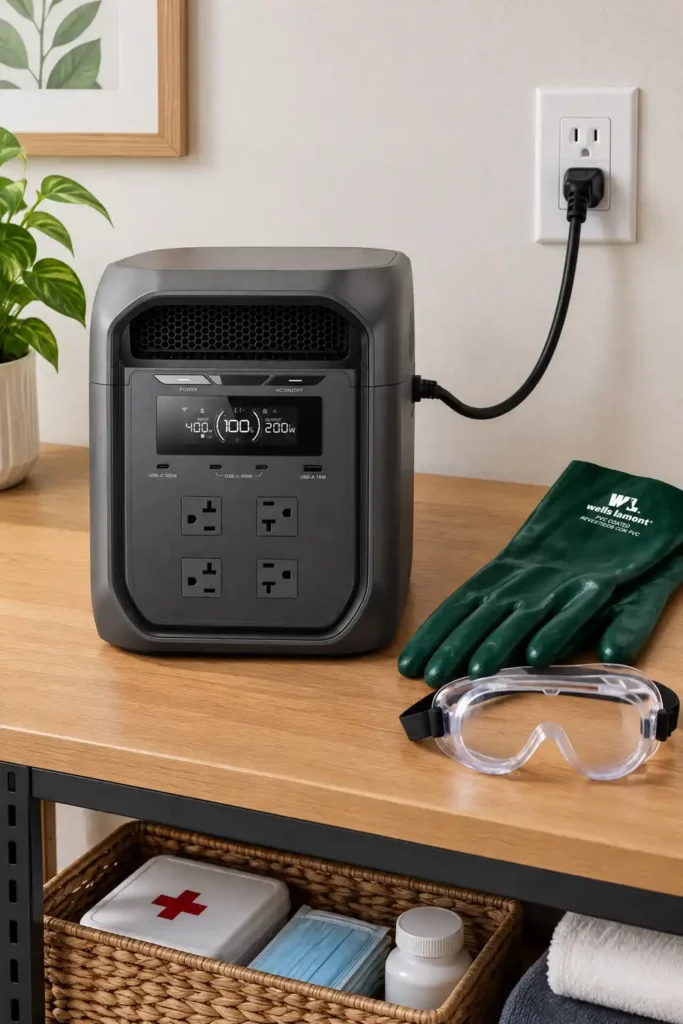
Table of Contents
Why This Depends Entirely on Which Battery You Have
“Battery” isn’t one thing here. Two chemistries show up across medical backup power, and they carry genuinely different real-world hazards:
LiFePO4 (lithium iron phosphate) — the chemistry in most modern portable power stations, including the ones we recommend most often on this site. Cells are sealed, and normal charging and operation don’t expose you to any chemical.
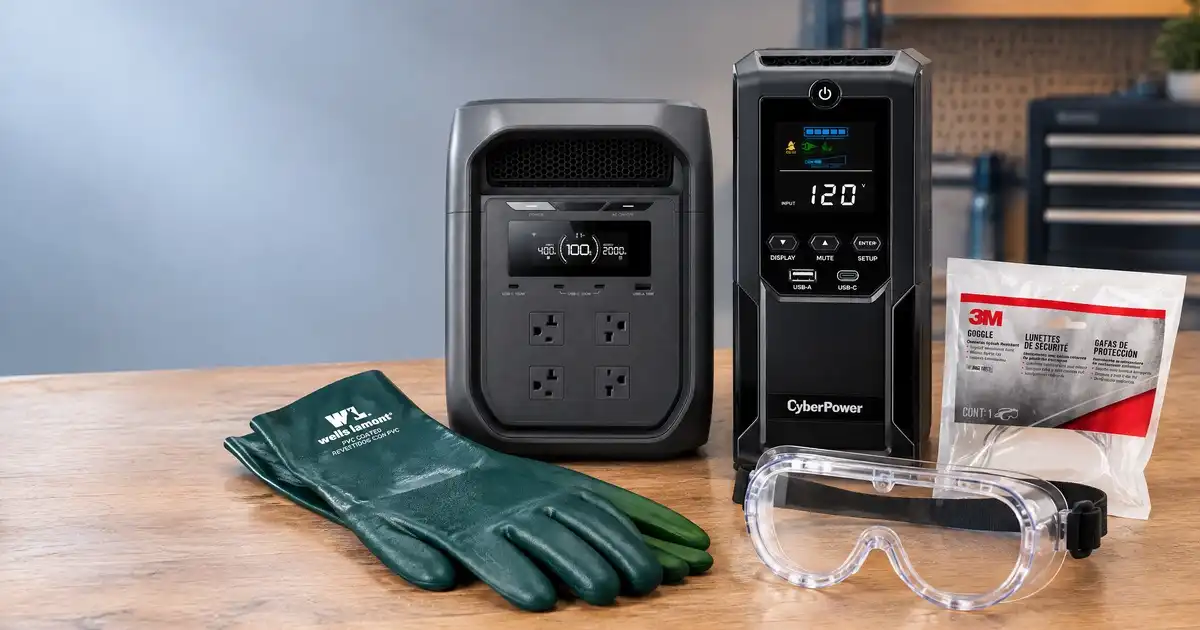
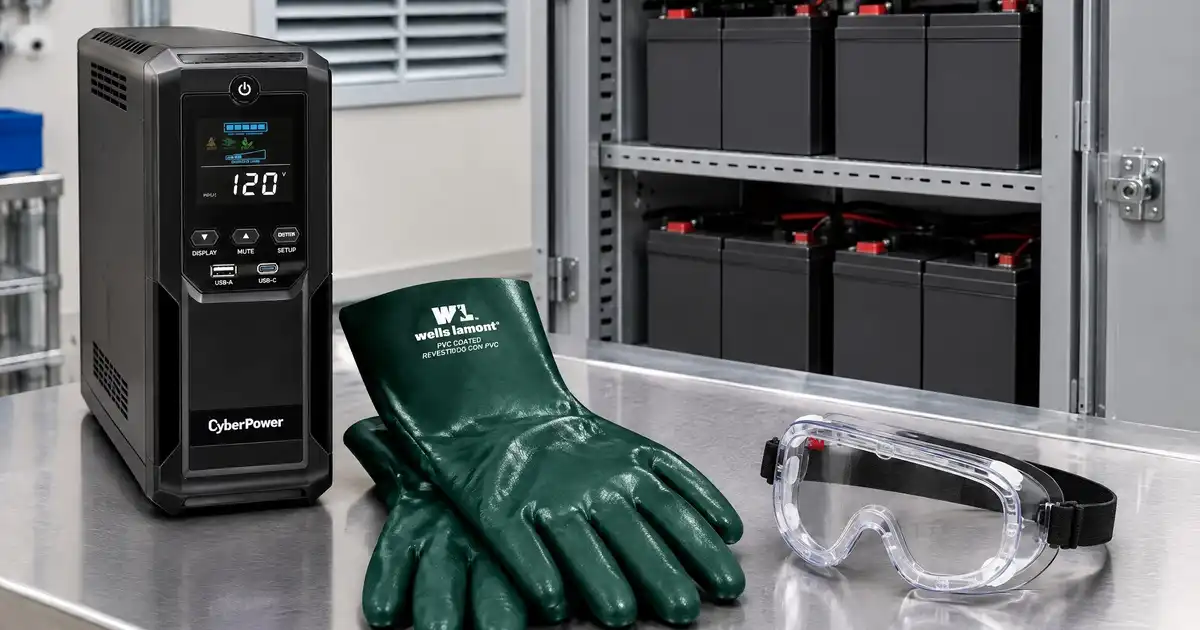
Lead-acid — still used inside some medical-grade UPS units, like the internal batteries in the CyberPower and APC units we cover in our medical-grade UPS guide. These contain liquid sulfuric acid electrolyte and release hydrogen gas while charging.
Full industrial PPE for a sealed lithium pack, or no precautions at all for a lead-acid unit, misses the actual hazard in front of you either way.
What Lead-Acid Battery Handling Actually Requires
A setup with a lead-acid battery — inside a UPS, or a backup battery you’re replacing or maintaining yourself — is where OSHA’s own standard for battery charging spells out real PPE, not a generic recommendation. It applies to industrial settings, but the underlying hazards (acid splash, hydrogen gas) are the same at home scale:
- Chemical splash goggles or a full face shield, per OSHA’s powered industrial truck standard — contact lens wearers face extra risk from acid vapor and should still wear goggles underneath
- Acid-resistant gloves, rubber or neoprene, not general-purpose work gloves
- An acid-resistant apron for any task involving opening or handling the battery directly
- Ventilation during charging, since hydrogen gas builds up and needs somewhere to go
- No open flames, sparks, or non-rated tools anywhere near a charging lead-acid battery, since hydrogen is explosive in the right concentration
Most patients and caregivers won’t be doing hands-on lead-acid maintenance themselves — that’s usually a job for whoever services the UPS unit. But if you are opening one up, this is the real, sourced list, not a guess.
What LiFePO4 Power Stations Actually Need (Less Than You’d Think)
Here’s where the “safety kit” framing breaks down. A sealed LiFePO4 power station doesn’t expose you to acid, doesn’t off-gas hydrogen during normal charging, and doesn’t call for gloves or goggles to plug in and use. Buying an industrial battery-room PPE kit for one is solving a hazard that isn’t there.
What actually matters for LiFePO4 is prevention, not protective gear:
- Charge within the manufacturer’s temperature range — many units won’t accept a charge below freezing, and charging outside spec is a real way to shorten battery life or cause damage
- Plug directly into a wall outlet, not a power strip, per consumer lithium-ion guidance from New York State’s Division of Homeland Security
- Never leave a unit charging unattended overnight, especially while sleeping
- Watch for warning signs: unusual heat, swelling, hissing or popping sounds, odd smells, or visible damage to the casing — any of these mean stop using it immediately
The Fire Extinguisher Myth Worth Correcting
Most “battery safety kit” content assumes a fire extinguisher belongs in it. For lithium batteries specifically, that assumption doesn’t hold up.
New York State’s own consumer safety guidance is direct about this: “fire extinguishers do not work on lithium-ion battery fires.” Their guidance isn’t to fight it — it’s to leave the area immediately and call 911.
Even fire-industry sources researching the problem, like Amerex’s own analysis, note that neither UL nor NFPA has established a real performance standard for extinguishing a lithium-ion battery fire with a handheld unit.
That doesn’t mean do nothing. It means the actual safety plan for LiFePO4 is prevention and an exit plan, not a piece of equipment you buy once and forget about.
Know where the unit is stored, know your fastest way out, and treat any of the warning signs above as a reason to unplug and move the unit outdoors immediately, not a reason to reach for an extinguisher.
A Realistic Home Battery Safety Kit, by Chemistry
If your setup is LiFePO4 only (true for most of the portable power stations covered on this site): no dedicated PPE kit is really needed. Your real safety kit is a stable, ventilated storage spot away from direct sun and a habit of charging on a hard surface, away from bedding and furniture.
Add one more habit to that list: a plan for where you’d move the unit if a warning sign showed up.
If your setup includes a lead-acid battery: chemical splash goggles, acid-resistant gloves, and a ventilated space for charging are the real, OSHA-grounded list — not a generic hardware-store safety kit.
For more on how these two chemistries compare on fire and disposal risk specifically, see our LiFePO4 safety guide for medical devices.
If You Do Need Gear: Two Established Pieces, Not One Unverified Kit
There’s one real gap in everything above: occasionally checking on or replacing a lead-acid battery in a UPS unit still calls for gloves and goggles, just not a 12-pack industrial battery-room kit built for a warehouse crew.
Rather than one bundled “kit” from an unfamiliar seller, we’d rather point you to two individual pieces from brands with an actual track record.

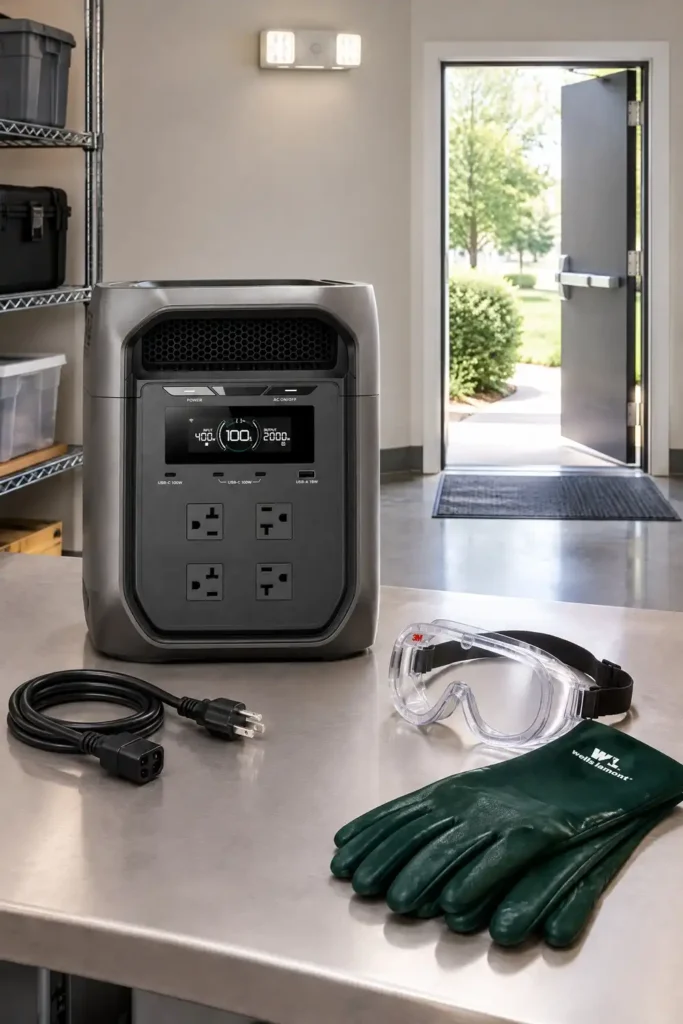
That’s Wells Lamont PVC-Coated Chemical-Resistant Gloves and 3M’s Chemical Splash/Impact Goggle, bought as a pair.
Wells Lamont has made work gloves since 1907, and the manufacturer’s own spec sheet states this PVC-coated style is “effective against adhesives, detergents, and diluted bases and acids” — a real, sourced chemical-resistance claim, not a repurposed generic description. 3M needs no introduction, and this goggle line is sold and reviewed across multiple major retailers, not just one Amazon listing.
Pros:
- Both from established, verifiable brands rather than an unfamiliar third-party seller
- Wells Lamont’s own spec sheet explicitly names acid resistance, not just general “chemical resistance”
- Sold as individual single-pair/single-unit items, not a bulk industrial case
- Inexpensive enough as a pair to keep in an emergency kit without a second thought
Cons:
- Two separate purchases instead of one bundled kit, so it’s not a single click
- Wells Lamont’s page doesn’t specify acid concentration levels, so treat it as good general protection rather than a rating for concentrated acid immersion
- Neither product is medical-specific — they’re general-purpose safety gear repurposed for this use
Why You’ll Love It: Buying two well-documented items beats one bundled kit with unclear sourcing. You can verify each product’s manufacturer claims independently, which is exactly what this article had to do before recommending anything.
Our Favorite Feature: The Wells Lamont glove’s explicit “diluted bases and acids” language on the manufacturer’s own product page — a real, specific claim, not a vague “chemical resistant” label with no detail behind it.
Compatibility Check: Sized for incidental, occasional contact with a lead-acid battery — checking terminals, wiping corrosion, or swapping a UPS battery out. For frequent or extended lead-acid servicing, OSHA’s own “rubber or neoprene” standard still applies, and a heavier-duty glove built for that job is worth the upgrade.
Storage & Care Notes: Store both near wherever the UPS unit lives rather than in a general toolbox, so they’re on hand when you actually need them. Rinse the gloves and let them air dry after any real contact with battery residue, and keep the goggles in their bag or a case so the lens doesn’t pick up scratches from loose tools.
What Others Are Saying: The 3M goggle line carries a real, verifiable review history across major retailers (21 reviews on the equivalent Home Depot listing alone), and Wells Lamont is a widely stocked, decades-established brand — the opposite of the single unreviewed listing this section originally pointed to.
A Note on HSA/FSA: This one is a stretch. General safety equipment like gloves and goggles doesn’t tie to a specific prescribed medical device the way a power station or its charging adapter does.

We wouldn’t count on this qualifying under IRS Publication 502 without a specific letter of medical necessity tying it directly to servicing prescribed equipment. Worth asking your HSA/FSA administrator directly rather than assuming either way.
As with any Amazon listing, pricing and stock change — check both current listings before buying.
FAQs
Do I need a fire extinguisher for my solar generator battery?
For a LiFePO4 unit, typical extinguishers don’t reliably work on lithium-ion battery fires, according to NY State’s consumer safety guidance and fire-industry research. The real safety plan is prevention and evacuation, not firefighting equipment.
What gloves should I use for battery maintenance?
It depends on the chemistry. LiFePO4 power stations don’t require gloves for normal use since the cells are sealed. A lead-acid battery, the kind inside some medical-grade UPS units, calls for acid-resistant rubber or neoprene gloves, per OSHA’s battery-charging standard.
Is it safe to charge a portable power station indoors?
Yes, for LiFePO4 units under normal conditions — they don’t off-gas during charging the way lead-acid batteries do. Charge on a hard, ventilated surface, plugged directly into a wall outlet rather than a power strip, and never left unattended overnight.
What are the warning signs a battery is failing?
Unusual heat to the touch, swelling or bulging, hissing or popping sounds, an odd smell, or visible casing damage. Any of these means stop using the unit and move it away from anything flammable immediately.
Does my medical-grade UPS need the same precautions as my portable power station?
Only if it uses a lead-acid battery internally, which many do — see our medical-grade UPS guide for specifics. That’s the unit that actually carries acid and hydrogen gas exposure risk, not the LiFePO4 power stations covered elsewhere on this site.
Is a basic gloves-and-goggles setup enough, or do I need full industrial PPE?
For occasional contact — checking terminals, wiping down a case, swapping a UPS battery out — a basic acid-resistant glove and chemical splash goggle pair covers incidental exposure. Frequent or extended lead-acid servicing calls for OSHA-grade neoprene gloves instead, a different job than most homeowners actually do.
Bottom Line
A “medical battery PPE safety kit” isn’t one product — it depends entirely on which battery chemistry you’re actually dealing with. Lead-acid batteries carry a real, OSHA-documented case for gloves, goggles, and ventilation. LiFePO4 power stations, which cover most of what’s recommended on this site, don’t need protective gear for normal use at all.
The genuinely useful safety kit for LiFePO4 is a habit, not a hardware purchase: correct charging temperature, a wall outlet instead of a power strip, and a plan for what you’d do if a warning sign showed up. Buying an industrial acid-handling kit for a sealed lithium battery solves a problem you don’t have.
This article reflects OSHA battery-charging standards and NFPA/New York State consumer lithium-ion battery safety guidance current as of October 2026 . Always follow your specific unit’s manufacturer manual, which takes precedence over general guidance here. This is not a substitute for professional fire-safety or electrical-safety advice specific to your home setup.