Insurance Coverage Medical Power Backup Equipment: What Actually Applies
 By Lee Arnold
Medical Solar Power Backup Specialist | 8+ years in the field
Quick Answer:
Insurance coverage for medical power backup equipment splits into two completely different questions most guides blend together: does health insurance pay for it, and does property insurance protect it once you own it.
Private and employer health insurance generally follows the same logic as Medicare — a battery is covered when it’s required for a specific device to function (like a power wheelchair’s own battery), not as standalone backup or emergency power. A major insurer’s own DME policy confirms this directly.
Homeowners and renters insurance is the more promising, less-discussed side: a portable power station is typically covered as personal property against fire, theft, and storm damage, though not against ordinary mechanical breakdown — a real protection worth knowing about once you’ve bought one.
Most search results for this topic either repeat Medicare-specific rules without checking private insurance separately, or skip the property-insurance angle entirely. This one covers both, sourced from an actual insurer policy document and homeowners insurance industry guidance rather than assumption.
Table of Contents
How Private and Employer Health Insurance Actually Treats This
Private and employer-sponsored plans don’t all follow identical rules, but the underlying logic tends to match Medicare’s. UnitedHealthcare’s own published DME policy is a useful real example.
It states that medical supplies used with covered DME are covered only “when the supply is necessary for the effective use of the item/device,” explicitly naming batteries for power wheelchairs and prosthetics as examples — and separately excludes “batteries for non-medical equipment” outright.
That’s a meaningful distinction. A battery built into or required by a covered device is treated as part of that device. A standalone battery, power station, or generator purchased separately for backup or emergency power is a different category entirely.
That’s the same “backup equipment isn’t primary medical necessity” logic that governs Medicare’s own back-up equipment policy, covered in depth in our Medicare Part B DME emergency backup guide.
Notably, the same UHC policy document that covers ventilators in detail — the clinical criteria for when one is medically necessary — contains no language at all addressing backup or duplicate ventilator equipment, or backup power systems generally. If a major national insurer’s own policy is silent on it, that’s a strong signal it isn’t a standard, guaranteed benefit.
The “Some Plans Cover Ventilator Backup Power” Claim — Worth Verifying, Not Assuming
You may come across a claim that private insurance sometimes covers backup power specifically for ventilator-dependent patients, given how much more acute that need is compared to CPAP or oxygen use. That claim shows up in general guidance around this topic, but it’s stated as an exception or possibility, not a documented rule.
We couldn’t confirm this as a standard industry practice against an actual insurer policy — UHC’s own DME document, which covers ventilators extensively, includes no such provision. That doesn’t mean no plan anywhere offers it; it means this is genuinely plan-specific rather than something to count on.
For a ventilator-dependent family member, the right move is asking your specific plan directly whether any backup power or emergency equipment benefit exists, rather than assuming either way based on general guidance.
Where Homeowners and Renters Insurance Actually Comes In
This is the side of the question most “does insurance cover backup power” content skips entirely, and it’s genuinely more useful once you’ve already bought the equipment rather than while you’re trying to get it paid for.
A portable power station or solar generator is typically treated as personal property under a standard homeowners or renters policy. Openly’s own breakdown of generator coverage puts it plainly: these movable units are “typically treated like personal belongings.”
That means protection against the same named perils as the rest of your things — fire, theft, vandalism, severe weather — but not against ordinary wear, mechanical breakdown, or a battery simply failing with age.
Two real policy add-ons are worth knowing about if you’re relying on this equipment:
- Scheduled Personal Property Coverage removes the sub-limits standard policies often place on higher-value electronics, which can matter if your power station cost several hundred dollars or more.
- Equipment Breakdown Coverage specifically covers sudden mechanical failure and power surge damage — the exact gap standard personal property coverage leaves open.
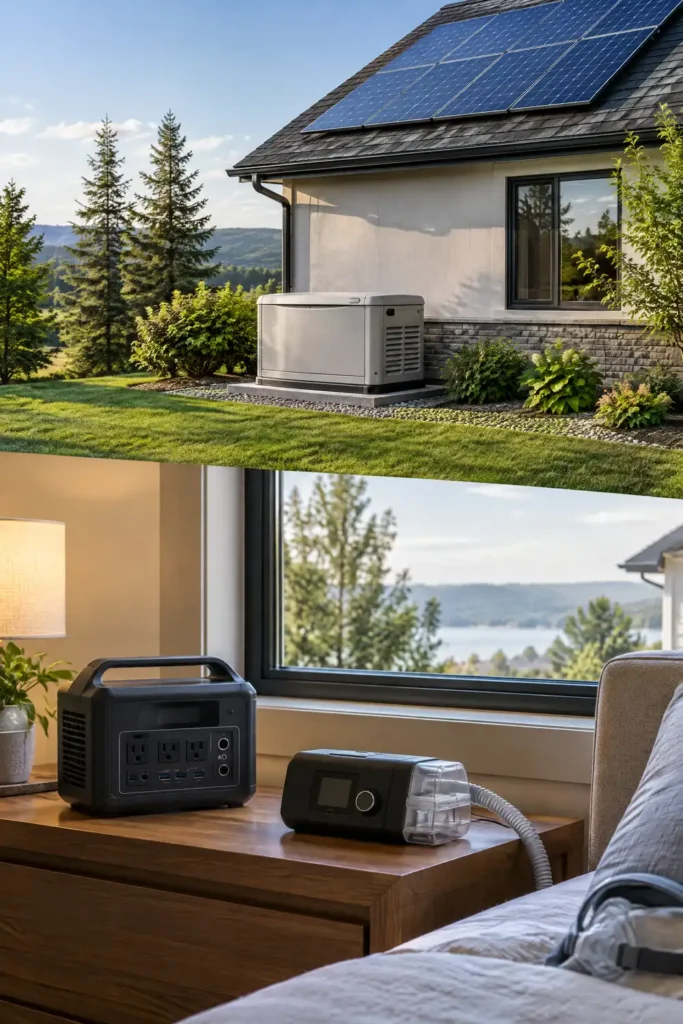
A permanently installed standby generator is a different animal insurance-wise: it typically falls under dwelling or other-structures coverage instead of personal property, since it’s fixed to the home rather than a portable item you own.
Rooftop Solar Panels Are a Different Question Entirely
A setup that also includes rooftop or ground-mounted solar panels — not just a portable power station — is generally covered similarly to a standby generator: under dwelling coverage for roof-mounted systems, or other-structures coverage for ground-mounted arrays, against the same perils as the rest of your home.
That’s a separate insurance question from the portable backup power most of this site covers, worth knowing if you’re evaluating a full home solar setup rather than a standalone power station.
How This Differs From Our Other Insurance Guides
Our Medicare Part B DME emergency backup guide and Medicare solar generator DME coverage guide go deep specifically on Medicare’s own policy and payment categories. This guide covers the broader landscape — private and employer health insurance, plus the homeowners/renters angle neither of those touches.
For the tax-advantaged alternative that actually works regardless of what insurance says, see our letter of medical necessity guide for using HSA or FSA funds instead.
FAQs
Does my private health insurance cover a backup battery or generator for my CPAP?
Generally no. Private and employer plans tend to follow the same logic as Medicare — a battery is covered when required for a specific device to function, not as standalone backup power. Confirm directly with your plan, since coverage isn’t standardized across insurers.
Is there an exception for ventilator-dependent patients?
It’s claimed in some general guidance, but we couldn’t confirm it as a documented standard practice against an actual insurer policy. Treat it as plan-specific and verify directly with your insurer rather than assuming it applies.
Will homeowners insurance replace my power station if it’s stolen?
Typically yes, since a portable power station is usually treated as personal property covered against theft under a standard policy, subject to your policy’s deductible and any sub-limits on electronics.
Does homeowners insurance cover my power station if the battery just dies?
No. Standard personal property coverage protects against named perils like fire, theft, and storm damage, not ordinary wear or mechanical failure. Equipment Breakdown Coverage is a specific add-on that closes that gap if you want it.
Is a permanently installed standby generator covered differently than a portable power station?
Yes. A standby generator is typically covered under dwelling or other-structures coverage since it’s fixed to your home, while a portable power station falls under personal property coverage as a belonging you own.
Bottom Line
Insurance coverage for medical power backup equipment isn’t one answer — it’s two separate questions. Health insurance, private or Medicare, generally won’t pay for the equipment itself, following the same backup-isn’t-primary-necessity logic across the industry. Homeowners or renters insurance won’t help you buy it, but it can genuinely protect it once you own it, against the real risks of fire, theft, and storm damage.
Matching the right kind of coverage to the right part of the problem beats assuming either one covers something it doesn’t.
This article reflects UnitedHealthcare’s published DME policy and homeowners insurance industry guidance current as of October2026 . Coverage details vary significantly by specific insurer, plan, and policy — confirm current details directly with your health insurer and homeowners or renters insurance provider before making purchasing or coverage decisions. This is not insurance, legal, or financial advice.