FSA Eligible CPAP O2 Accessories: The Complete Medical Supplies List for 2 Devices
 By Lee Arnold
Medical Solar Power Backup Specialist | 8+ years in the field
Quick Answer:
This FSA eligible CPAP O2 accessories checklist starts with what IRS Publication 502 states plainly: “You can include in medical expenses amounts you pay for oxygen and oxygen equipment to relieve breathing problems caused by a medical condition.” That single sentence covers concentrators, tubing, cannulas, humidifier bottles, filters, and power cords — the same category CPAP supplies fall into as prescribed durable medical equipment.
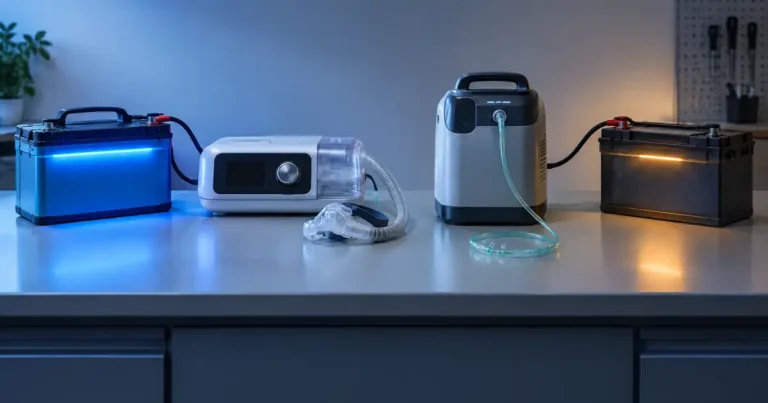
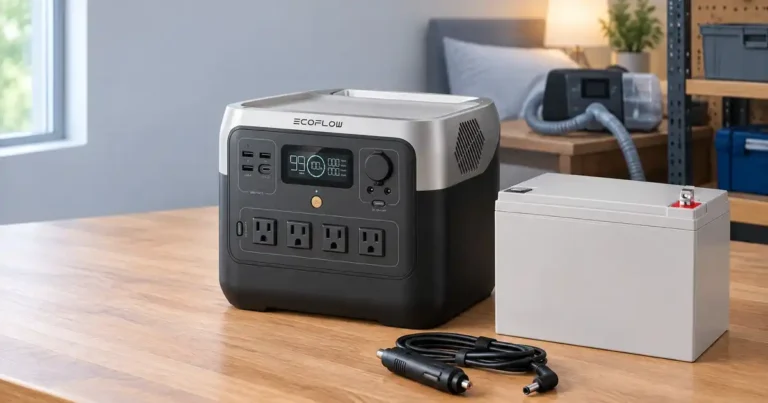
The pattern that holds across both device types: the machine and its prescribed supplies qualify without extra paperwork, purpose-built medical batteries (like the Medistrom or EASYLONGER lines) qualify without a Letter of Medical Necessity, but a general-purpose power station — Jackery, Bluetti, EcoFlow, regardless of which device it’s backing up — needs one.
This is the combined FSA eligible CPAP O2 accessories checklist. For the full, exhaustive CPAP-only breakdown, see our dedicated CPAP accessories HSA/FSA guide and CPAP battery FSA eligibility guide — what’s new here is the oxygen side, which neither of those covers.
Most FSA eligibility content treats CPAP and oxygen equipment as two unrelated searches, even though anyone managing both devices — a common overlap, since both conditions often coexist — ends up needing the same answer twice. This FSA eligible CPAP O2 accessories list covers both in one place, with oxygen accessories getting the itemized treatment they don’t get elsewhere on this site.
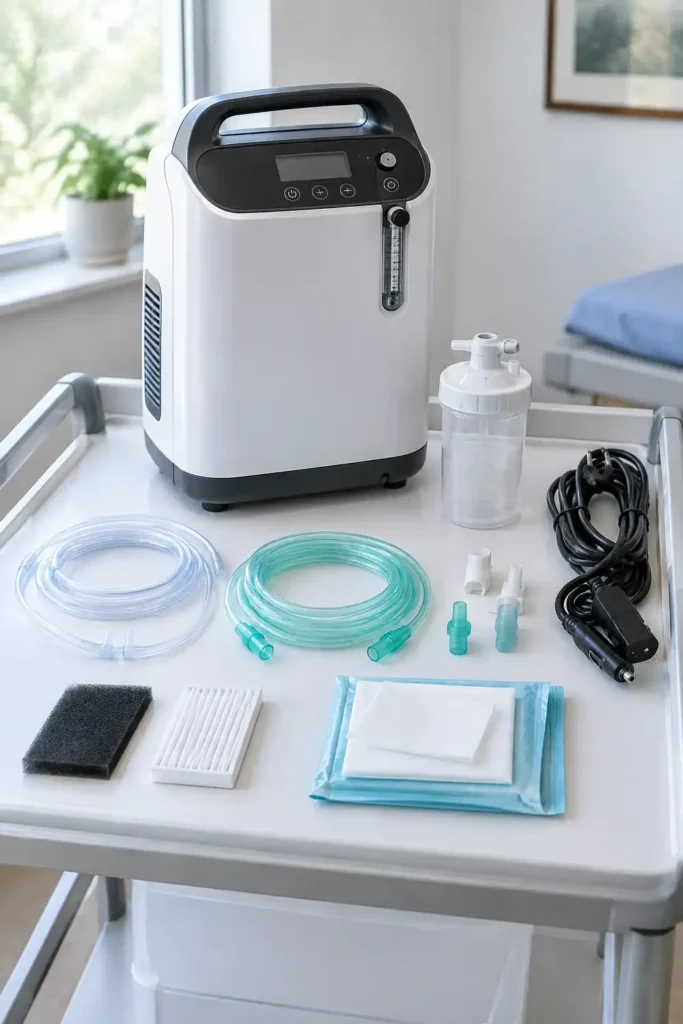
Table of Contents
What Actually Makes Something FSA Eligible
The underlying test, straight from IRS Publication 502, is whether an expense is primarily for the diagnosis, cure, mitigation, treatment, or prevention of disease — not general health or convenience. A prescribed CPAP machine or oxygen concentrator clears that bar easily. So do the supplies that keep either one running as intended.
Where people get tripped up is assuming that test applies evenly to every accessory. It doesn’t — a mask cushion prescribed alongside your CPAP is different from a travel case you’d buy regardless of any prescription, and the checklists below sort accordingly.
CPAP Supplies: The Short Version
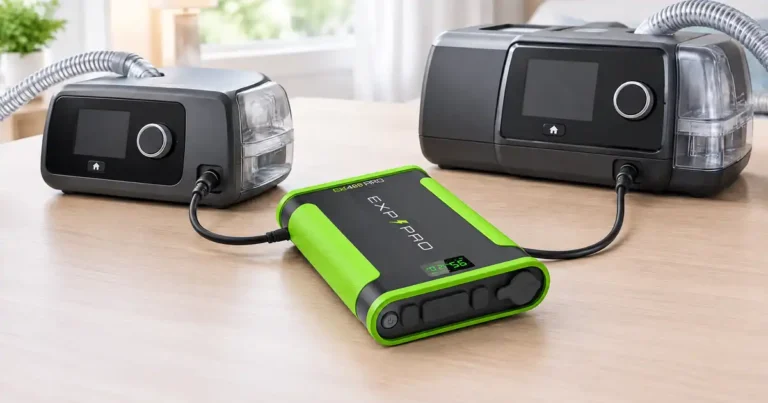
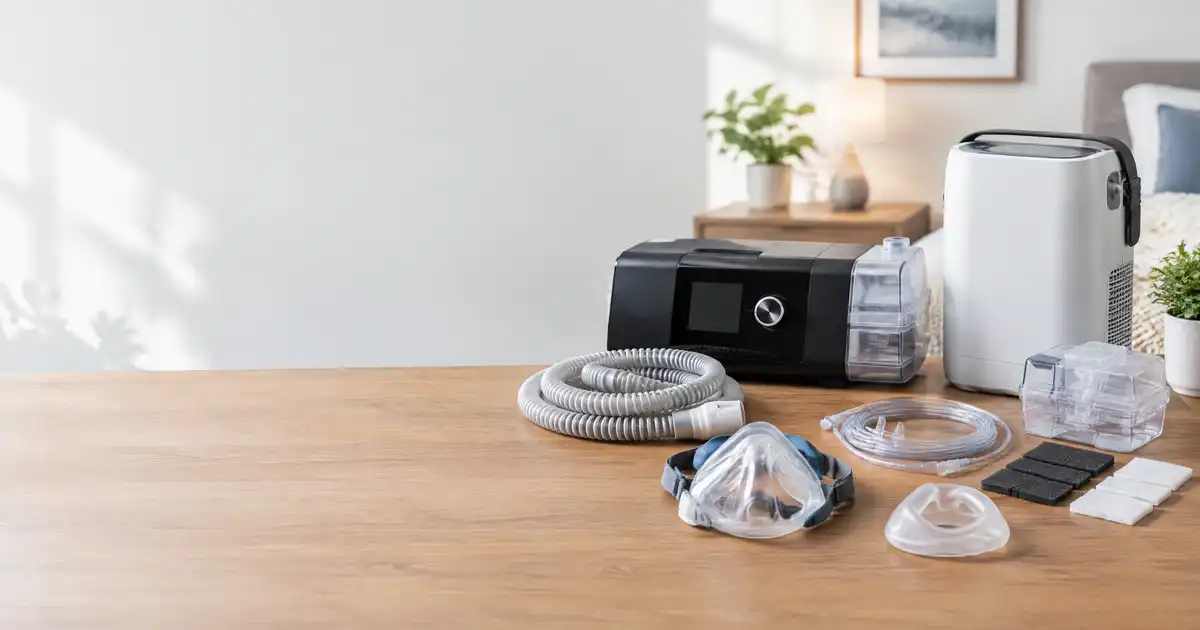
We’ve already built the exhaustive version of this list — full face masks, cushions, headgear, tubing, humidifier chambers, filters, power supplies, and named FSA-eligible batteries (Medistrom Pilot-12 Lite, Pilot-24 Lite, EXP48 Pro; EASYLONGER ES270, ES400 AIR, ES720) — in our CPAP accessories HSA/FSA guide and CPAP battery FSA eligibility guide.
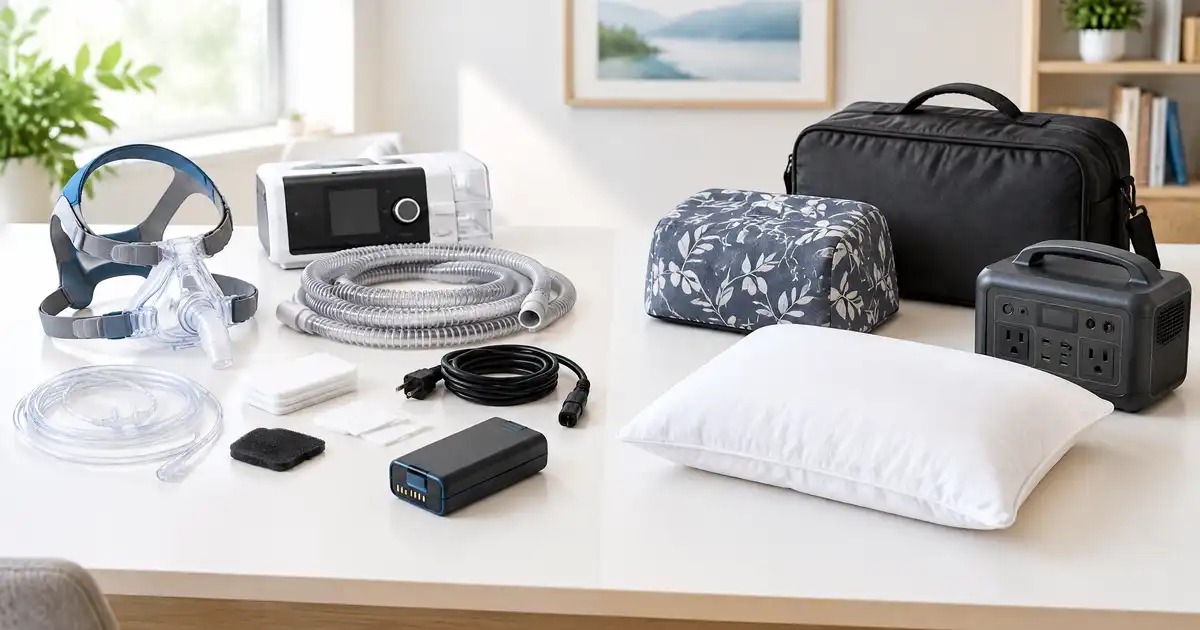
The short version: masks, tubing, humidifier parts, filters, and CPAP-specific batteries qualify. Standard pillows, non-CPAP travel bags, distilled water, cosmetic machine covers, and sleep-tracking wearables don’t.
Oxygen Concentrator Supplies: The Full Checklist
This is the side most FSA guides skip. FSAstore’s oxygen equipment eligibility page itemizes what a typical oxygen setup includes beyond the concentrator itself — tubing, face masks, filters, cleansing wipes and sprays, and power cords, plus battery packs where applicable.
Typically eligible:
- The oxygen concentrator or portable oxygen concentrator itself, prescribed
- Nasal cannulas and oxygen face masks
- Oxygen tubing and connectors
- Humidifier bottles and replacement water chambers
- Intake and exhaust filters
- Cleansing wipes and sprays for the unit
- AC and DC power cords supplied with the unit
- A purpose-built external battery pack designed for that specific concentrator model
Needs a Letter of Medical Necessity:
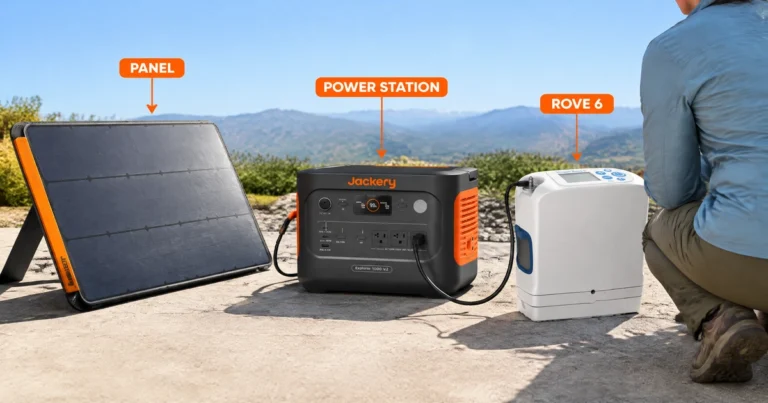
- A general-purpose portable power station (Jackery, Bluetti, EcoFlow, or similar) used as backup power for the concentrator — the same rule that applies to CPAP backup power, covered in our letter of medical necessity guide
Typically not eligible:
- Carrying bags or cases not specific to the prescribed unit
- Cosmetic accessories or decorative covers
- General air purifiers or humidifiers not tied to the oxygen equipment itself
What’s Never Eligible, Regardless of Device
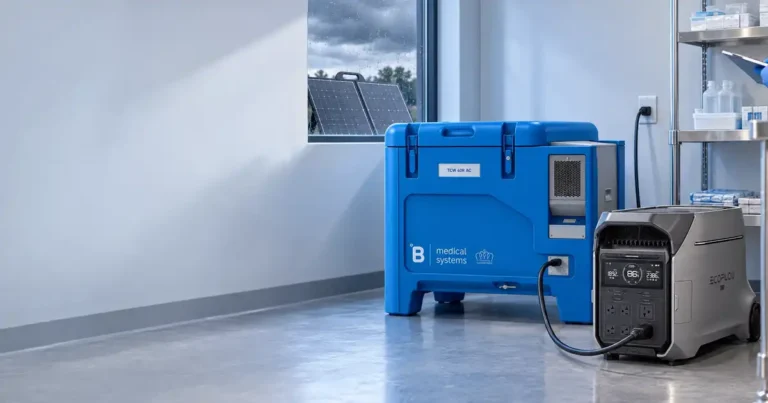
One exclusion holds across CPAP and oxygen equipment alike, consistent with what we’ve documented in our Medicare Part B DME emergency backup guide and insurance coverage for medical power backup equipment guide: backup power itself sits in a gray area insurance won’t touch, which is exactly why the FSA/LMN path matters here.
A general power station bought with no prescribed device to justify it, or one bought purely as a precaution with no letter tying it to a specific medical need, doesn’t clear the bar either.
How to Actually Claim These
Save the receipt and, for anything on the “eligible” list above, submit it through your FSA administrator’s normal reimbursement process — most don’t require extra documentation for items already on their own eligibility list. For anything requiring a Letter of Medical Necessity, our letter of medical necessity guide walks through the actual FSAFEDS-based template and the appeals process if a claim gets denied.
Insurance (not FSA) coverage for either device is a separate question with its own rules, covered in our CPAP insurance coverage guide.
How This Differs From Our Other FSA/CPAP Guides
Our CPAP accessories HSA/FSA guide and CPAP battery FSA eligibility guide go deep specifically on CPAP, with named eligible products and a full eligible/not-eligible breakdown. This guide is the combined checklist — CPAP condensed, oxygen given its first full treatment on the site, and the backup-power/LMN pattern that ties both together in one place.
FAQs
Are oxygen concentrator supplies FSA eligible the same way CPAP supplies are?
Yes, under the same underlying rule. IRS Publication 502 explicitly names oxygen and oxygen equipment as an eligible medical expense, and the standard accessories — tubing, masks, filters, power cords — follow the prescribed-supply logic that applies to CPAP.
Do I need a prescription for oxygen accessories to qualify?
The oxygen equipment itself needs to be prescribed. Standard accessories that come with or replace parts on that prescribed unit generally follow its eligibility without a separate prescription for each item, but confirm with your FSA administrator if an item seems borderline.
Is a portable power station FSA eligible for oxygen concentrator backup?
Only with a Letter of Medical Necessity, the same rule that applies to CPAP backup power. A purpose-built external battery pack designed for your specific concentrator model is different and typically doesn’t need one.
Can I use FSA funds for both CPAP and oxygen supplies in the same year?
Yes — FSA eligibility applies per expense, not per device category, so there’s no rule limiting you to supplies for one prescribed device only, as long as each expense is for a device you’re actually prescribed.
What’s the single most commonly denied item on either list?
Backup power bought without a Letter of Medical Necessity is the most common miss on both sides, since a general-purpose power station looks like a convenience purchase without that documentation tying it to a specific prescribed device.
Bottom Line
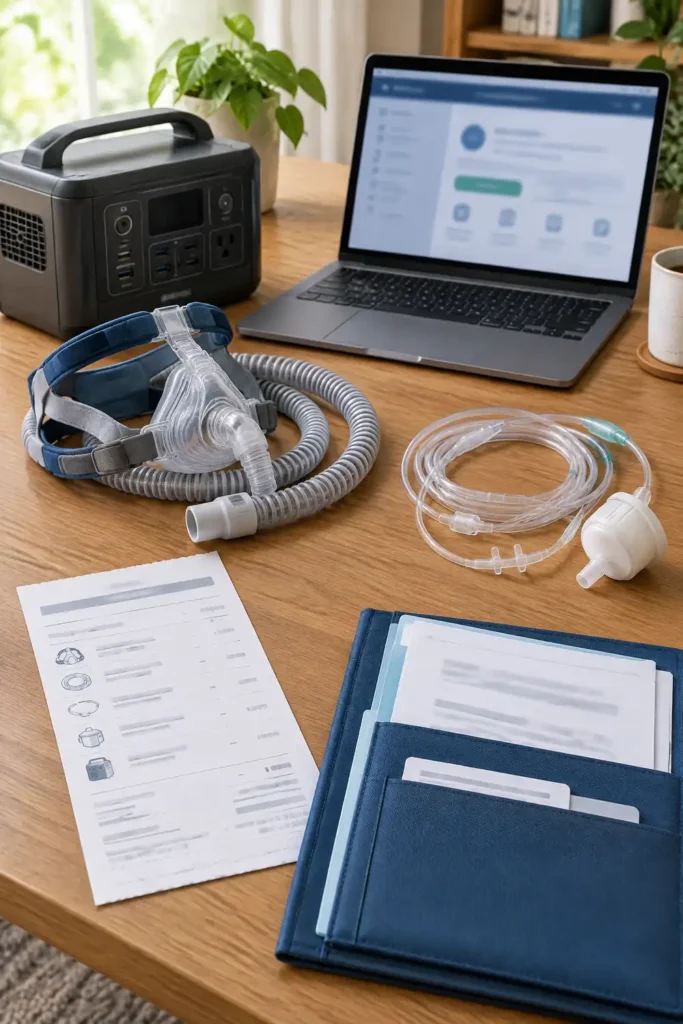
FSA eligible CPAP and O2 accessories follow the same underlying logic even though most guides treat them as separate questions: the prescribed device and its standard supplies qualify, purpose-built medical batteries qualify without extra paperwork, and general-purpose power stations need a Letter of Medical Necessity regardless of which device they’re backing up.
Keep your receipts, check your specific FSA administrator’s list for anything borderline, and use the LMN path for backup power rather than assuming it’s automatically covered.
This article reflects IRS Publication 502 and FSAstore’s oxygen equipment eligibility guidance current as of October 2026 . FSA eligibility rules and specific administrator requirements can vary — confirm current details with your FSA administrator before making purchasing decisions. This is not tax or financial advice; consult a tax professional for guidance specific to your situation.