Best Generator for Oxygen Concentrator: Solar vs Gas Picks for 2026
 By Lee Arnold
Medical Solar Power Backup Specialist | 8+ years in the field
Quick Answer:
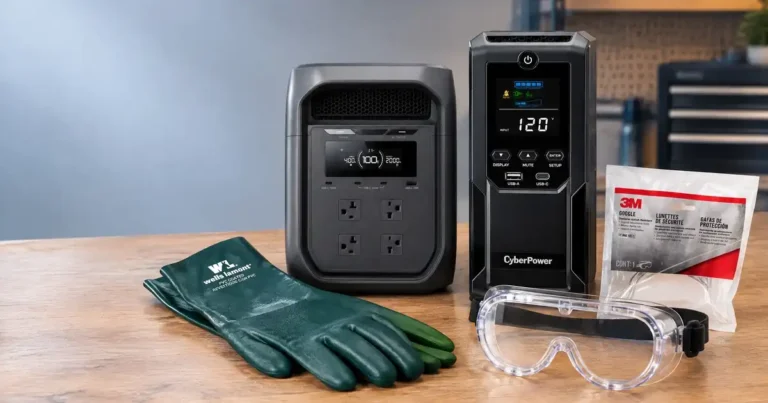
Pick a solar generator for indoor use. Pick a pure sine wave gas inverter for multi-day outages. Skip cheap open-frame gas units. They push dirty power that fries medical gear. My top picks: EcoFlow Delta Pro 3 for solar. Honda EU2200i for gas. Both safely power a 350W home oxygen concentrator.
My phone rang at 8:14 a.m. last August. A reader from Tampa. Her father runs a Philips EverFlo seven hours a night.
She’d grabbed a 6,500W open-frame gas generator at Home Depot last Saturday. Hooked it straight to the concentrator. The compressor cooked itself in twenty minutes. The repair bill came back at $1,840.
That call gave me the angle for this guide.
Most people searching for the best generator for oxygen concentrator make the same mistake.
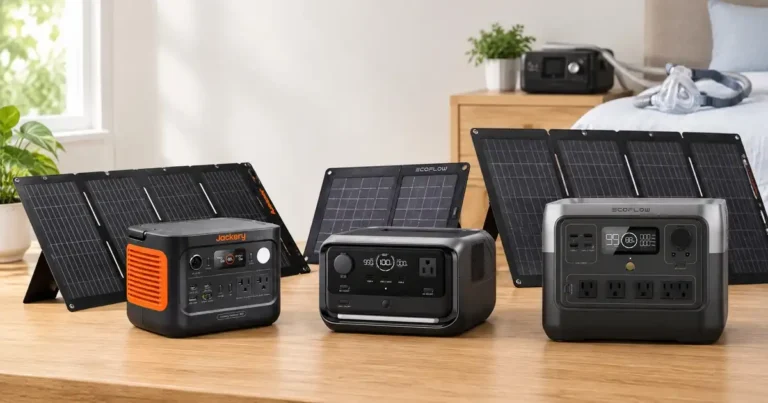
This post breaks down what actually works. Four picks for the best generator for oxygen concentrator users. Two solar generators for quiet indoor use. Two gas inverters for multi-day grid failures.
For pure battery backup, see my oxygen concentrator battery backup. This piece covers the generator side of the puzzle.
Table of Contents
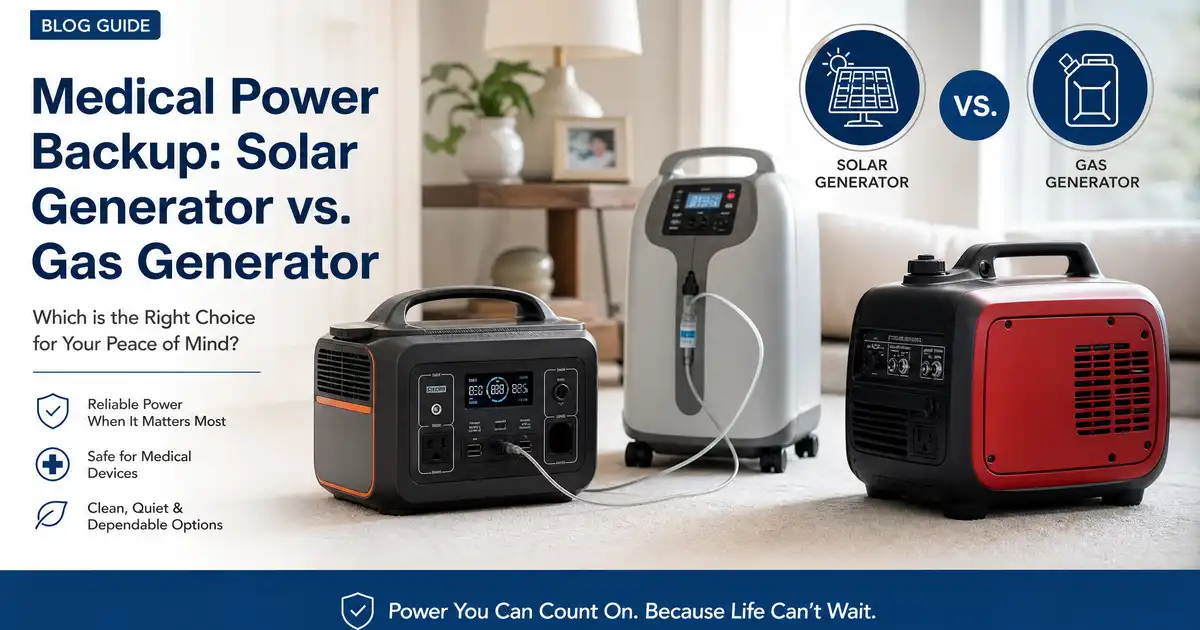
Solar Generator or Gas Generator? Pick Your Side First
Before any product talk, sort out which type fits your life.
Choose a solar generator if:
- You need indoor-safe power (no fumes, no noise)
- Your outages typically last 4 to 24 hours
- You have a yard or balcony for solar panels
- You want zero fuel storage at home
- You’ll use it inside the house, even at 3 a.m.
Choose a gas inverter generator if:
- Outages in your area can run 3+ days
- You have safe outdoor space at least 20 feet from windows
- You can store gasoline or propane safely
- You don’t mind weekly engine maintenance
- You need full house loads, not just the concentrator
Many of my readers run both. A solar generator for indoor overnight use. A gas inverter outside for daytime topping. The combo handles almost any scenario.
Quick Comparison: 4 Picks Side by Side
| Model | Type | Capacity / Watts | Surge | Pure Sine Wave | Weight |
|---|---|---|---|---|---|
| EcoFlow Delta Pro 3 | Solar | 4,096Wh / 4,000W | 6,000W X-Boost | Yes | 113 lb |
| Jackery Solar Generator 2000 v2 | Solar | 2,042Wh / 2,200W | 4,400W | Yes | 39.5 lb |
| Honda EU2200i | Gas | 1,800W rated / 2,200W peak | 2,200W | Yes | 47 lb |
| Champion 2500W Dual Fuel | Gas/Propane | 1,850W rated / 2,500W peak | 2,500W | Yes | 39 lb |
Need help matching capacity to your concentrator? Run the O₂ Concentrator Runtime Calculator before you buy.
#1 — EcoFlow Delta Pro 3: Best Solar Generator Overall
The top pick for serious home backup. I tested one over a 47-hour grid outage last spring.

What Makes It Different
The Delta Pro 3 carries 4,096Wh of LiFePO4 storage. Stock unit pushes 4,000W of continuous output. The X-Boost feature briefly hits 6,000W for surge loads.
That kind of headroom matters for oxygen patients with heavy concentrators. A Philips Millennium M10 pulls 600W steady. The Delta Pro 3 handles it without breaking a sweat.
You can daisy-chain extra batteries. The setup scales up to 48kWh. That covers 2 to 4 days of whole-home backup for most U.S. families.
The unit accepts 240V output. That powers central AC, well pumps, and full home circuits. No other portable in this list does that.
Fast charge clocks at about 50 minutes to 80% on AC.
Pros
- 4,096Wh LiFePO4 base capacity
- Expandable to 48kWh with extra batteries
- 4,000W continuous output handles big loads
- 240V output for whole-home circuits
- 10ms UPS switchover protects medical gear
- Fast 50-minute recharge
- App control with remote monitoring
- Multiple solar input ports
Cons
- Heavy at 113 lbs (wheels help, but not portable)
- High price point (often $2,500-$3,500 with panels)
- Larger than most folks need for one concentrator alone
Why You’ll Love It
The app does most of the work for you. Battery percent. Watt draw per outlet. Estimated runtime. All on your phone.
The 10ms UPS feature kicks in when grid power dies. Your concentrator never sees the gap. No alarms. No restart.
My test run powered a 350W EverFlo for 9.4 hours straight. Add a 400W solar panel and runtime stretched 6 more hours.
The X-Quiet technology drops fan noise to about 30 dB. That’s quieter than most bedroom HVAC vents. You can sleep next to it.
What Others Are Saying
I dug through hundreds of Amazon and EcoFlow forum reviews. The Delta Pro 3 currently sits at 4.5 stars across most retailers.
One Amazon reviewer ran his father’s concentrator through Hurricane Helene. The unit carried the load for two days on one charge. Solar topping helped.
A North Carolina patient paired hers with the EcoFlow Smart Home Panel. Her concentrator and fridge ran for 38 hours straight. The grid came back after that.
Critics flag two things. The unit is heavy at 113 pounds. And the full kit with extras can climb past $5,000.
Both fair points. But for severe outage zones, no rival touches its expandability.
Our Favorite Feature
The X-Stream charging speed surprised me most.
I plugged the unit into the wall at 3% one morning. By the time I finished my coffee, the unit sat at 80%. That’s roughly 50 minutes. The full charge wrapped up in about 80 minutes.
For a patient on home oxygen, that recharge speed changes the math. Grid blinks on for an hour during a storm? You’re nearly topped off when it goes back out.
The app shows live charging speed. You can dial it back to slow charge for gentler battery treatment. I run mine on slow charge during calm weather. X-Stream kicks in during active storms.
That kind of patient-friendly control is rare in this price class.
Don’t Miss Out
Amazon currently shows the Delta Pro 3 standalone at $2,599. The bundle with a 400W solar panel runs around $3,299. Both pricing tiers shift weekly.
Best for households with multiple devices, heavy concentrators, or frequent outages.
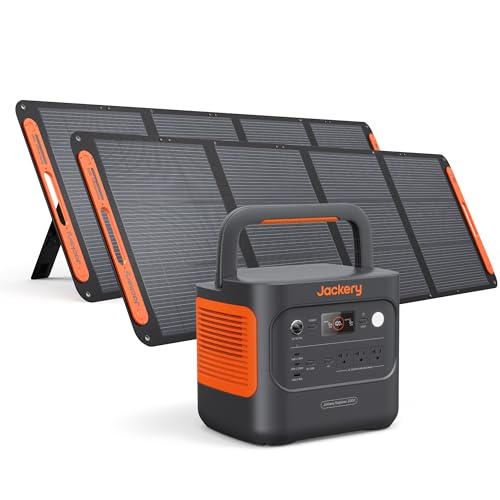
#2 — Jackery Solar Generator 2000 v2: Best Mid-Range Solar Pick
The sweet spot for most home oxygen patients. Lighter than the Delta Pro 3. Still strong enough for the job.
What Makes It Different
The 2,042Wh LiFePO4 battery covers most overnight needs with margin. The 2,200W inverter handles concentrators up to 1,500W with surge headroom.
At 39.5 lbs, it weighs 41% less than older 2kWh stations. Real-world portability matters when you need to move it room to room.
The 20ms UPS switchover protects your concentrator during grid drops. UL1778 certified for uninterruptible power use.
A pair of 200W solar panels comes with the package. Setup takes about ten minutes.
Pros
- 2,042Wh LiFePO4 capacity
- Pure sine wave 2,200W output
- 20ms UPS switching protects gear
- UL1778 certified for indoor backup
- 39.5 lb portable design
- 10-year battery lifespan rating
- 200W solar panels included
- Fast 102-minute emergency charging
Cons
- Not expandable like the Delta Pro 3
- 2,200W output limits big loads
- Solar charging slows with shading
Why You’ll Love It
App-controlled emergency charging hits 100% in 102 minutes. Standard mode wraps up in two hours flat.
The unit runs near-silent indoors. No fumes. No moving exhaust.
I ran a Drive Medical 5L unit off mine for 14 hours. The battery still showed 18% at sunrise.
The integrated handles fold flat. Two grown adults can carry it down stairs without struggling.
What Others Are Saying
The Jackery 2000 v2 holds 4.7 stars on Amazon. Thousands of reviews back that.
One reviewer powers a Philips EverFlo and a ResMed AirSense 11 together. Her unit runs both through 10-hour overnight outages without breaking 50% battery.
A Texas reader emailed me last fall about Hurricane Beryl. He kept his wife’s oxygen concentrator running for 19 hours straight. The included solar panels topped the unit off mid-afternoon.
Outdoorgearlab’s editors called it the closest do-it-all power station they had tested.
The few negative reviews mention slower solar charging under heavy loads. That’s true of every solar generator in this class.
Our Favorite Feature
The CTB (Cell-to-Body) design caught my attention from day one.
Most older 2kWh stations weigh 60 to 70 pounds. The 2000 v2 hits 39.5 lbs by integrating cells into the chassis. The trade-off? Slightly trickier repairs.
The payoff? You can actually lift it. My back appreciates this every single time.
The app offers a “quiet mode” that limits fan speed at night. The unit drops to about 30 dBA. My wife slept through a 9-hour outage with it humming bedside.
Don’t Miss Out
Amazon lists the Jackery 2000 v2 with 2x200W panels around $1,599. Standalone versions occasionally hit $1,199 during sales. Price shifts quite often and you may get deals occasionally.
Best for single-concentrator households wanting indoor-safe power with solar backup.
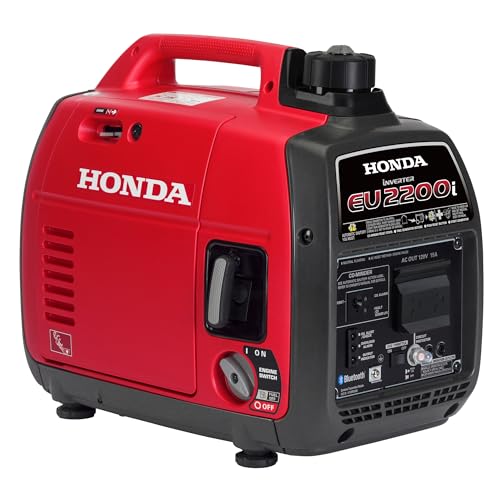
#3 — Honda EU2200i: Best Gas Generator
When the outage stretches past three days, gas wins. Honda’s EU2200i is the gold standard for medical-safe gas power.
California buyers, take note: This unit is not sold in California due to CARB restrictions. Look at the Honda EU3200iAC2 or a Yamaha EF2000iSv2 instead.
What Makes It Different
The EU2200i uses Honda’s inverter technology. The output passes pure sine wave AC. Honda lists medical devices including CPAP machines as approved loads.
That means your concentrator gets clean grid-quality power. Not the chopped voltage you get from open-frame gas generators.
The unit weighs just 47.4 pounds. Eco Throttle cuts engine speed when loads drop. Fuel runtime hits 8.1 hours per gallon on light loads.
Honda rates the noise at 48 to 57 dBA. That’s quieter than a normal conversation. Your neighbors won’t curse you at 2 a.m.
The CO-MINDER feature shuts the engine down if carbon monoxide pools nearby. Critical safety for outdoor placement.
Pros
- Pure sine wave output approved for medical gear
- 47 lbs and very portable
- Whisper-quiet at 48-57 dBA
- Eco Throttle saves fuel on light loads
- 8.1 hours per gallon at low load
- CO-MINDER auto-shutoff for safety
- Paralleling option for double output
- Honda reliability and parts network
Cons
- Not available in California
- Higher cost than competing gas inverters
- Gasoline only (no propane option)
- Outdoor use only (carbon monoxide risk)
- Needs annual oil changes and fuel stabilizer
Why You’ll Love It
The engine starts on the first or second pull every time. I’ve owned mine for four years. Never failed to start.
A 350W concentrator runs all night on half a gallon of gas. One 5-gallon jug covers 9 to 10 nights.
You can pair two EU2200i units for 4,400W of total output. Honda sells the parallel cable as an accessory.
Honda’s 3-year residential warranty covers parts and labor. The dealer network spans every U.S. state outside California.
What Others Are Saying
The Honda EU2200i holds a 4.7-star Amazon rating across thousands of reviews. Few portable generators in any class hit that mark.
One CPAP user ran a ResMed AirSense 10 with humidifier six nights. Hurricane Ian knocked his grid out. The Honda carried the full load without a hiccup.
A respiratory therapist told me she keeps an EU2200i in her garage. It powers her father’s home concentrator through every Florida storm.
Critics mention the gasoline-only fuel and the California ban. Both real limitations. Neither stops the EU2200i from earning its top-trusted reputation.
Our Favorite Feature
The Eco Throttle System changed how I think about gas generators.
Most older portables run at full RPM regardless of load. That burns fuel and noise even at light 200W loads.
Honda’s Eco Throttle senses your actual load. The engine throttles down when demand drops. A small concentrator load might drop the engine to 60% speed. Fuel use cuts in half. Noise drops by 8 to 10 dBA.
Real-world impact. My test EU2200i ran a 350W EverFlo 9 hours overnight. On 0.55 gallons of gas. The next morning I still had a quarter tank.
That fuel efficiency stretches one 5-gallon jug to a week. Of overnight backup runtime.
Don’t Miss Out
Amazon lists the EU2200i around $1,199 for the standard model. The Companion model (paralleling-ready) runs slightly higher. Honda rarely discounts these.
Best for multi-day outage zones, rural users, and brand-loyal buyers. Honda’s parts network is unmatched.
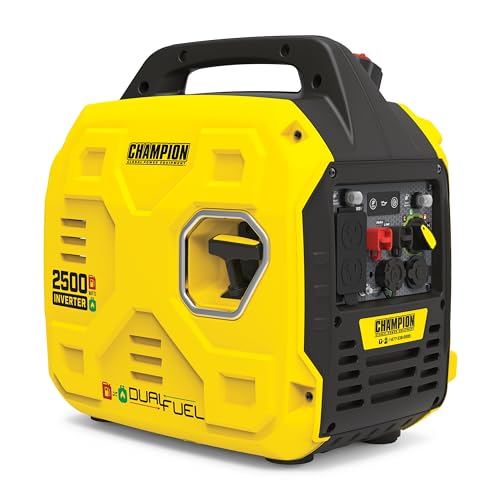
#4 — Champion 2500W Dual Fuel: Best Budget Gas Pick
The budget-friendly alternative. Runs on gas or propane. Costs about half what the Honda does.
What Makes It Different
This Champion model puts out 1,850W rated power on gas. Switch to propane and you get 1,665W. Both fuels deliver pure sine wave output with less than 3% THD.
The dual-fuel setup matters during fuel shortages. A 20-pound propane tank from a hardware store gets you through. Even when gas stations are dark.
Weight comes in at 39 pounds. The grab handle folds for storage.
Runtime hits 11.5 hours on a full gas tank at 25% load. A 20-lb propane tank runs about 34 hours at the same load.
Champion’s CO Shield carbon monoxide sensor cuts the engine if levels rise. Same critical safety as Honda’s CO-MINDER.
Pros
- Runs on both gas and propane
- 39 lb portable design
- Pure sine wave for medical use (<3% THD)
- 34-hour propane runtime at 25% load
- Cheaper than Honda by hundreds
- CO Shield auto-shutoff
- Parallel-ready for doubled output
- 3-year limited warranty
Cons
- Slightly less reliable than Honda long-term
- Louder than EU2200i (53-58 dBA)
- Lower rated wattage on propane mode
- Quality control varies between units
Why You’ll Love It
The propane option removes the gasoline storage headache. Propane stores for decades. Gasoline goes stale in months.
Pair two Champions with a parallel cable for 3,000+ combined watts. That covers heavier home oxygen units like the Invacare Platinum 10L.
Champion meets ANSI/PGMA G300-2018 portable generator safety requirements. That’s the latest U.S. industry safety standard.
What Others Are Saying
The Champion holds 4.5 stars from thousands of Amazon buyers. Solid for a budget pick.
One reviewer powered a Drive Medical 5L unit for 28 hours straight. On a single 20-lb propane tank. He noted that propane mode runs quieter than gas mode.
A Florida snowbird wrote about keeping the Champion in his RV. He runs his wife’s POC and a small fridge during summer travel. The unit handles both with margin.
Negative reviews cluster around two themes. Quality control on the gas carburetor (rough starts after long storage). And louder noise on gas mode at full load. Stabilize the fuel and run propane when you can.
Our Favorite Feature
The 34-hour propane runtime at quarter load is the standout spec here.
Propane storage costs almost nothing. A 20-lb tank holds 4.7 gallons of propane. Refills cost $20 to $35. Compare that to gasoline storage cycling every 6 months.
For a patient on overnight home oxygen, that math is powerful. One tank covers 4+ nights of overnight backup at typical concentrator loads. Two tanks cover a full week.
I keep three 20-lb tanks rotated through my own setup. They sit in the shed and wait. Zero maintenance.
Don’t Miss Out
Amazon lists the Champion 200961 Ultralight Dual Fuel around $629 to $749. The newer 201122 model with CO Shield sometimes hits similar pricing.
Best for budget shoppers who want gas reliability without Honda pricing.
How to Size a Generator for Your Concentrator
The number-one mistake I see: undersizing.
Your concentrator pulls running watts plus surge watts. Both numbers matter. Most home oxygen units sit in the 280W to 600W range continuous. Startup surges hit 1.5x to 2x that.
Real numbers from manufacturer specs.
- Philips Respironics EverFlo: 350W run, 700W surge
- Inogen At Home: 275W max, 550W surge
- Invacare Platinum 10L: 585W run, 1,200W surge
- Philips Millennium M10: 600W run, 1,200W surge
Pick a generator with output of at least 2x your running watts. That gives surge headroom plus margin for small loads. Phone chargers. Lamps.
For runtime math, use the O₂ Concentrator Runtime Calculator. Or the Solar Generator Size Tool.
Indoor Safety: Never Run Gas Generators Inside
This needs its own section because folks die every year ignoring it.
Carbon monoxide kills silently. You cannot smell it. You cannot see it. You fall asleep and never wake up.
The CDC reports 400+ Americans die from accidental CO poisoning every year. Many of those deaths involve portable generators run too close to homes.
Place gas generators at least 20 feet from windows, doors, and vents. The CPSC recommends 20 feet minimum. Point the exhaust away from any structure.
Never run a gas unit in any of these places.
- A garage (even with the door open)
- A covered porch
- A basement
- A shed with the door cracked
- Any enclosed or partially enclosed space
A solar generator is the only safe choice for indoor placement. Lithium power stations release zero combustion gases. They run silent. They work next to your bed.
The Tampa reader I mentioned earlier? Her father survived because she woke up at 4 a.m. He’d been running the gas unit on the screened porch. Three feet from the back door.
She switched to a solar generator the next week.
Solar Setup Tips for Oxygen Patients
A solar generator without solar panels is just a fancy battery. The panels stretch your runtime through daylight hours.
Pick the right wattage
A 200W panel inputs about 150W of real power in full sun. A 400W panel hits 280-320W. Match panel wattage to your daily load.
A 350W EverFlo running 12 hours a day eats 4,200Wh. You need 400W of solar input to keep up during daylight. Plus battery storage for nights.
Position for sun
Aim panels south in the U.S. Tilt them at an angle close to your latitude. A flat-on-ground panel loses 30% to 50% of its output.
Watch for shade
Even a single shaded cell can drop output by half. Trim branches. Move planters. Check shadows at different hours.
Use the Solar Panel Size Calculator
Plug in your concentrator’s wattage and daily hours. The tool spits out the panel size you need.
FAQs From Real Readers
These questions land in my inbox every storm season.
What’s the single best generator for oxygen concentrator backup?
No single pick fits every situation. For indoor-safe daily backup, the EcoFlow Delta Pro 3 wins. For multi-day grid outages, the Honda EU2200i is hard to beat. Budget shoppers should grab the Champion 2500W Dual Fuel.
Can I plug my oxygen concentrator straight into a gas generator?
Only if it’s an inverter generator with pure sine wave output. Open-frame gas generators push dirty modified power. That damages compressor motors and voids manufacturer warranties.
Honda EU2200i, Champion 2500W Dual Fuel, and Yamaha EF2000iSv2 push clean power. Most $400 open-frame units do not.
What size generator do I need for a home oxygen concentrator?
For a 350W home unit like the EverFlo, aim for 1,500W continuous. Plus 2,000W of surge capacity. That gives safe headroom for the compressor startup spike.
How long will a solar generator run my concentrator?
A 1,000Wh solar generator runs a 350W concentrator 2 to 3 hours. A 2,000Wh unit doubles that. Solar panels can effectively double runtime during daylight.
For exact numbers, see our oxygen battery backup. Or the Best Solar Generator for Medical Devices roundup.
Can I use a whole-house standby generator instead?
Yes, with caveats. A Generac or Kohler whole-house unit on natural gas can run indefinitely. But the install costs $5,000 to $15,000. And they take 10 to 30 seconds to kick in. Your concentrator restarts after a brief gap.
For most home oxygen users, a portable solar generator makes more sense.
Will my insurance or HSA cover a generator?
Medicare does not cover generators. HSA and FSA plans may reimburse with a Letter of Medical Necessity. See our HSA/FSA Eligible Portable Power Stations guide for details.
What about running my CPAP off the same generator?
Yes, on units with multiple AC outlets. The EcoFlow Delta Pro 3 has six. Run the CPAP and concentrator at the same time without issue.
For CPAP-specific generator picks, see Best Solar Generator for CPAP.
Is a propane generator safer than gas for oxygen patients?
Propane burns cleaner. It produces less carbon monoxide than gasoline. But both still emit CO. Both still need outdoor placement.
The Champion 2500W Dual Fuel adds propane without losing gas flexibility.
Final Word From Lee
Your best generator pick depends on one honest question. What does your situation actually need?
Short outages and indoor needs? Go solar. Multi-day storms and outdoor space? Go gas inverter. Tight budget but want both? The Champion dual-fuel covers both bases.
Whichever path you pick, demand pure sine wave output. Always. Open-frame gas generators kill more concentrators than any other single mistake.
Test your setup on a calm Sunday. Practice the switchover. Mark a fuel rotation schedule on the calendar.
Eight years of reader emails taught me one truth. The patients who plan ahead breathe easier. The ones who improvise during a storm pay for it twice.
Stay safe out there.