CPAP Inverter: What You Must Know Before Buying (2026)
 By Lee Arnold
Medical Solar Power Backup Specialist | 8+ years in the field
Quick Answer
A CPAP requires a pure sine wave inverter. Modified sine wave inverters cause motor noise and long-term internal damage. For a car inverter, choose pure sine wave rated at least 300W. Most CPAPs draw 30-90W. They need clean AC like your home outlet.
Most CPAP inverter mistakes happen at the checkout stage. Someone grabs a $40 inverter off a shelf. It works for a week. Then the CPAP starts making noise. Then it throws error codes. Then the motor fails six months early.
The price gap between modified and pure sine wave inverters is $30-$80. The CPAP damage that bad inverter causes runs $300-$1,200.
This guide covers what to look for and how to size correctly.
Table of Contents
Pure Sine Wave vs Modified Sine Wave: The Critical Difference
This is the only decision that matters when buying a CPAP inverter.
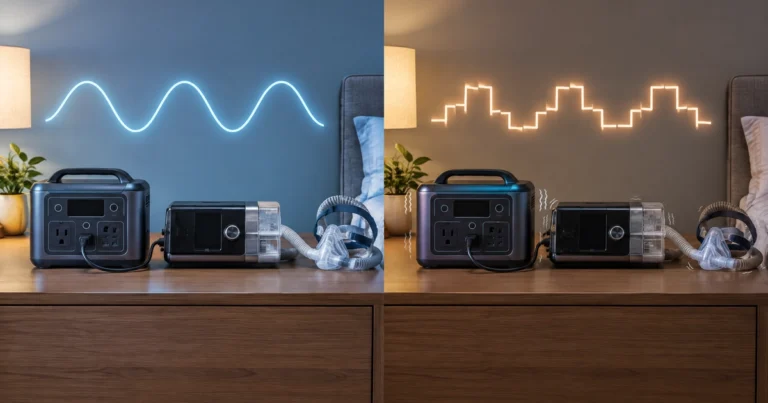
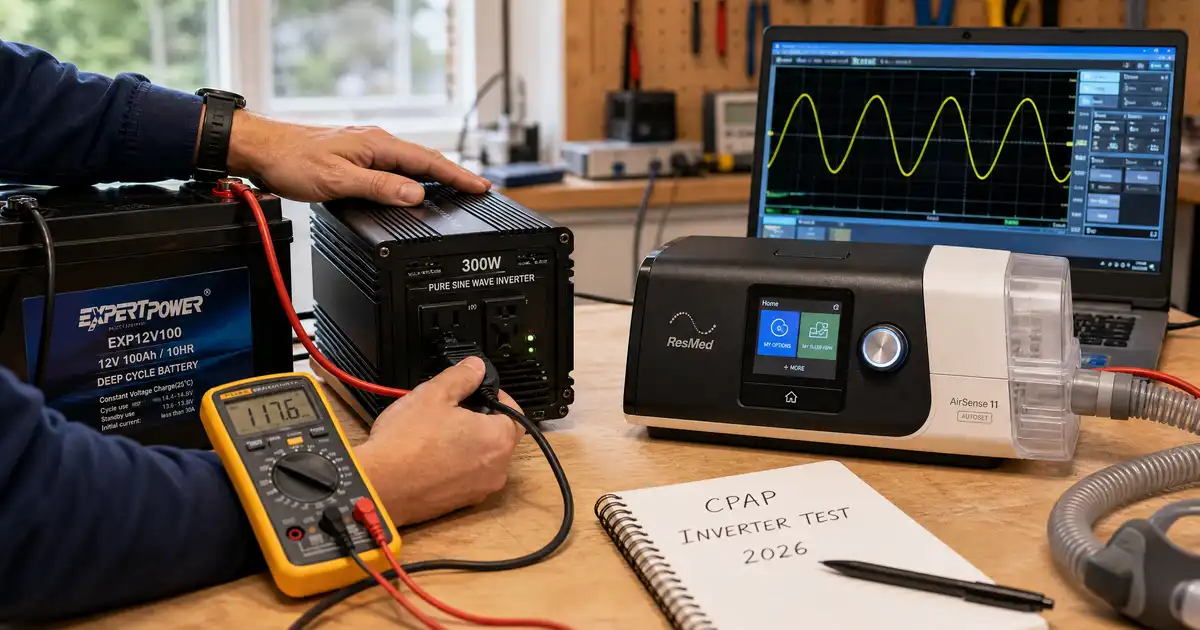
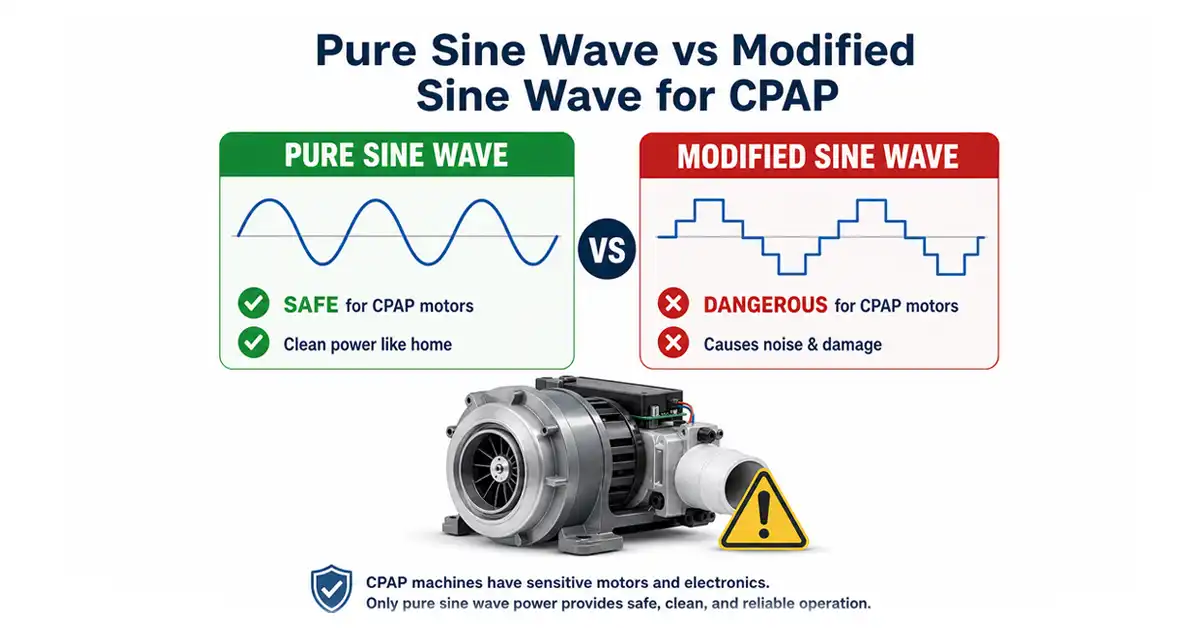
Pure sine wave inverters output AC power with the same smooth, clean waveform as your home wall outlet. The electrical current rises and falls in a perfect curve. CPAP machines are designed to run on this type of power.
Modified sine wave inverters output a stepped, blocky approximation of AC power. The waveform is jagged rather than smooth. It is cheaper to manufacture. It is adequate for simple devices like phone chargers and light bulbs. It is not adequate for CPAP machines.
Why modified sine wave damages CPAPs
CPAP machines use brushless DC motors with precise electronic speed controllers. These controllers depend on clean sine wave input to regulate pressure accurately. Modified sine wave creates several problems.
- Audible motor hum: The motor vibrates at frequencies it’s not designed for.
- Erratic pressure delivery: The pressure controller misreads the power quality.
- Electronic stress: Capacitors and rectifiers in the machine work harder.
- Accelerated motor wear: Long-term internal degradation.
ResMed product specifications confirm that ResMed machines require pure sine wave power. Phillips Respironics and Fisher & Paykel specify the same.
One night of modified sine wave may show no visible harm. Weeks or months of modified sine wave degrades the motor. The failure is gradual and hard to trace. Until the machine quits.
Rule: Only use pure sine wave inverters for CPAP.
How to Size a CPAP Inverter
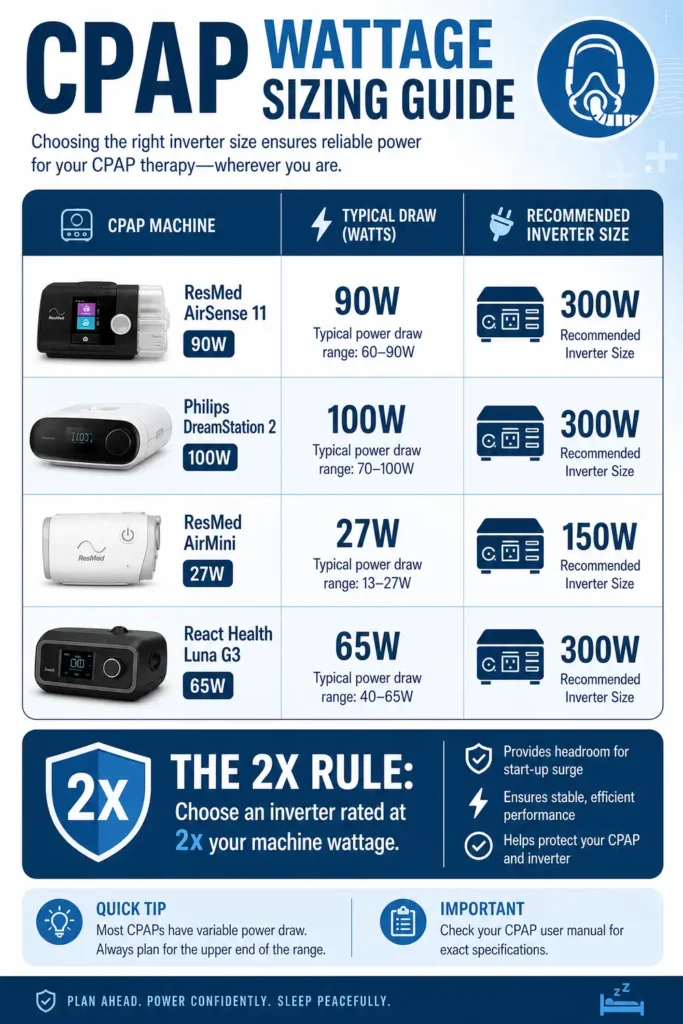
Inverter size is measured in watts. The inverter must exceed your CPAP’s peak draw, not just typical draw.
Find your CPAP’s wattage
The rated wattage is on the label on the machine’s bottom. Common values:
| Machine | Rated Watts | Typical Draw (no HH) | Draw With Humidifier |
|---|---|---|---|
| ResMed AirSense 11 | 90W rated | 30-45W | 55-85W |
| ResMed AirMini | 27W rated | 5-8W | N/A (no heated HH) |
| Philips DreamStation 2 | 100W rated | 35-50W | 60-90W |
| ResMed AirSense 10 | 90W rated | 30-45W | 55-80W |
| React Health Luna G3 | 65W rated | 25-40W | 50-70W |
For precise wattage data by machine, see my cpap wattage guide.
Sizing rule
Buy an inverter rated at least 2× your CPAP’s rated wattage. The machine’s startup surge can briefly exceed its rated draw. An inverter running at its maximum limit runs hot and wears faster.
Examples:
- AirSense 11 (90W rated): choose a 300W+ inverter
- DreamStation 2 (100W rated): choose a 300W+ inverter
- AirMini (27W rated): a 150W+ inverter covers it, but 300W is more practical
A 300W pure sine wave inverter covers virtually every CPAP machine sold. The cost difference between a 150W and 300W model is minimal. Go with 300W as your baseline.
Car Inverter for CPAP: The 12V DC Approach
The most common use: running a CPAP from a car’s 12V port.
Cigarette lighter port (12V)
Most car lighter ports deliver 10-15A — about 120-180W available. A 300W inverter can’t draw full power from a lighter port. The port limits it.
For basic CPAP use at 40-60W, a lighter port connection works. The inverter draws only what the CPAP needs. For a machine drawing 45W, a lighter port has plenty of headroom.
Do not leave the car running in an enclosed space. Carbon monoxide is a fatal risk. If running a CPAP from car power at a campsite, crack a window and confirm there is ventilation.
Direct battery connection (recommended for extended use)
For extended off-grid use, connect the inverter to the car battery directly. This bypasses the lighter port’s current limit and provides full inverter capacity.
Battery depletion risk: A car battery running a CPAP at 45W for 8 hours will draw roughly 30Ah of capacity. A standard car battery holds 45-70Ah. That means 1-1.5 nights of therapy brings the battery to a level where starting the car is risky.
Options to avoid a dead car battery:
- Run the engine for 30-45 minutes before sleep to top off the battery
- Use a dedicated deep-cycle auxiliary battery
- Use a portable power station instead (safer for extended CPAP use)
DC power cord alternative
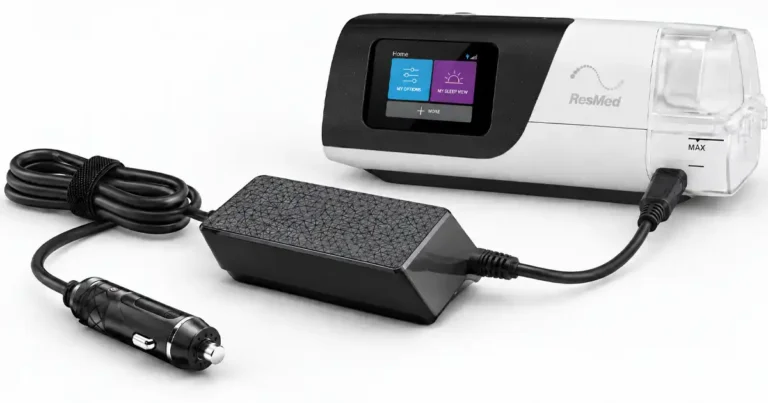
For ResMed machines, a DC cord skips the inverter entirely. The cord connects the car’s 12V output to the CPAP’s DC input.
DC direct connection is 20-30% more efficient than the inverter path. No AC conversion. No heat loss. More CPAP therapy from the same battery.
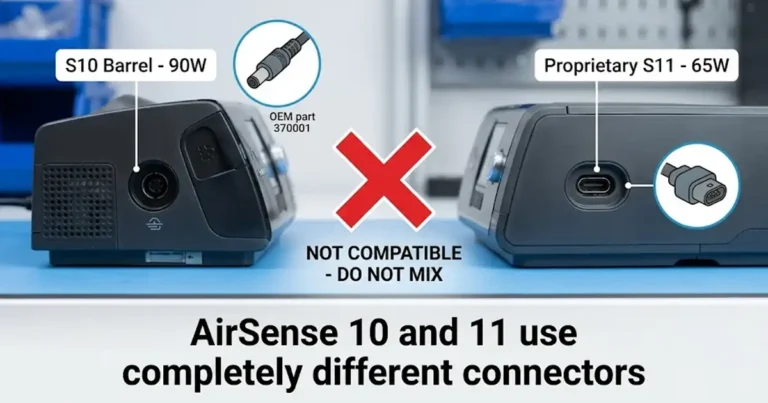
For AirSense 11 DC cord options, see my airsense 11 power cord guide. For battery powered CPAP options more broadly, see my battery powered cpap guide.
Generator Inverter for CPAP: Home Backup
Standard portable generators (gasoline-powered) output modified sine wave power. Without an added inverter, standard generators are not safe for CPAP.
Inverter generators are different. Products from Honda, Yamaha, and EcoFlow specifically label their units as “inverter generators” — meaning they include an internal pure sine wave inverter. The Honda EU2200i is the benchmark inverter generator for medical device use.
| Generator Type | Output | Safe for CPAP? |
|---|---|---|
| Standard portable generator | Modified sine wave | No |
| Inverter generator (Honda EU2200i, Yamaha EF2200iS) | Pure sine wave | Yes |
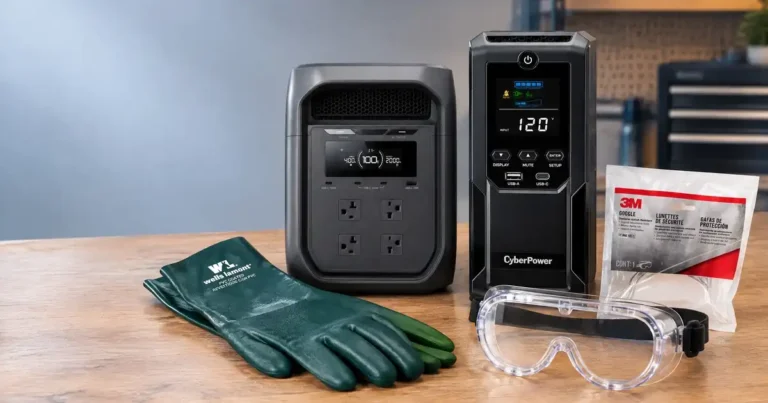
| Portable power station | Pure sine wave | Yes |
Own a standard generator? Add a pure sine wave inverter between it and the CPAP. Connect the generator’s AC output to the inverter’s AC input. The inverter re-conditions the power to clean sine wave. The CPAP connects to the inverter’s output.
This adds cost and efficiency loss. A portable power station is a cleaner solution for most CPAP patients. For the generator comparison, see my best generator for oxygen concentrator guide.
What to Look for on the Label
When buying any inverter for CPAP use, confirm these specifications:
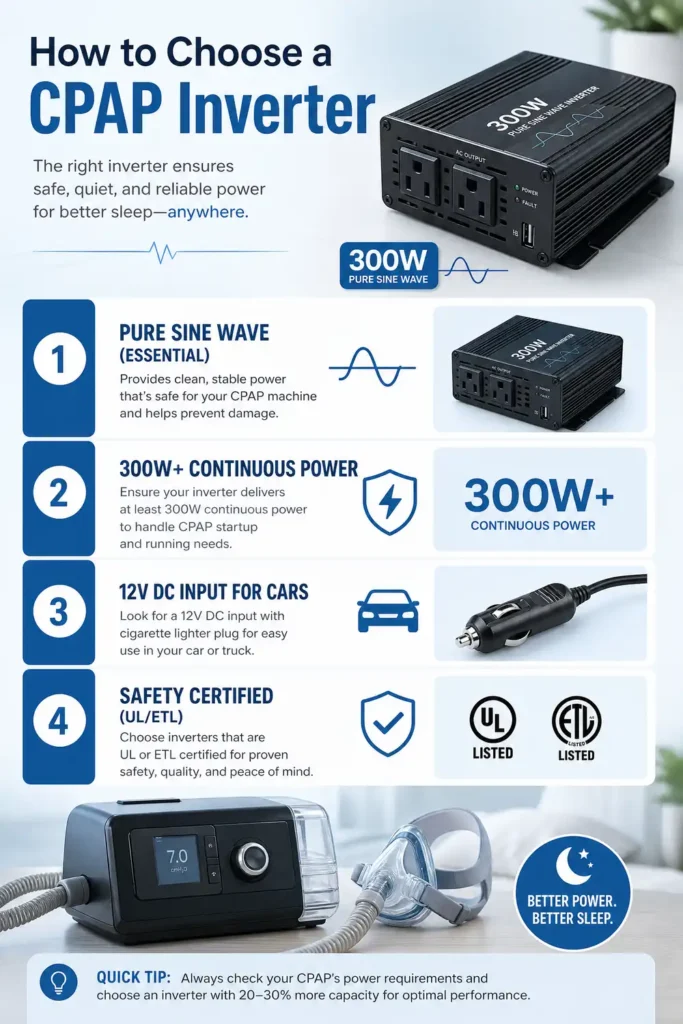
1. Pure sine wave output — Must be stated explicitly. If the listing says “sine wave” without “pure,” assume modified.
2. Continuous wattage rating — Must exceed your CPAP’s peak draw. A 300W continuous rating covers all standard CPAPs.
3. Surge/peak wattage — The startup surge capacity. Rated at 2× or higher than continuous.
4. Input voltage — 12V for car use. 12V-48V multi-input for flexibility.
5. UL or ETL certification — Safety certification matters for a device running medical equipment.
Do You Actually Need an Inverter?
Before buying an inverter, consider whether you need one at all.
You may not need an inverter if:
- Your CPAP machine has a DC input (most modern ResMed and some Philips models do)
- You want to run from a car battery — use a DC cord instead
- You want home outage backup — a portable power station already includes a built-in pure sine wave inverter
An inverter is right when your AC source is dirty. It also works when a CPAP lacks a DC input port entirely.
For home outage backup, a portable power station is simpler and cheaper. Power stations include a pure sine wave inverter, battery, and charge control. No separate inverter needed.
For tested power station recommendations, see my cpap battery backup pillar and my best portable power station for cpap guide.
FAQs on CPAP Inverters
Will a 400W inverter work for my CPAP?
Yes. A 400W pure sine wave inverter comfortably handles any CPAP machine. Your machine draws 30-90W — well below a 400W rated inverter.
Can I use a power strip between the inverter and the CPAP?
Yes. A power strip does not affect power quality. It passes the inverter’s output unchanged to connected devices. Confirm the power strip’s rated amperage exceeds your total device draw.
My CPAP makes a humming sound on my inverter. What is wrong?
That hum almost always means modified sine wave. The CPAP motor is reacting to distorted power. Check the inverter specs for “pure sine wave.” Replace it immediately.
Can I run a CPAP and humidifier from a car inverter?
Yes, with caveats. A CPAP with humidifier draws 60-90W. A 300W inverter handles that load. The car battery is the limiting factor. Humidifier use for 2+ hours drains it fast.
Does the inverter size affect CPAP therapy quality?
No — provided the inverter is pure sine wave and properly sized. A 300W and 2,000W pure sine wave inverter deliver identical quality. An oversized inverter adds cost without adding benefit.
Can I use a solar panel directly as a CPAP power source?
Not directly. A solar panel outputs variable DC voltage. Your CPAP requires regulated AC (inverter) or regulated DC (charge controller). A power station accepts solar input and outputs clean AC or DC.
Bottom Line
The rule is simple: pure sine wave only. Every other inverter specification is secondary.
A 300W pure sine wave inverter covers every standard CPAP machine. A DC cord avoids the inverter entirely for compatible machines. A power station includes a built-in pure sine wave inverter. Simplest home backup.
The National Sleep Foundation confirms that poor CPAP power affects therapy quality. The right inverter eliminates that risk entirely.
For the complete guide to running your CPAP on battery power, see my cpap battery backup pillar. For testing your backup setup before you need it, see my test cpap backup battery guide.