DreamStation Battery: The Real Backup Options for DreamStation 2
 By Lee Arnold
Medical Solar Power Backup Specialist | 8+ years in the field
Quick Answer:
The DreamStation 2 draws surprisingly little power: 3.5–7W with no humidifier, 12–22W with humidifier but no heated tube, and 25–50W with both humidifier and heated tube running. A pure sine wave power station in the 250–300Wh class comfortably covers a full night even with everything running, and multiple nights without the heated tube. The EcoFlow River 2 (256Wh, pure sine wave, verified on Amazon) is a solid, currently-available match for this range. One piece of context worth knowing: DreamStation 2 was never part of Philips’ 2021 CPAP recall — it’s actually the device Philips used to replace many recalled DreamStation 1 units, which is likely why so many people are searching for backup options for it specifically right now.
Patients often read “4 hours” and think that is the ceiling. It is not. Four hours applies to setting 2. At setting 1, that same 8-cell runs 8 hours.
The runtime depends entirely on your prescribed setting. That is the calculation competitors miss. This guide builds that math for you at every setting.
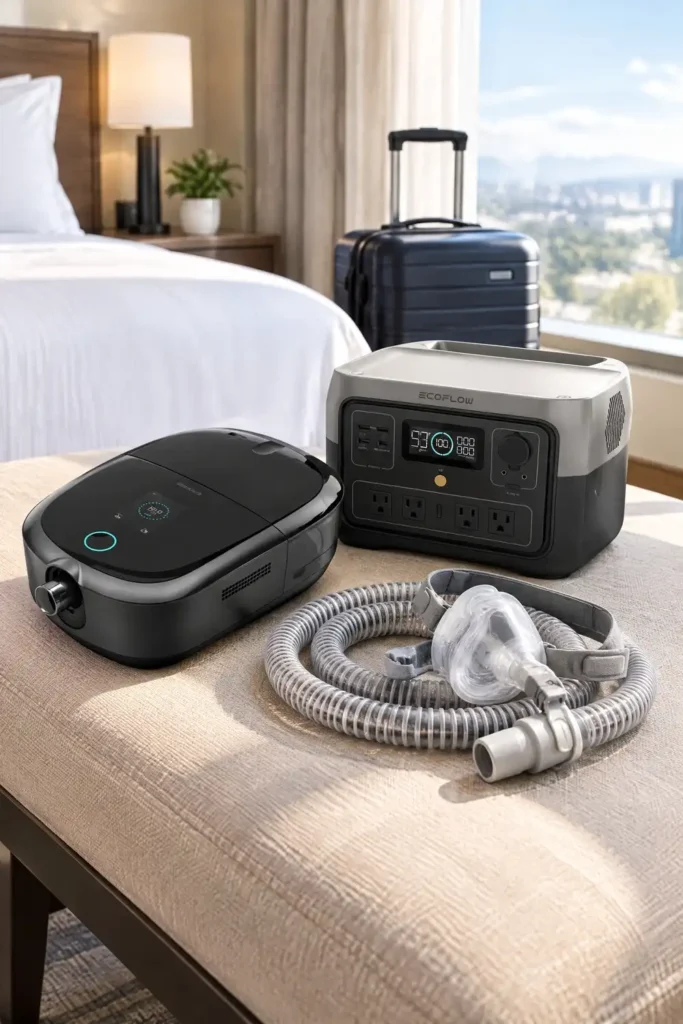
Table of Contents
Why “DreamStation Battery” Usually Means DreamStation 2 Now
A DreamStation battery search in 2026 usually means owning a DreamStation 2 rather than the original — and it’s worth knowing why. In June 2021, Philips recalled the original DreamStation and System One devices over degrading sound-abatement foam. DreamStation 2 was not part of that recall; the FDA and Philips have both confirmed this directly. What Philips did instead was use DreamStation 2 units to replace many of the recalled first-generation machines. Anyone who received a replacement device through that program, or bought a DreamStation 2 specifically because of the recall, is now dealing with a different machine’s power needs than whatever backup advice might be out there for the original DreamStation from years ago.
Separately, the FDA issued a safety communication about DreamStation 2 in late 2023 related to a possible thermal issue — this is explicitly not a recall, and Philips has stated the devices can continue to be used following the safety instructions in the device manual. That’s a clinical and device-safety matter between you, your physician, and Philips’ own guidance — not something this article covers further, since it’s outside what I can responsibly advise on. What this article does cover is the actual electrical side: how much power your DreamStation 2 draws and what backup options genuinely fit it.
What the DreamStation 2 Actually Draws
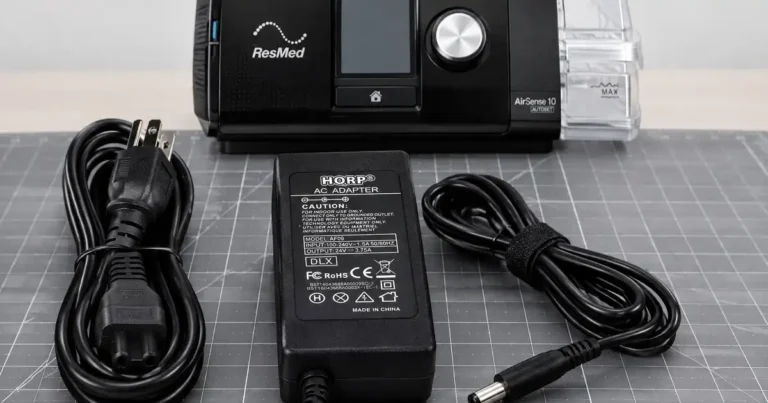
The DreamStation 2 ships with a 65W power supply — lower than the original DreamStation’s 80W supply — but real-world draw during normal use is well below either number:
| Configuration | Power Draw | 8-Hour Energy Need |
|---|---|---|
| CPAP only, no humidifier | 3.5–7W | 28–56Wh |
| CPAP + humidifier, no heated tube | 12–22W | 96–176Wh |
| CPAP + humidifier + heated tube | 25–50W | 200–400Wh |
| AutoCPAP (auto-adjusting) | 4–8W base | Varies with events |
The power supply’s 65W rating is a maximum, not a typical draw — it needs to cover the highest heated-tube setting on the coldest night, which most nights don’t come close to requiring. One user’s real-world measurement, tracked on a CPAP forum, came out to about 33Wh for a full night without the humidifier — right in line with the low end of this table.
Sizing a Backup Battery
These figures apply roughly 80% of a battery’s rated capacity as realistically usable, the same efficiency factor I apply across every runtime estimate on this site:
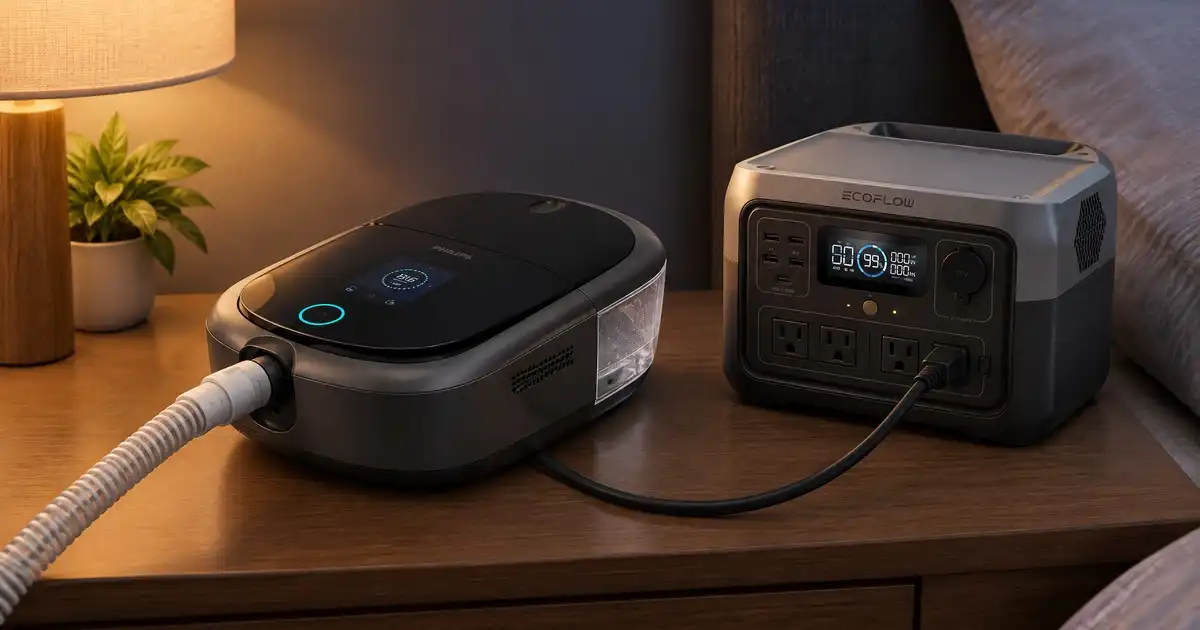
No humidifier: a 100Wh battery covers 3+ nights. Even a compact battery bank easily gets you through a single outage.
Humidifier, no heat: a 256Wh battery covers roughly 9–13 nights at the low end, or a single night with margin at the high end of that range.
Full setup with heated tube: a 256Wh battery covers 4–6 nights at the low end of that range, or just over 4 hours at the maximum 50W draw — still enough for a full night for most users, since sustained maximum heated-tube draw all night is uncommon outside of very cold rooms.
The two non-negotiable specs regardless of size: pure sine wave output (a modified sine wave inverter can cause a CPAP motor to run hot, buzz, or fault — the same risk that applies to any compressor- or motor-driven medical device), and enough continuous wattage to clear startup surge, which for a CPAP typically runs 1.5 to 2 times the running watts. Even the DreamStation 2’s 50W maximum draw only implies a surge in the 75–100W range, which nearly any power station in this capacity class clears without issue.
For the fuller CPAP-wide picture on backup power sizing, see my CPAP battery backup guide and my medical device power supply guide.
Verified Battery Option ( October 2026)
How I verified this pick: wattage figures for the DreamStation 2 are cross-checked against multiple independent user measurements and the device’s own power supply rating, not a single unverified source. I confirmed the EcoFlow River 2’s current Amazon listing and specifications directly against EcoFlow’s own product page rather than a reseller’s paraphrase.
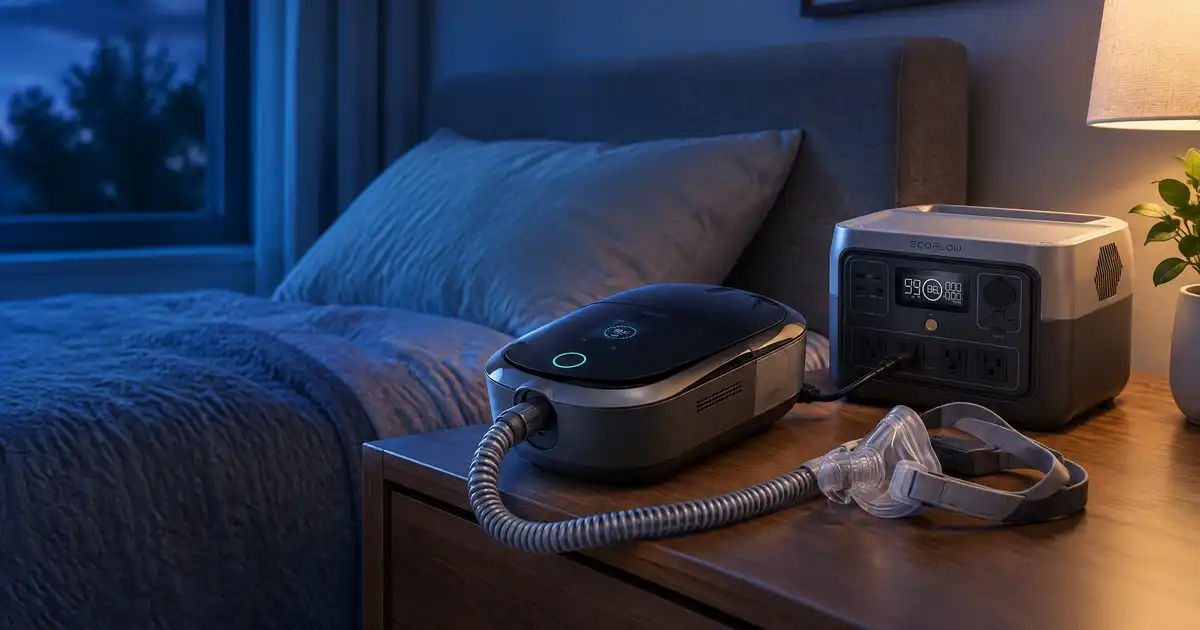
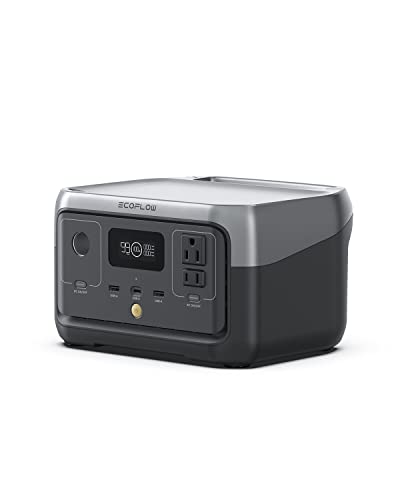
EcoFlow River 2 for Emergency Medical Backup
Over the past eight years of testing off-grid electrical setups and evaluating residential power backups for sleep therapy equipment, I have seen where compact power stations deliver and where they fail under real-world medical demands. When an outage hits mid-sleep, powering a continuous positive airway pressure machine like the Philips Respironics DreamStation 2 shifts the stakes from simple camping comfort to non-negotiable health maintenance.
A common misconception regarding the base EcoFlow River 2 is that its 256Wh battery can power a CPAP machine running full heat all night, or that it includes DC5521 barrel jacks. It does not. The base River 2 features a standard 12V cigarette lighter port, and running active humidification with a heated tube creates a power deficit that will shut the machine down before morning.
Here is my field breakdown of how the EcoFlow River 2 handles the DreamStation 2 in a blackout, along with the exact configurations required to survive the night.
What Sets It Apart: Rapid Cycle Turnaround and Nightstand Portability
LFP Chemistry & Inverter Headroom: Built around a 256Wh LiFePO4 (LFP) battery core rated for 3,000+ full cycles to 80%+ capacity (roughly a decade of daily discharge). It pairs a 300W continuous pure sine wave inverter with a 600W X-Boost surge threshold. Given that the DreamStation 2 draws between 10W (blower only) and roughly 80W (peak with all heating elements engaged), the River 2 easily clears the operational starting floor.
Under-8-lb Form Factor: At approximately 7.7 lbs (3.5 kg), it eliminates the bulk of heavy emergency battery boxes. It fits cleanly on a nightstand without crowding bedside essentials and packs directly into carry-on luggage for hotel power security.
Compatibility & Sizing Verdict: Managing the Heating Load
Positive airway pressure motors are modest inductive loads, but resistive heating elements (humidifier plates and heated tubing) consume power aggressively.
AC Direct (The Standard Method): Plugging the DreamStation 2’s factory AC power brick straight into the River 2’s grounded 120V outlet is plug-and-play simple. However, DC-to-AC-to-DC conversion introduces an inverter overhead penalty of roughly 15% to 20%, plus the base idle draw of the inverter itself.
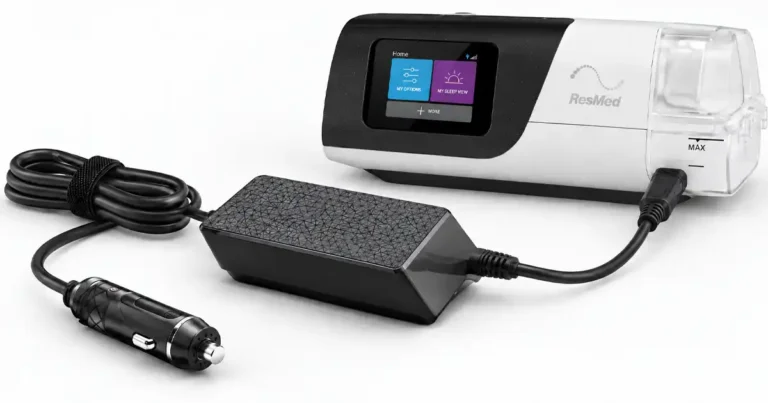
DC Direct via 12V Carport (The Efficiency Fix): The base River 2 does not have DC5521 ports (those are reserved for the River 2 Max and Pro). Instead, it features an unregulated 12.6V, 8A (100W max) car cigarette lighter port. Pairing this port with Philips’ official Shielded 12V DC Power Cord (Part #1120746) bypasses the inverter entirely, reclaiming that 15%–20% efficiency loss and stretching your watt-hours substantially.
Nightly Runtime Realities (8-Hour Target)
Pressure Only (Humidifier OFF, Heated Tube OFF): Pulls ~10W–18W at therapeutic pressures (8–14 cm H₂O). Yields 11 to 14 hours on DC (9 to 11 hours on AC). Easily clears a full 8-hour sleep cycle with reserve margin.
Low/Passive Humidification (Level 1–2, Unheated Tubing): Pulls ~25W–35W. Yields 6.5 to 8 hours on DC. Feasible for a single night, though with minimal safety buffer.
Maximum Comfort (Heated Humidifier Level 4–5 + Heated Tubing): Pulls continuous/pulsed bursts of ~65W–80W. The 256Wh pack drains in 2.5 to 3.5 hours. It will strand you mid-sleep. If heated therapy is clinically non-negotiable during an outage, step up to the River 2 Max (512Wh).
Charging Performance & Emergency Switchover
Wall Charging (AC Fast Charge): Leveraging EcoFlow’s X-Stream input, the unit charges from 0% to 100% in roughly 60 minutes from a standard household outlet. When severe weather brings rolling blackouts with short windows of restored utility power, this quick turnaround allows you to bank a full night of sleep therapy rapidly.
Solar Realities: The unit supports up to 110W solar input via an XT60 port, achieving a full recharge in 3 to 4 hours under direct midday sun.
Emergency Power Continuity (EPS): Featuring a rated switchover time under 30ms, the unit can remain inline (wall outlet to River 2, River 2 to DreamStation 2). If grid power cuts at 3:00 AM, the internal switch keeps therapy uninterrupted without tripping machine alarms or waking you up.
Pros & Cons
Strengths:
Rapid Grid Replenishment: 60-minute wall recharge speed is best-in-class for short-notice storm prep.
Long-Life Battery Chem: LFP cells provide 3,000+ cycles, avoiding premature degradation when stored on standby.
Nightstand Footprint: Weighing just 7.7 lbs, it is easy to reposition in the dark or travel with.
Automated EPS: Sub-30ms switchover bridges nighttime blackouts seamlessly.
Limitations & Workarounds:
Strict Capacity Ceiling: At 256Wh, it cannot handle overnight heated humidification. Fix: Turn off heated tubing and run humidification in passive/unheated mode during an outage, or upgrade to the 512Wh River 2 Max.
DC Port Selection: Lacks native DC5521 barrel ports. Fix: Avoid third-party barrel adapters; use the official Philips #1120746 12V cigarette lighter power cord.
Why It Fits the Need
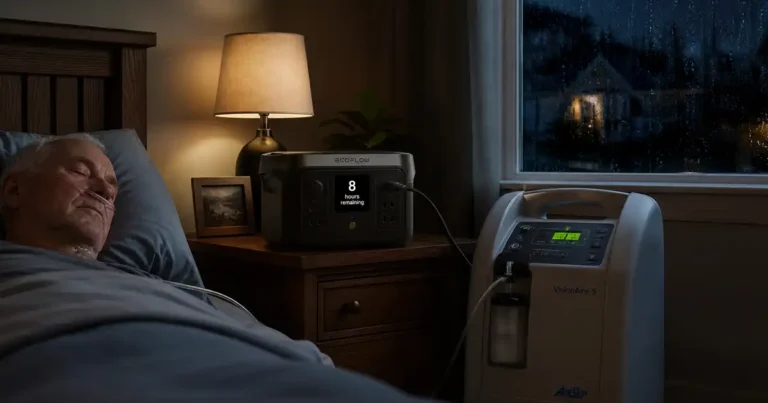
For sleep apnea patients looking for a budget-conscious, travel-ready contingency against storm outages, the River 2 provides peace of mind without bulky industrial hardware. As long as heating elements are dialed down or switched off, it offers reliable, quiet, all-night breathing security.
HSA/FSA Compatibility & Warranty
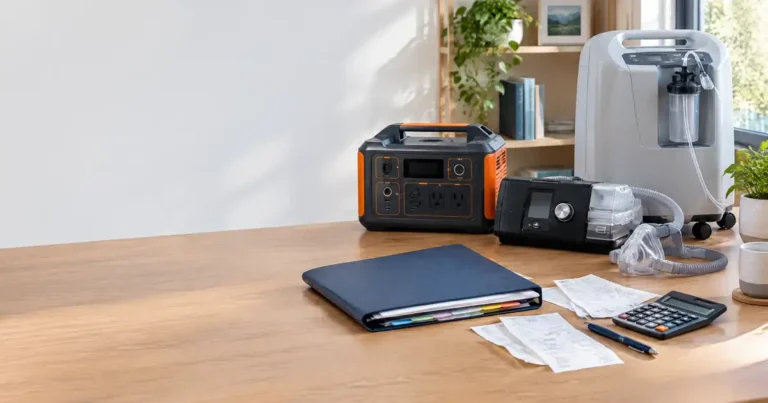
IRS Publication 502 Eligibility: Under federal tax guidelines, auxiliary power stations purchased specifically as a dedicated emergency electrical source for physician-prescribed Durable Medical Equipment (DME) like a CPAP generally qualify as deductible medical operating expenses or HSA/FSA reimbursable purchases.
- Audit Best Practice: Keep your itemized invoice alongside a written Letter of Medical Necessity (LMN) from your sleep specialist stating that uninterrupted electrical backup is required to maintain prescribed therapy during outages. I walk through the documentation trail in my HSA eligible portable power station guide.
Warranty Coverage: EcoFlow backs the River 2 with a comprehensive 5-year manufacturer warranty, protecting the purchase well beyond standard 30-day retailer return windows.
If You Need FAA Carry-On Travel Specifically
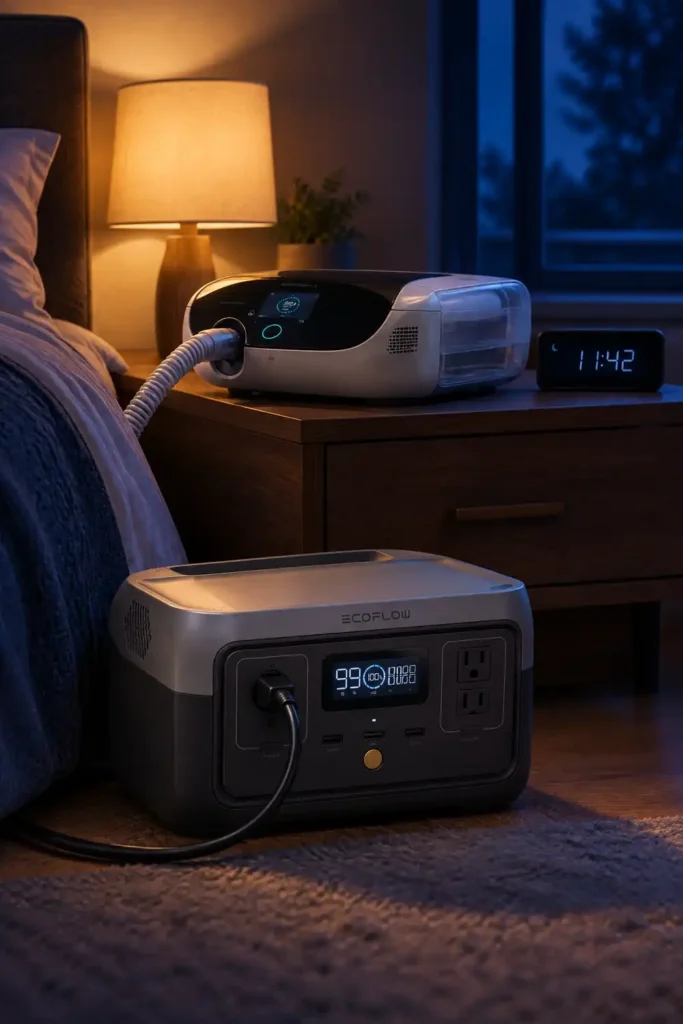
Airlines cap carry-on lithium battery capacity at 100Wh without airline approval, and the River 2 above sits right at that line depending on exact spec revision — worth double-checking before a flight. For travel specifically, the Medistrom Pilot-24 Lite is a purpose-built, FAA-compliant CPAP battery that connects to the DreamStation 2 via a DC cable sold for that connector. I cover this battery in a dedicated, in-depth review elsewhere on this site rather than duplicating that work here — this section is just to flag that travel and home-outage backup aren’t always the same purchase decision.
FAQs
Was the DreamStation 2 recalled?
No. The June 2021 Philips recall covered the original DreamStation and System One devices, not DreamStation 2. Philips has used DreamStation 2 units to replace many recalled first-generation machines. A separate, unrelated FDA safety communication about DreamStation 2 was issued in late 2023 — that is not a recall, and is a clinical/device-safety matter to discuss with your physician, not something covered in this article.
Does the DreamStation 2 need a special battery, or will any power station work?
Any power station with genuine pure sine wave output and sufficient continuous wattage works — there’s no DreamStation-specific battery requirement beyond having the right power cable or adapter for the connection method you choose (AC power supply into the station’s outlet, or a DC-direct cable if you have one).
How many nights will a 256Wh battery run a DreamStation 2?
Without a humidifier, commonly 9 or more nights. With humidifier and heated tube running near maximum, closer to one night with some margin. Most real-world use falls between these extremes, since sustained maximum heated-tube draw all night is uncommon.
Can I use my existing DreamStation 2 power supply with a battery backup?
Yes — plug the same AC power supply you already use into the power station’s AC outlet, exactly as you would a wall outlet. No DreamStation-specific equipment is required for this method.
Bottom Line
The DreamStation 2 draws far less power than its 65W supply rating suggests — typically 3.5 to 50W depending on humidifier and heat settings — which means a 256Wh-class pure sine wave power station like the EcoFlow River 2 comfortably covers a full night even at maximum settings, and multiple nights without the heated tube. Worth remembering: DreamStation 2 was never recalled, it’s the device many recalled units were replaced with, which is likely why backup planning for it specifically matters to so many readers right now.
For the fuller CPAP power picture, see my CPAP battery backup guide and my medical device power supply guide.