DreamStation 2 Solar Backup: Can It Actually Run Off-Grid?
 By Lee Arnold
Medical Solar Power Backup Specialist | 8+ years in the field
Quick Answer:
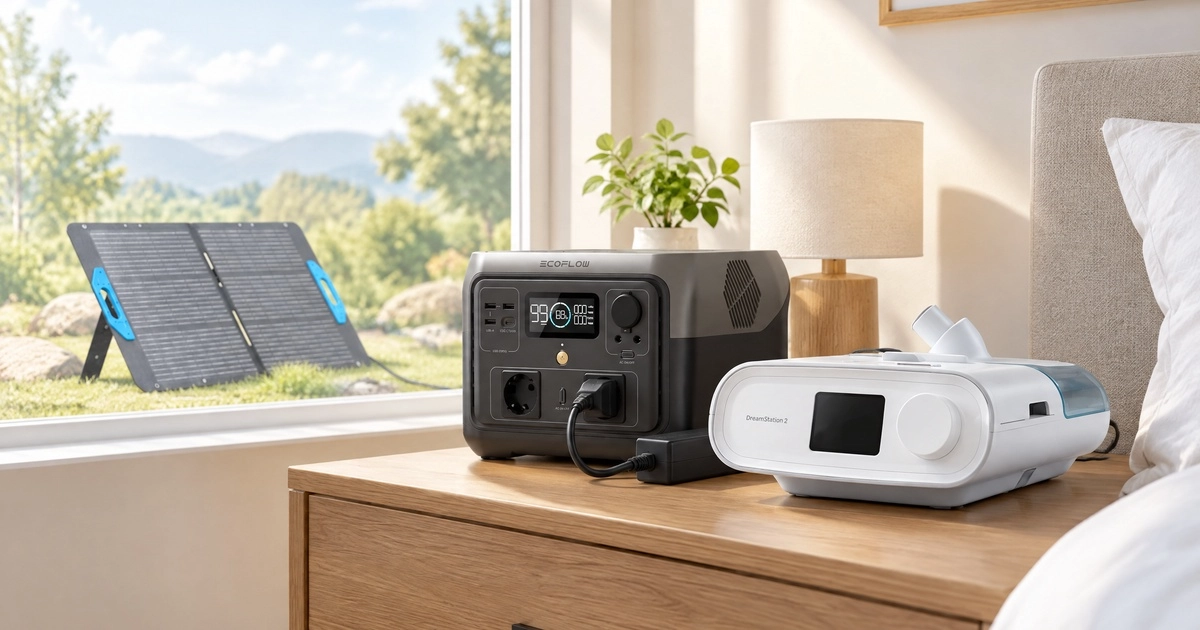
Yes, realistically — the DreamStation 2 draws only 3.5 to 50W depending on humidifier and heated-tube settings, which is modest enough that a mid-size solar setup can sustainably keep pace with nightly use indefinitely, not just bridge a short outage. This is a genuinely different answer than a 24/7 stationary oxygen concentrator gets on this site: a CPAP only runs about 8 hours a day, so a daytime solar charge has real time to catch up before the next night. A 512Wh-class pure sine wave power station paired with a 100W panel comfortably covers this for most users, including humidifier use.
I cover the DreamStation 2’s full wattage breakdown by setting in my DreamStation battery guide — this one is specifically about whether solar can sustain it long-term, not just for a single outage.
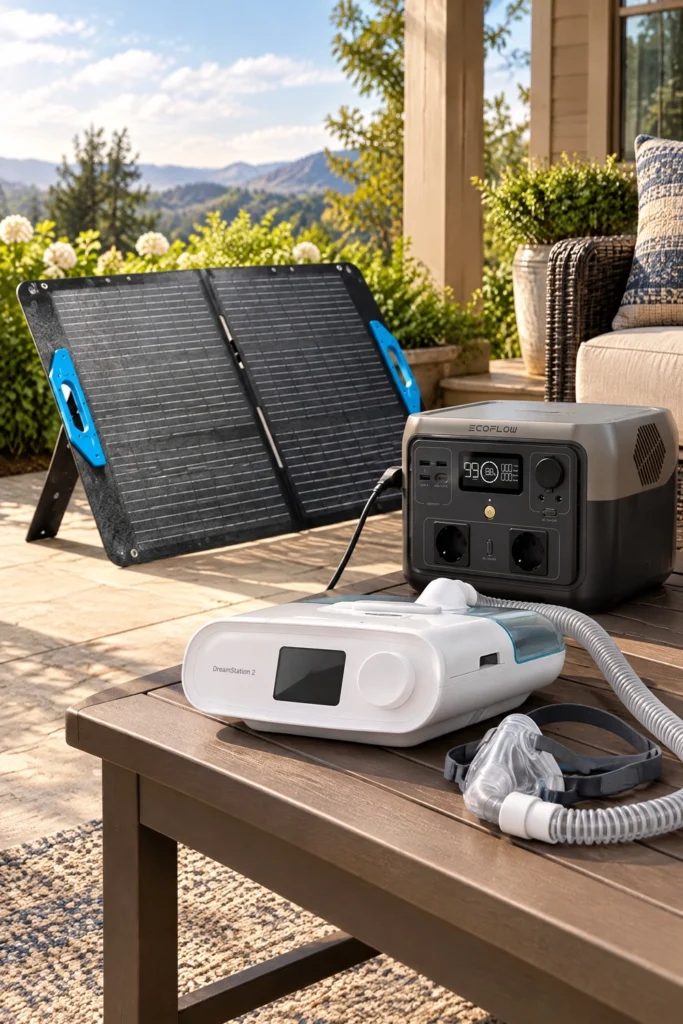
Table of Contents
Why “Off-Grid” Is a Realistic Question for This Device
A stationary oxygen concentrator like the Inogen At Home runs continuously, 24 hours a day — solar can bridge an outage, but keeping pace with that draw indefinitely is a genuinely bigger project. A CPAP is different: it runs roughly 8 hours a night and sits idle the other 16, which means a full day of sunlight has real time to recharge what got used the night before. That’s the actual reason “can it run off-grid” has a more optimistic answer for a DreamStation 2 than it does for continuous medical equipment — not a difference in marketing, a difference in duty cycle.
Real Numbers
From the DreamStation 2’s actual draw, covered in depth in the sibling guide linked above:
| Configuration | Power Draw | Nightly Energy (8 hours) |
|---|---|---|
| No humidifier | 3.5–7W | 28–56Wh |
| Humidifier, no heated tube | 12–22W | 96–176Wh |
| Humidifier + heated tube | 25–50W | 200–400Wh |
Even at the highest setting, a full night tops out around 400Wh. A single 100W solar panel in decent sun generates roughly 300 to 400Wh over a day — meaning for most configurations, one day of sun replaces one night of use, keeping the system in a stable, sustainable cycle rather than slowly running down.
The Setup
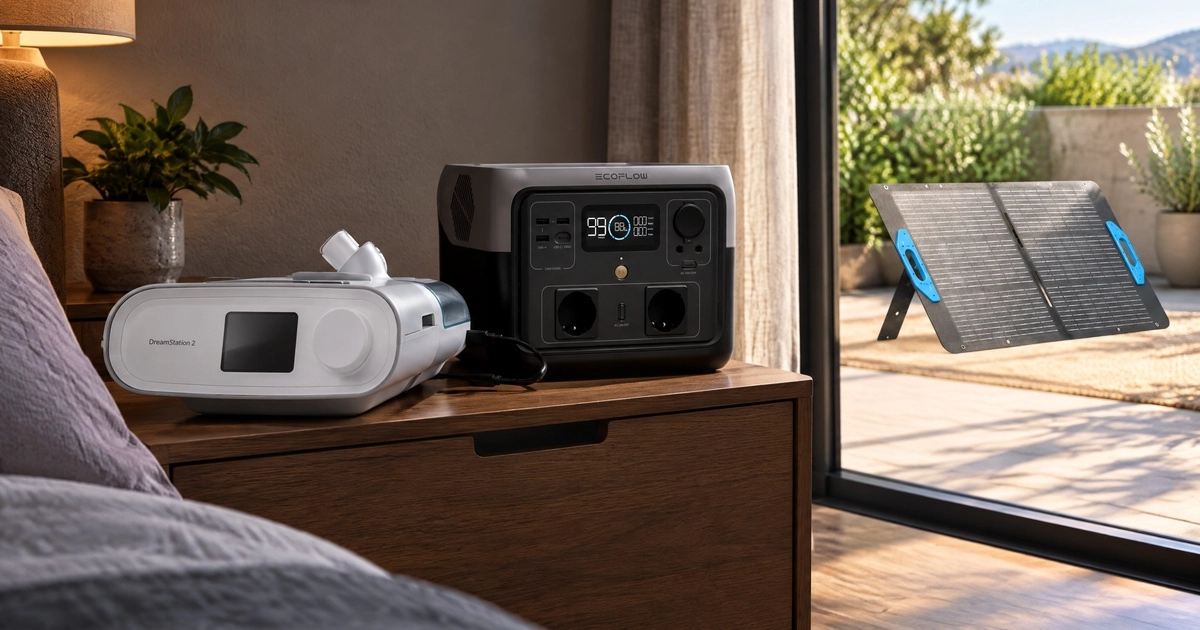
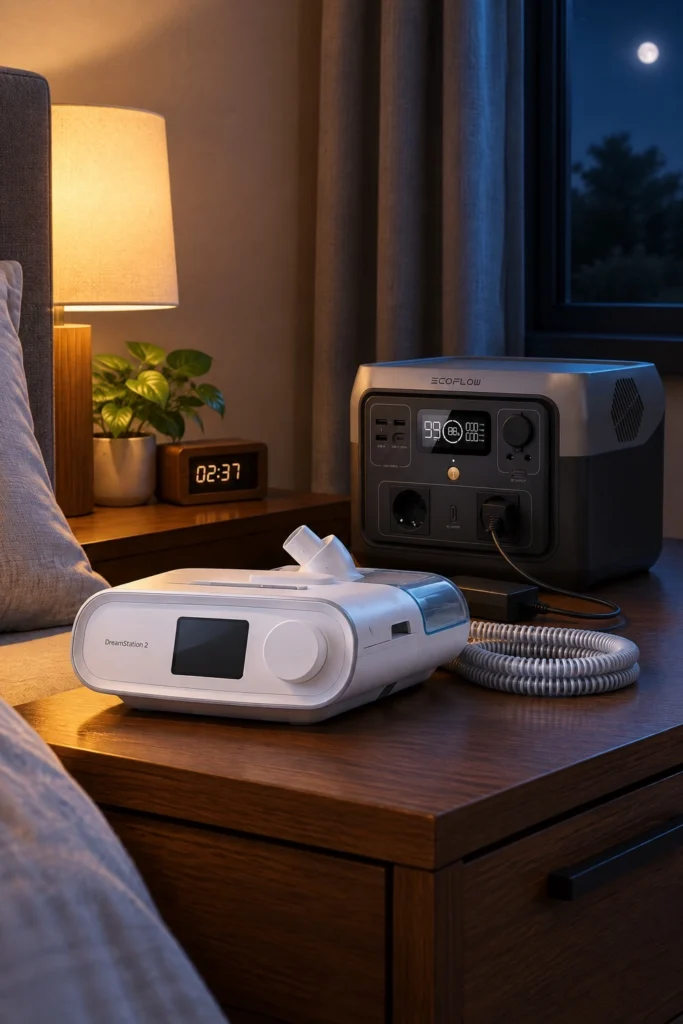
A pure sine wave power station in the 512Wh class, paired with a 100W (or larger) solar panel, gives enough buffer to handle a run of cloudy days without the system collapsing — plug the DreamStation 2’s own AC power supply into the power station’s outlet, exactly as you would a wall outlet, and let the panel top the station off through the day. For the full step-by-step chain and why DC-direct isn’t the better option for this particular machine (DreamStation 2 doesn’t have the dedicated DC input port some ResMed machines do), the same AC-adapter approach covered in my Inogen Rove 6 solar charging guide applies here directly.
Verified Gear ( October 2026)
How I verified this pick: capacity, output, and charge-time specs are cross-checked against the manufacturer’s own published numbers, and I confirmed this exact model is genuinely rated for pure sine wave output — not assumed from a general product line.
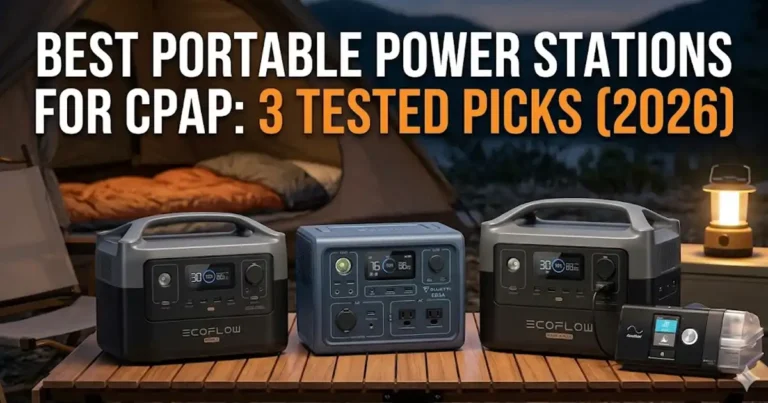
EcoFlow River 2 Max

What Makes It Different 512Wh capacity, 500W continuous pure sine wave AC output (1,000W surge via X-Boost), LiFePO4 cells rated for 3,000+ cycles, and a 60-minute full AC recharge — fast enough to top off between cloudy stretches rather than waiting most of a day.
Compatibility Check Works with the DreamStation 2’s own AC power supply plugged into the station’s AC outlet — no special cable needed. Solar input tops out around 220W, so a single 100–200W panel charges it fully in roughly 2.5 to 5 hours of good sun.
Setup & Charging Notes The 60-minute AC recharge is a genuine practical advantage for this use case: if a cloudy stretch runs the battery down, a short stint on wall power between outages catches it back up fast, rather than the multi-hour recharge times common on larger power stations.
Pros: Genuine pure sine wave output, fast recharge both via AC and solar, LiFePO4 longevity, app-based monitoring.
Cons, with the fix: At 13.2–13.3 lbs it’s a two-hand carry, not a grab-and-go travel battery — if portability matters more than capacity, the smaller River 2 (256Wh) covers a no-humidifier DreamStation 2 setup at a lighter weight. One inverter caution worth knowing generally, not specific to CPAP use: a reviewer noted that plugging genuinely inductive loads (a mini fridge, for example) into this class of power station can shorten the inverter’s lifespan — not a concern for a CPAP’s power profile, but worth knowing if you’re expecting this same unit to run other appliances too.
What Others Are Saying This exact model holds a 4.5-star rating across 900-plus Amazon reviews, a solid volume for this product class. I found more detailed written reviews on Best Buy’s listing for the identical unit, and feedback there is consistent with the Amazon rating — strongly positive on runtime and quiet operation, with the most common criticism from buyers being underestimating how much capacity they’d actually need for non-CPAP uses like small appliances, not a knock on the unit’s core performance. One independent blogger documented running a CPAP with the humidifier on overnight and finishing with about 10% battery remaining — and found that switching the CPAP’s wifi and Bluetooth to airplane mode recovered another 4 to 7% of overnight battery margin, a genuinely useful tip that has nothing to do with the power station itself and everything to do with trimming the CPAP’s own draw.
HSA/FSA Note A power station purchased specifically to run a prescribed CPAP device generally qualifies as an operating cost under IRS Publication 502.
A note on this listing: EcoFlow has sold the River 2 Max under slightly different listing names over time (some periods as “River 2 Max,” others as “River 2 Max 500” for what appears to be the same or a near-identical unit). If this exact link is ever unavailable, searching “EcoFlow River 2 Max” directly on Amazon will surface the current listing.
FAQs
Can a DreamStation 2 really run entirely off solar, long-term?
For most users, yes — its low draw and 8-hour nightly use cycle mean a modest solar setup can realistically keep pace indefinitely, not just bridge a short outage. Heavy humidifier and heated-tube use narrows that margin but doesn’t eliminate it.
What size solar panel do I actually need?
A single 100W panel generates enough on a decent day to replace a full night’s use for most humidifier configurations. A 200W panel adds margin for consecutive cloudy days or heavier heated-tube use.
Does the DreamStation 2 need a special DC cable for this setup?
No — plug its existing AC power supply into the power station’s AC outlet. It doesn’t have the dedicated 24V DC input some ResMed machines use, so the simpler AC route is the right one here.
How many cloudy days can this setup cover without sun?
A fully charged 512Wh power station alone covers roughly one to two nights even at the highest humidifier setting, more at lower settings — solar extends that indefinitely when the sun cooperates, but the stored capacity is what gets you through a genuinely sunless stretch.
Bottom Line
Unlike continuous medical equipment, a DreamStation 2’s modest draw and part-time duty cycle make genuine long-term solar sustainability realistic, not just short-outage bridging. A 512Wh-class pure sine wave power station with a 100W panel handles most configurations comfortably, and the one non-obvious tip worth remembering — switching the CPAP’s wifi and Bluetooth to airplane mode — squeezes out meaningful extra runtime for free.
For the full DreamStation 2 wattage breakdown, see my DreamStation battery guide, and for the pillar-level picture on medical device power, the medical device power supply guide.