
Solar vs Gas Generator for Dialysis: What Actually Matters
 By Lee Arnold
Medical Solar Power Backup Specialist | 8+ years in the field
Quick Answer:
For dialysis specifically, the real difference between solar and gas isn’t cost or runtime — it’s the gap. A gas generator needs time to start, whether that’s you pulling a cord or a transfer switch kicking in, and that gap can interrupt a treatment already in progress.
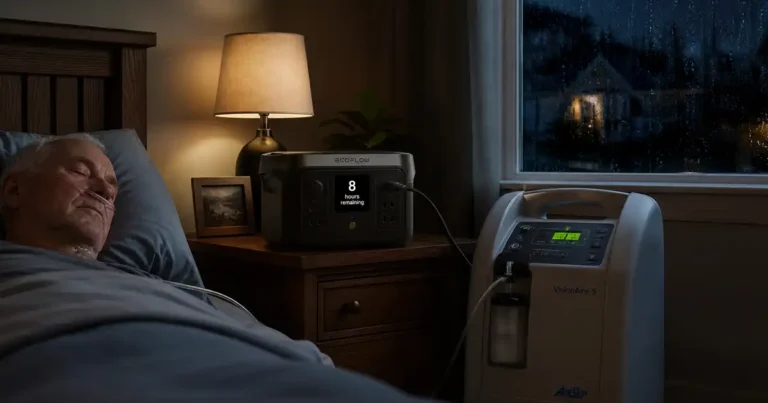
A battery-based solar generator switches over instantly, with no start-up delay, because it’s already charged and ready.
Gas brings other real risks too: carbon monoxide, a backfeed hazard if it’s wired into your panel without an interlock, and a real chance modified sine wave output damages sensitive electronics. Solar avoids all three, but can’t run a whole house for days the way a large gas unit can.
Most home dialysis patients end up better served by a battery/solar unit for the machine itself, with gas as whole-house backup only if you already have one.
This isn’t a generic solar-vs-gas comparison — you can find a dozen of those, and most are written by generator companies with no medical context at all. This one is built around what actually matters when the load is a dialysis machine, not a refrigerator.
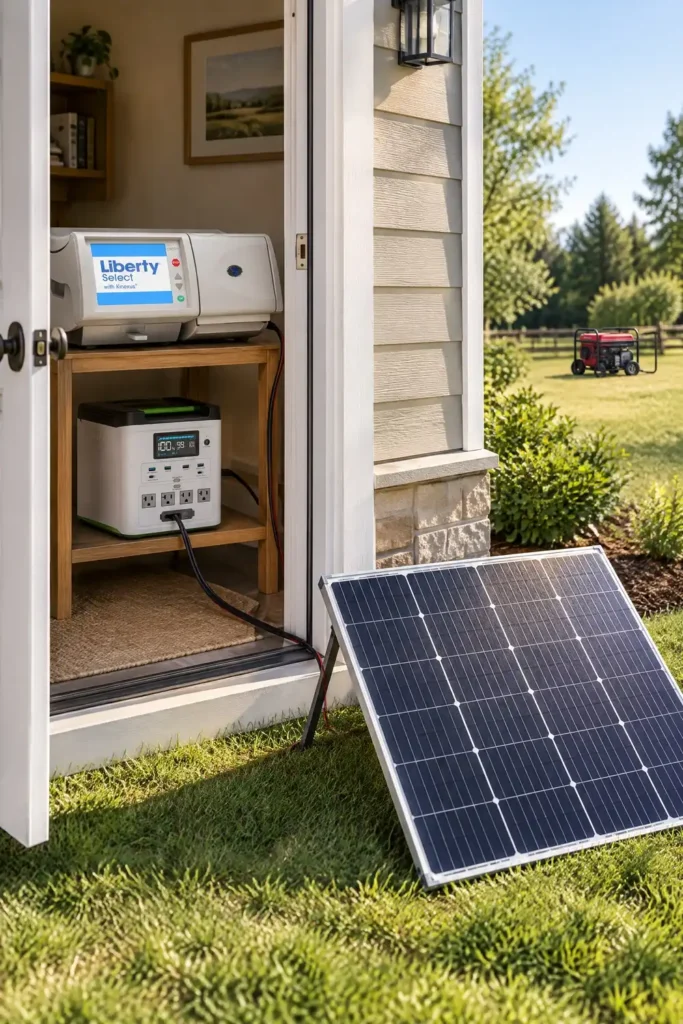
Table of Contents
Why This Choice Is Different for Dialysis
Most backup-power comparisons treat “runtime” as the deciding factor. For dialysis, the more important number is the gap — the seconds between when utility power fails and when backup power picks up.
A battery-based power station is already charged and switches over instantly, because there’s no engine to start. A gas generator, even a good one, needs time: you pulling a cord, or an automatic transfer switch sensing the outage and starting the engine.
One home dialysis patient’s own account, published on Home Dialysis Central, describes exactly this gap: a battery backup buys roughly 30 minutes, which is “enough time for the generator backup to get up and running.” That’s the real workaround gas-generator users rely on — a battery bridges the gap gas can’t close on its own.
What Dialysis Equipment Actually Draws
Generic “how many watts does a generator need” guides won’t get you a real number, because dialysis equipment varies a lot by machine and mode. Two figures worth knowing:
| Equipment | Power Draw |
|---|---|
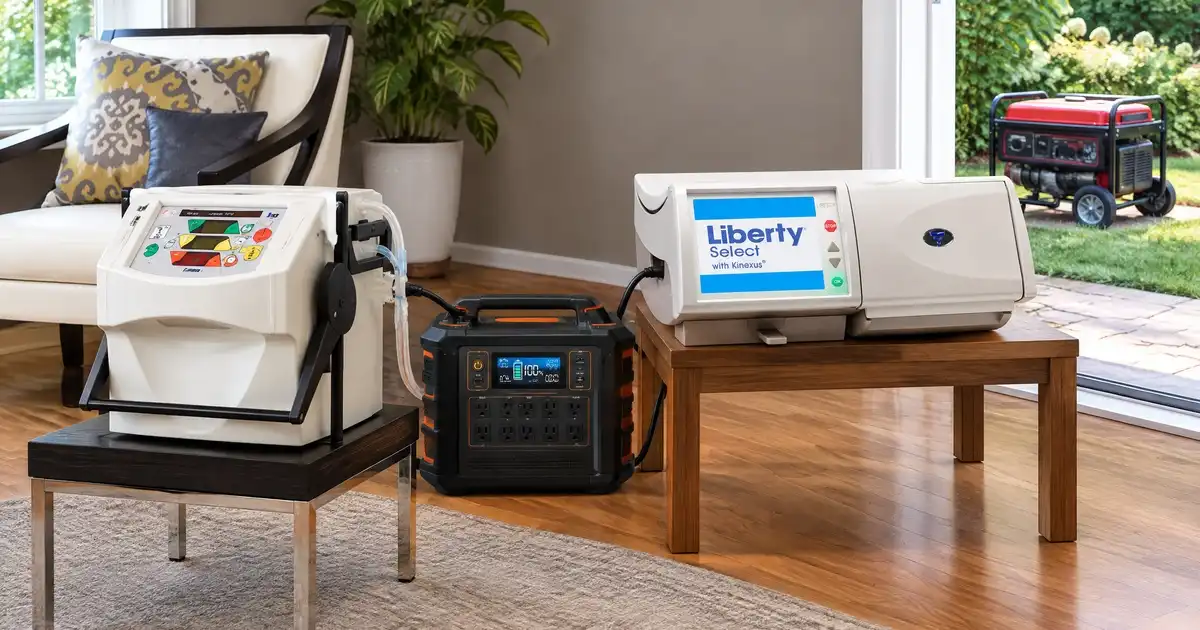
| Fresenius Liberty Select Cycler (PD) | 480W at 100V, 700W at 240V |
| NxStage PureFlow SL (dialysate prep) | ~100W average, 400VA peak |
These numbers shift depending on whether a heater is actively running — heaters pull meaningfully more than the base unit. Don’t size backup power off a generic estimate. Confirm the actual draw for your specific machine and mode with your equipment manufacturer or clinical team before buying anything.
The Modified Sine Wave Problem
Not all backup power produces the same kind of electricity. Pure sine wave output mimics the smooth power that comes out of a wall outlet. Modified sine wave output uses abrupt, stepped approximations instead — cheaper to produce, but rougher on sensitive electronics.
Medical equipment is exactly the kind of load that’s sensitive to this. CPAP manufacturers already warn that modified sine wave power can damage their machines or harm humidifier components, and the same underlying electronics concern applies to dialysis equipment.
Most portable solar generators and power stations ship with pure sine wave inverters by default. Many budget gas generators don’t — check the spec sheet before assuming, since “generator” alone doesn’t tell you which kind of power you’re getting.
The Backfeed Risk Nobody Explains
This applies specifically to a gas generator wired directly into your home’s breaker panel, not to a portable power station you plug devices into directly.
Without a proper transfer switch or interlock kit, a generator connected to house wiring can send power backward into the utility grid. That’s not just against code — it can electrocute a utility lineworker repairing lines they believe are dead.
A portable solar generator used the way most home users actually use one — plugging the dialysis machine directly into the unit’s own outlets — never touches your house wiring, so this specific hazard doesn’t apply. If you’re hardwiring any generator into your panel, that’s a job for a licensed electrician, full stop.
Carbon Monoxide: The Risk That’s Specific to Gas
This is the one that kills people, and it kills them at home, not in some abstract scenario. The Consumer Product Safety Commission estimates roughly 100 deaths a year from carbon monoxide poisoning tied to portable generators, and the CDC reports over 400 annual U.S. deaths from unintentional CO poisoning overall.
Almost all generator-related CO deaths trace back to the same mistake: running the unit indoors, in a garage, or too close to windows and doors. CPSC guidance recommends keeping a gas generator at least 20 feet from any structure — further than most manufacturer manuals actually state.
A battery-based solar generator produces zero combustion exhaust. This isn’t a minor convenience difference — it’s the one risk on this list that has actually killed people during outages, including people running a generator specifically to keep medical equipment running.
Noise, Fuel, and Real-World Reliability
A few other differences matter more in practice than most comparisons mention:
- Noise: A running gas generator is loud enough to disrupt a treatment session that can run several hours, especially overnight for nocturnal HD or PD. A solar generator is silent.
- Fuel logistics: Stored gasoline degrades over months and needs rotation; running out mid-outage means going out to find fuel, sometimes in bad weather. A solar generator recharges from panels, an outlet, or a car, with nothing to store or go stale.
- Extended multi-day outages: This is where gas still wins. A large gas generator can run a house for days on refueling; most portable solar setups are sized for critical devices, not whole-house loads, unless paired with enough solar input to recharge daily.
Register as a Critical-Care Customer Either Way
Whichever backup power you choose, it’s worth registering with your utility as a medical or critical-care customer — dialysis patients typically qualify. Our guide to medical power outage patient rights covers what that registration actually gets you and, just as important, what it doesn’t guarantee.
So Which One Actually Makes Sense for Dialysis?
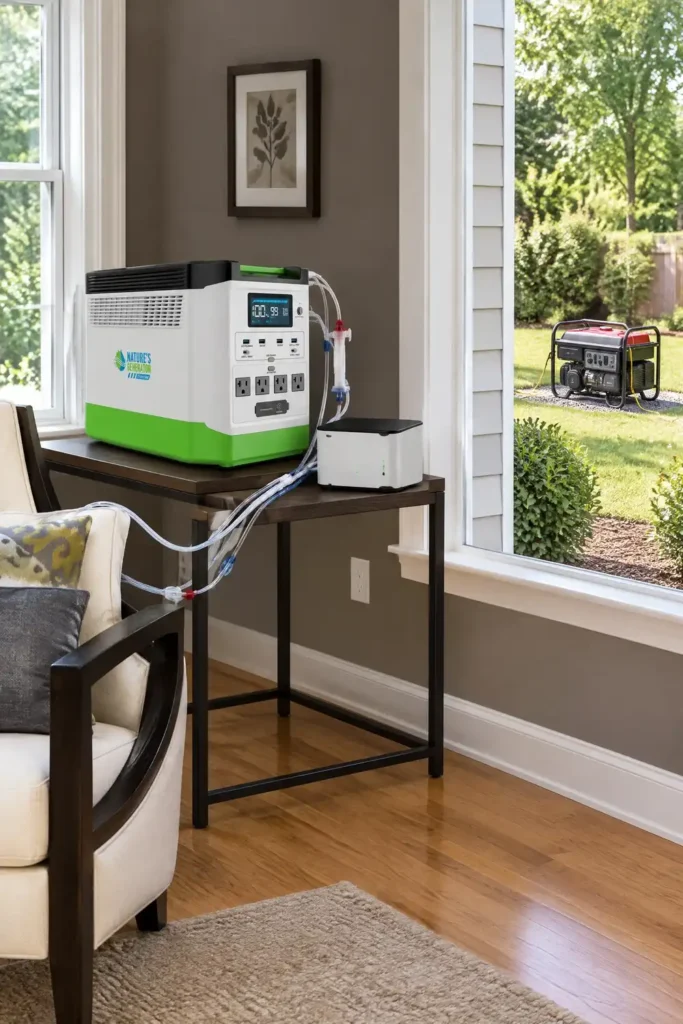
For most home dialysis patients, the honest answer is a battery/solar unit sized to the specific machine, not a general-purpose gas generator bought off a big-box shelf. The instant switchover matters more than raw runtime for equipment that alarms and interrupts treatment the moment power drops.
Already own a whole-house gas generator? Keep it — it’s genuinely useful for extended outages and everything else in the house. Just don’t rely on it alone for the dialysis machine itself; pair it with a smaller battery unit that closes the start-up gap, the way the Home Dialysis Central account above describes.
FAQs
Can I run my dialysis machine directly off a gas generator?
Physically, often yes, if the generator produces clean enough power and you size it to the machine’s peak draw. But you still face the start-up gap, CO risk if used indoors or too close to the house, and a real chance of damage if it’s not pure sine wave. Confirm compatibility with your equipment manufacturer first.
How much backup runtime does a dialysis patient actually need?
It depends entirely on your specific machine, treatment schedule, and how long outages typically last in your area. A short urban outage might need under an hour of bridge power; a rural area with multi-day storm outages needs a real plan, possibly combining battery and gas backup.
Is a portable power station actually powerful enough for a dialysis machine?
Many are, based on the wattage figures above, but “powerful enough” depends on continuous watts, surge watts, and whether a heater component is running. Match the unit’s rated output against your specific machine’s real draw, not a generic estimate.
Do I need a whole-house generator if I’m on home dialysis?
Not necessarily. A battery/solar unit sized to the dialysis equipment itself covers the actual medical risk. A whole-house generator adds convenience for everything else in the home during a longer outage, but it’s a separate decision from keeping the dialysis machine running.
Is carbon monoxide really a risk if I only run the generator briefly?
Yes. CO poisoning doesn’t require hours of exposure in an enclosed space — it can happen quickly if a generator is too close to windows, doors, or vents, even outdoors. Keep at least 20 feet of distance from any structure, per CPSC guidance.
Bottom Line
Solar vs gas generator for dialysis isn’t really about which one is “better” in general. It’s about which risks you’re willing to accept for equipment that can’t tolerate an unplanned interruption.
Gas brings real capability for extended outages but carries CO risk, a backfeed hazard if it’s wired into your panel, and a start-up gap that a battery doesn’t have. A battery/solar unit closes that gap instantly and produces cleaner power, but won’t run a house for days on its own.
For most home dialysis patients, the safest setup pairs a properly sized battery unit for the machine itself with gas as whole-house backup, not a replacement for it.
HSA/FSA Note
Backup power equipment purchased specifically to keep a prescribed dialysis machine running during an outage can often qualify as a deductible medical expense under IRS Publication 502, typically with a letter of medical necessity tying the purchase to your treatment. Our letter of medical necessity template walks through that document and process.
This article reflects CPSC, CDC, and manufacturer specification data current as of October 2026. Power requirements vary by specific equipment model and treatment mode — confirm exact figures with your equipment manufacturer or clinical team before sizing any backup power system. This is not medical advice; consult your care team about backup