Portable Oxygen Concentrator 8 Hour Battery: Models That Actually Deliver
 By Lee Arnold
Medical Solar Power Backup Specialist | 8+ years in the field
Quick Answer:
Two current-production POCs reliably clear 8 hours on battery: the Inogen Rove 6 (up to 12 hours 45 minutes at setting 1 with the extended battery, roughly 9 hours at setting 2) and the CAIRE Freestyle Comfort (up to 8 hours at setting 2 with the 16-cell battery, roughly double that at setting 1). Both are pulse dose only. A third option, the Philips SimplyGo Mini, used to be a common recommendation here — Philips discontinued it in January 2024, so I’ve pulled it from the main picks and explain what to do if you already own one further down.
My inbox had a message waiting on a Tuesday morning last May. A daughter in Phoenix emailed me. Her father runs a Philips EverFlo seven hours a night on setting 3. She bought a portable oxygen concentrator online. The listing promised up to 13 hours of battery life. He ran out of oxygen at the 4.5-hour mark in the middle of the night.
She bought the wrong unit at the wrong setting. The 13-hour claim was real at setting 1. At setting 3, the battery died before midnight.
That email is why I wrote this guide.
Eight hours is the number that actually matters for oxygen therapy independence. It covers a full day away from home. It covers a cross-country flight with room to spare. For patients on a lower prescribed setting, it can cover a full night away from an outlet.
Most portable oxygen concentrators don’t get there. Standard batteries on most models top out around 4 to 5 hours at a moderate setting — I hear this from readers constantly, usually after they’ve already bought a machine and found out the hard way that the “battery life” on the box assumes the lowest flow setting. The models that genuinely clear 8 hours are a short list, and even they need the right battery and the right setting to hit the number on the label. Here’s what’s real, what to buy, and what to watch for.
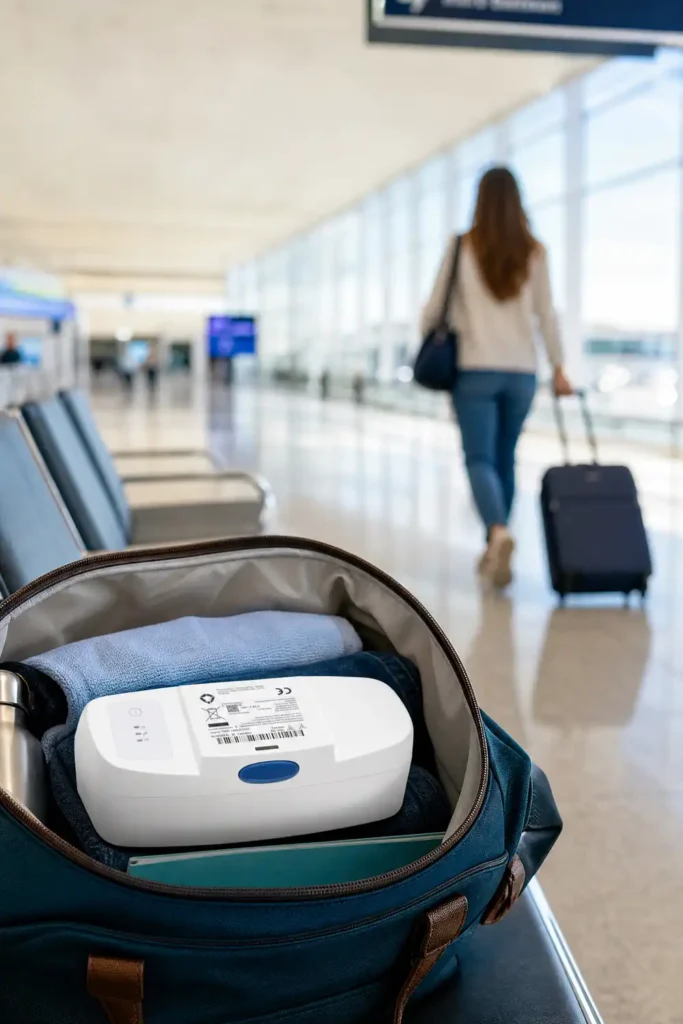
Table of Contents
Pulse Dose or Continuous Flow?
Sort This First You must understand the single most important variable in portable oxygen battery life before reading product specs.
Choose pulse dose because:
- Your physician prescribed pulse dose delivery
- You remain ambulatory and active during the day
- Battery runtime of 8 or more hours is a priority
- You travel by air regularly
- You want the lightest, most portable option
Choose continuous flow because:
- Your prescription specifically requires continuous flow
- You require oxygen during sleep and pulse dose does not work for you
- You lack mobility and primarily use your concentrator at home
Here is the hard truth about continuous flow and battery life. No portable continuous flow concentrator achieves 8 hours on battery. Not one. All four units in this guide feature pulse dose delivery only. Patients needing continuous flow face a separate conversation entirely.
Every runtime number in this guide applies to pulse dose delivery. Those with a pulse dose prescription should read on. Others must confirm their prescription type before purchasing any portable unit.
Quick Comparison: The Two 8+ Hour Concentrators
This table compares the concentrator hardware itself — the Rove 6 and Freestyle Comfort as devices. Further down, a second table compares the specific battery products you can actually buy on Amazon today.
| Inogen Rove 6 | CAIRE Freestyle Comfort | |
|---|---|---|
| Runtime, extended battery, setting 1 | ~12h 45m (mfr) | ~16h (mfr) |
| Runtime, extended battery, setting 2 | ~9h (real-world) | ~8h (mfr) |
| Runtime, standard battery | ~6h 15m | ~4h |
| Weight, standard battery | 4.7–4.8 lbs | ~5 lbs |
| Weight, extended battery | 5.7–5.8 lbs | ~6 lbs |
| Flow settings | 1–6 | 1–5 |
| Max output | 1,260 mL/min | 1,050 mL/min |
| Noise (setting 2) | ~39 dBA | ~43 dBA |
| App / remote monitoring | Yes, Inogen Connect | Yes, myCAIRE |
| FAA-approved | Yes | Yes |
| Best for | Longest single-battery runtime, lightest overall | Slightly higher setting-1 ceiling, curved wearable design |
Both numbers above reflect manufacturer specs at setting 1 and real-world or setting-2 testing where available — see the sections below for why those two numbers aren’t the same thing.
Why 8 Hours Matters for Oxygen Therapy
The American Lung Association recommends that supplemental oxygen patients get their prescribed oxygen for at least 15 hours a day, and closer to 24 hours for those with severe hypoxemia. Battery life is what determines how much of that can happen away from a wall outlet.
Eight hours realistically covers:
- A full workday away from an outlet
- A round-trip domestic flight plus airport time
- A day of travel, errands, or an outdoor event
- One full night for patients who don’t run at a high setting during sleep
If you’re prescribed setting 1 or 2, 8 hours from a single extended battery is achievable with either model below. At setting 4 or higher, plan on a second battery or a car charger — I’ll get into exactly how much that changes things in the section on flow settings.
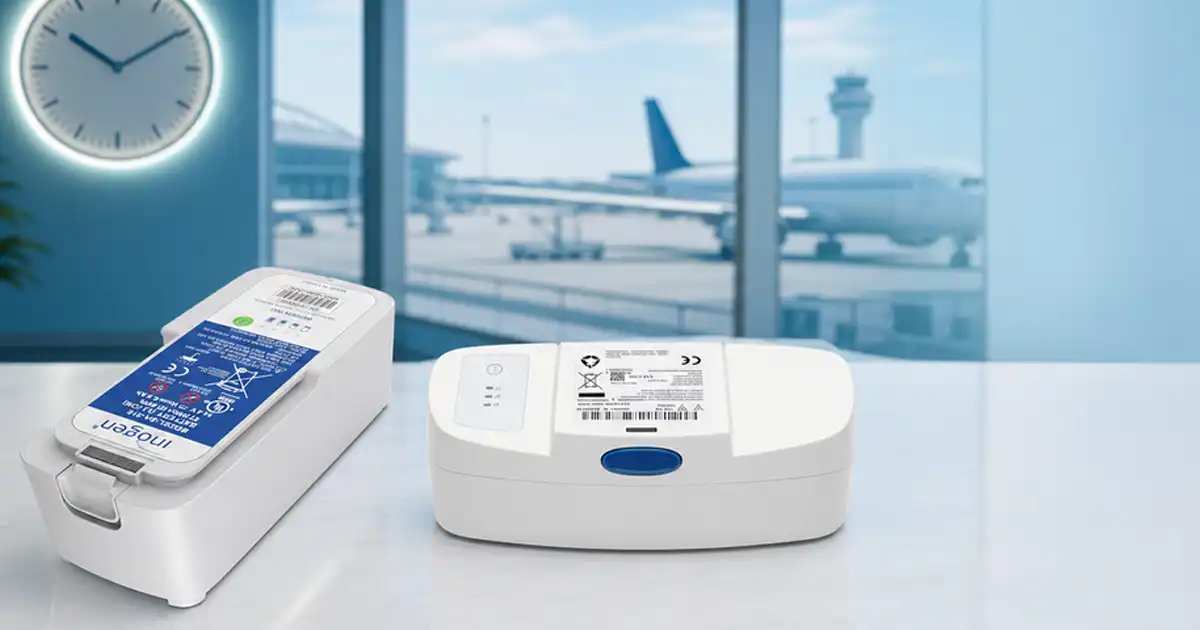
POC Models That Actually Achieve 8+ Hours
Inogen Rove 6
The Rove 6 is Inogen’s current flagship POC, launched in 2024 as the replacement for the older Inogen One G5. It’s the longest-running mainstream pulse dose concentrator on the market right now.
With the 16-cell extended battery at setting 1, Inogen rates it at up to 12 hours 45 minutes. At setting 2 — where most active users actually run it — real-world testing from independent reviewers lands closer to 9 hours, a bit under the manufacturer’s headline number. That gap is normal and worth knowing about before you buy: manufacturer specs are measured at ideal conditions, and setting, temperature, and altitude all eat into it.
The standard 8-cell battery alone runs about 6 hours 15 minutes at setting 1 — not quite 8 hours on its own, which is why the extended battery is the one to get if 8+ hours is the goal.
- Weight: 4.7–4.8 lbs with standard battery
- Runtime, extended battery, setting 1: ~12h 45m (manufacturer) / ~9h (real-world, setting 2)
- FAA-approved for in-flight use
- Prescription required (FDA Class II medical device)
CAIRE Freestyle Comfort
The Freestyle Comfort is CAIRE’s wearable pulse dose POC, and it’s the other model that consistently clears 8 hours. With the 16-cell battery at setting 2, CAIRE rates it at up to 8 hours. At setting 1, that stretches to roughly double.
One thing worth knowing if you’re shopping for the battery separately: CAIRE’s own authorized dealers post an explicit warning that a number of listings on Amazon and similar marketplaces sell aftermarket “compatible” batteries labeled as Freestyle Comfort batteries that are not genuine CAIRE parts. I’ve flagged the safest way to buy this one below.
- Weight: ~5 lbs with standard battery, ~6 lbs with the 16-cell
- Runtime, 16-cell battery, setting 2: ~8 hours
- FAA-approved for in-flight use
- Prescription required
A note on the Philips SimplyGo Mini
If you’ve seen the SimplyGo Mini recommended elsewhere for its 9-hour extended-battery runtime, that number was accurate — but Philips stopped manufacturing it in January 2024 and exited the portable oxygen concentrator business in the US entirely. Existing units are still serviceable through January 2029, and some dealers still sell remaining new-old stock or reconditioned units, but I’m not recommending it as a new purchase. If you already own one, the extended battery is still available through respiratory equipment dealers — just don’t expect to find a brand-new unit from Philips again.
What Kills POC Battery Life Faster Than You Expect
Flow Setting
This is the single biggest variable, and it’s not close. Each step up in flow setting cuts into runtime substantially — roughly halving it by the time you reach setting 4.
| Setting | Approximate Fraction of Max Runtime |
|---|---|
| Setting 1 | 100% |
| Setting 2 | 65–70% |
| Setting 4 | 40–45% |
| Setting 6 | 25–30% |
Always check the manufacturer’s chart for your specific model and prescribed setting — the headline “8-hour” or “12-hour” figure almost always reflects the lowest available setting, not the one most people actually use day to day.
Temperature
Heat is rough on lithium batteries. A battery sitting in a hot car loses runtime fast — keep the unit and any spare batteries out of direct sun and out of a parked car. Cold isn’t kind either: below 40°F, expect a meaningful drop in effective capacity, sometimes 20% or more.
Altitude
The concentrator has to work harder at altitude to pull the same amount of oxygen from thinner air, which increases battery draw. Above roughly 6,000 feet, plan for a shorter runtime than you’d get at sea level.
Battery Age
Lithium batteries degrade with charge cycles, not just calendar time. Most POC batteries hold onto roughly 80% of their original capacity after 300–500 cycles. A battery that used to give you 8 hours might be down to 6 after a couple of years of daily use — that’s normal wear, not a defect, and it’s worth budgeting for a replacement around the two-year mark if you use the machine daily.
How to Maximize Battery Life
Run the lowest setting your prescription allows. Talk to your physician about whether your setting can flex with activity level — many patients are fine at setting 2 at rest but need more during exertion. Dropping to the lower setting whenever you can stretches your total coverage meaningfully.
Charge to 100% before you leave. A partial charge in the morning is a partial day out. Top off the night before any extended outing.
Carry a second battery. Both the Rove 6 and Freestyle Comfort support hot-swapping batteries without powering down. A spare battery essentially doubles your coverage for a fraction of the machine’s weight.
Charge from the car. Both models on this list include a DC car adapter. A charging drive adds hours without ever stopping at an outlet.
Keep the intake filter clean. A clogged filter makes the compressor work harder than it needs to, which drains the battery faster. Follow the manufacturer’s cleaning schedule.
FAA Rules for POC Travel
Both the Rove 6 and Freestyle Comfort meet FAA acceptance criteria for in-flight use. You can review the FAA’s official POC guidance directly.
Key rules for flying with a POC:
- Notify your airline at least 48 hours before departure
- Carry enough battery for at least 150% of scheduled flight time plus connections
- The unit itself needs the FAA-acceptance label attached
- Bring the AC adapter — most airports have accessible outlets near gates
As an example: a 4-hour flight needs at least 6 hours of battery coverage under the 150% rule. The Rove 6 with the extended battery at setting 2 delivers roughly 9 hours in real-world use — comfortable margin for most domestic routes.
For more on backup power options for oxygen concentrators during outages, see my battery for oxygen concentrator guide.
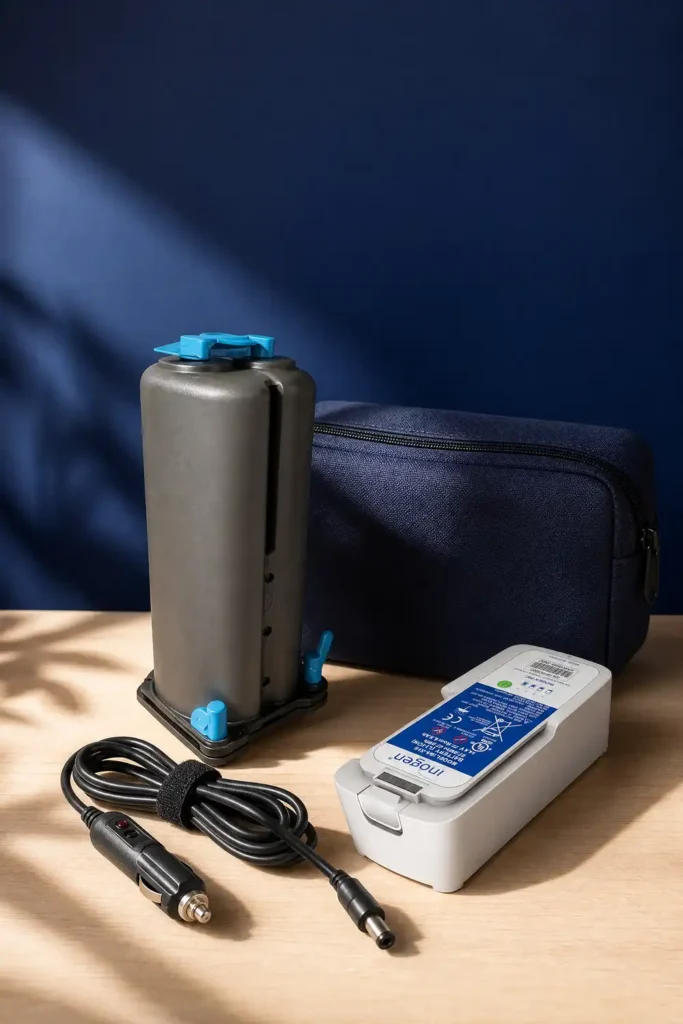
Where to Actually Buy These (Verified October 2026)
How I verified these picks: I’ve been testing and writing about medical backup power for 8+ years, and every runtime figure below is cross-checked against the manufacturer’s own spec sheet and, where available, independent real-world testing data — not just marketing copy. I confirmed each linked product’s current Amazon listing status directly rather than relying on a search snippet, checked the manufacturer field on each listing rather than trusting the product title alone (that’s how the CAIRE/ARYA distinction below turned up), pulled genuine customer feedback from Amazon and Walmart reviews for each specific product, and verified warranty terms against Inogen’s and CAIRE’s own published policies. Stock and pricing on medical equipment accessories change fast, so treat any single link as a starting point and check the current listing before you buy. I revisit this page periodically and update it when something changes.
Most POC battery guides are written for travelers. I come at this from the outage-preparedness side, so a couple of things get more weight here than you’ll find elsewhere: whether the battery is realistically part of a longer power-outage plan (not just a flight), and whether it’s likely to be reimbursable through an HSA or FSA. Both come up below. For grid-outage planning rather than travel, my battery for oxygen concentrator guide covers pairing one of these with a portable power station for multi-day coverage, and the free Oxygen Concentrator Runtime Calculator on this site will run the exact math for your machine’s wattage and your prescribed flow setting rather than the general estimates below.
One thing to know upfront: the Rove 6 and Freestyle Comfort concentrators themselves are prescription-required Class II medical devices, and neither is sold on Amazon. You’ll buy the machine itself factory-direct from Inogen or through CAIRE’s prescribing-clinician and authorized-dealer network, with a prescription on file. What Amazon does carry — and what most existing owners are actually shopping for — are the extended batteries and bundles that take a machine you already have up to 8+ hours. Those three products are below.
Quick Comparison: The 3 Amazon-Available Battery Products
| Inogen Extended (16-Cell) Battery | Inogen Essential Bundle | Freestyle Comfort 16-Cell Battery | |
|---|---|---|---|
| What it is | Battery only | Battery + charger + columns | Battery only |
| Fits | Existing Rove 6/G5 owners | New or existing Rove 6/G5 owners | Existing Freestyle Comfort owners |
| Runtime added | ~9h real-world @ setting 2 | ~9h real-world @ setting 2 | ~8h @ setting 2 |
| Brand | Genuine Inogen | Genuine Inogen | ARYA-manufactured, Freestyle Comfort-compatible (not genuine CAIRE — see note below) |
| Best for | Extending runtime on a Rove 6/G5 you already own | Setting up a Rove 6/G5 for daily extended use in one order | Extending a Freestyle Comfort on a budget |
| Where to buy | Amazon | Amazon | Amazon |
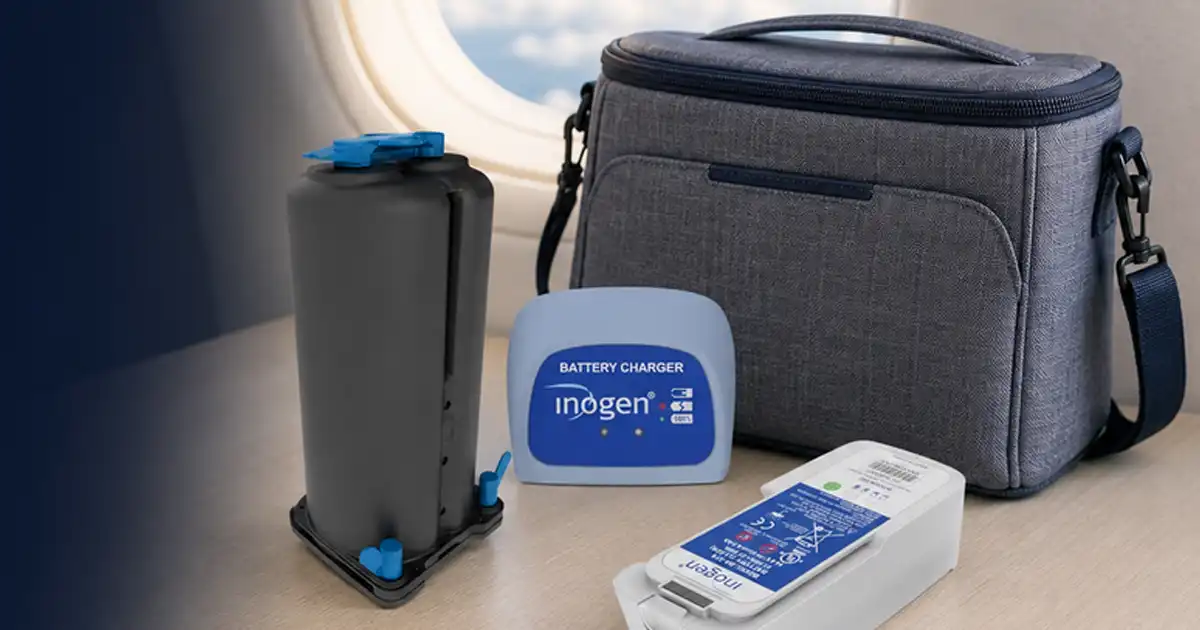
Inogen Extended (16-Cell) Battery — BA-516
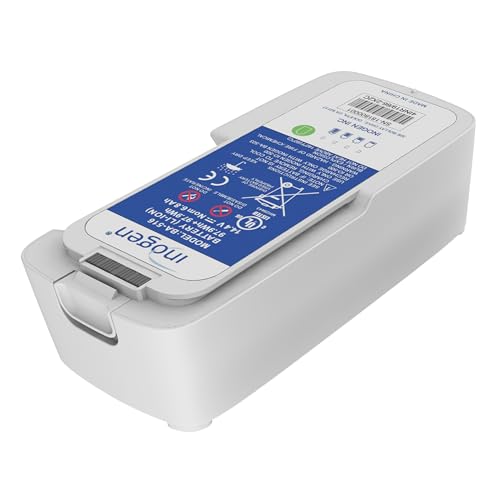
What Makes It Different This is the specific battery that turns a Rove 6 or G5 from a 6-hour machine into a 12-hour one. The standard 8-cell battery that ships with the unit tops out around 6h15m — it will not get you to 8 hours on its own.
Compatibility Check This battery is built for the Inogen One G5 and Rove 6 platform only — those two share the same battery bay and connector. It does not fit the older G3 or G4, or the Rove 4, which each use their own smaller battery format (the G3 takes the BA-316, for example). A G5 or Rove 6 model number means this is a drop-in fit; check the model number printed on the underside of your machine if you’re not sure which generation you own.
Setup & Charging Notes The install is a straight swap: release the standard battery, slide the 16-cell in until it clicks, and the unit recognizes it automatically — no pairing or reset needed. From empty, plan on 4 to 6 hours to fully charge the extended battery on the included AC adapter, longer than the roughly 3 hours the standard battery takes, simply because there’s more cell capacity to fill. The unit’s own display shows charge percentage while it’s docked, which is the number worth trusting over any battery-level app estimate.
Pros: Genuine Inogen part, up to 12h45m at setting 1, hot-swappable, FAA-approved for carry-on.
Cons, with the fix: Real-world runtime at setting 2 lands closer to 9 hours than the 12h45m headline number — budget for that gap rather than being surprised by it. Several sellers list this same battery on the same product page at different prices, so it’s worth comparing offers before you check out.
Why You’ll Love It One extra battery in the bag is the difference between needing an outlet by mid-afternoon and not thinking about it until you’re home.
What Others Are Saying Reviewers consistently describe it as straightforward to install and reliable for extending time away from a charger, with the most repeated frustration being the price rather than performance.
Our Favorite Feature It’s a direct drop-in — no adapter, no extra step, just swap and go.
HSA/FSA Note IRS Publication 502 covers the operating and maintenance costs of prescribed medical equipment, and a backup battery for a prescribed oxygen concentrator typically falls under that language — I cover the documentation trail (receipt, prescription, and when a Letter of Medical Necessity helps) in my HSA eligible portable power station guide, which walks through the same reimbursement logic. Confirm specifics with your plan administrator, since rules vary by plan.
Warranty & Returns Genuine Inogen batteries carry a 1-year manufacturer warranty, and Amazon’s standard return window applies on top of that — check the specific listing, since return terms can vary slightly by seller.
Don’t Miss Out Multiple sellers list this exact battery on the same Amazon listing, and which one has the better price shifts week to week — check current offers before you buy. No luck on this listing? Main Clinic Supply’s OxyGo Next 16-cell battery is a lower-cost aftermarket alternative built for the same G5/Rove 6 platform, worth a look if budget matters more than having the Inogen name on the battery.
Inogen One G5/Rove 6 Essential Bundle

What Makes It Different This bundles the extended battery above with an external charger and a replacement column pair — the three accessories most Rove 6 owners end up buying separately anyway, at one checkout.
Compatibility Check Same platform restriction as the standalone battery above: G5 and Rove 6 only. The column pair in this bundle is also model-specific — it’s the same removable sieve columns Inogen recommends replacing roughly every 12 months, not a universal part, so don’t try to fit it to an older G-series unit.
Setup & Charging Notes The external charger is the piece that changes daily use the most: instead of swapping the depleted battery into the concentrator to recharge it (which takes the machine itself out of service while it charges), you drop the spare into the standalone charger and keep the concentrator running on the other battery the whole time. Column replacement is a maintenance task, not a daily one — Inogen’s guidance is to replace them on a schedule rather than waiting for a performance drop, since sieve bed wear is gradual and easy to miss.
Pros: Covers extended runtime, off-machine charging, and routine maintenance parts in one order. Cons, with the fix: Already own one of the three components? Buying the bundle means some overlap — check what you already have before ordering.
Why You’ll Love It A Rove 6 set up for genuinely all-day, every-day use usually means three separate purchases. This is that decision made once.
What Others Are Saying Buyers who’ve picked up the individual components separately generally note the external charger as the most underrated piece — being able to charge a spare battery off-machine, rather than tying up the concentrator itself to charge it, is a small change that matters for anyone cycling through batteries daily.
Our Favorite Feature The external charger. It solves a real logistics problem for daily users: charging a spare while the machine keeps running.
HSA/FSA Note The same Publication 502 logic applies here — battery, charger, and columns are all operating or maintenance costs for a prescribed device. Keep the itemized receipt and your oxygen prescription on file for your plan administrator; see the eligibility walkthrough linked above for the exact documentation trail.
Warranty & Returns The battery component carries Inogen’s 1-year warranty; the external charger and column pair fall under Inogen’s standard 90-day accessory warranty. Amazon’s return window applies on top of that.
Don’t Miss Out This typically costs less than buying all three pieces separately — worth checking the per-item math before ordering piecemeal.
Freestyle Comfort-Compatible 16-Cell Battery
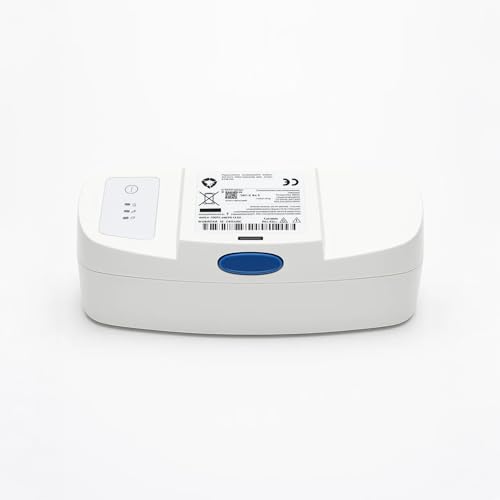
What Makes It Different This is the battery that gets a Freestyle Comfort to 8 hours at setting 2 — the concentrator ships with a smaller 8-cell battery that only covers about 4 hours at the same setting. Worth knowing before you buy: this specific Amazon listing is manufactured by ARYA, not CAIRE. It’s a compatible aftermarket battery, not a genuine CAIRE part — the listing itself doesn’t claim otherwise, so this isn’t the counterfeit-labeled-as-genuine risk I flag elsewhere. But if you specifically want the genuine CAIRE-branded battery, it isn’t sold on Amazon at all — order it through CAIRE’s authorized dealer network instead.
Compatibility Check This fits the Freestyle Comfort (model AS200) specifically. CAIRE’s older AirSep FreeStyle 5 and Companion 5 concentrators use different battery hardware entirely, so double-check your concentrator’s model number — printed on the underside near the serial number — before ordering.
Setup & Charging Notes Like the Inogen batteries, this is a tool-free swap: eject the smaller 8-cell, seat the 16-cell in the same bay, and the concentrator reads it immediately. CAIRE’s own spec sheet lists roughly 6 hours to fully charge the 16-cell from empty, compared to about 3.5 hours for the smaller 8-cell — worth planning around if you’re charging overnight before a full day out.
Pros: Doubles runtime over the stock battery, meaningfully cheaper than the genuine CAIRE part, fits the standard carrying bag alongside the smaller battery. Cons, with the fix: Aftermarket batteries generally carry a shorter cycle life than OEM parts, so expect to replace it somewhat sooner than a genuine CAIRE battery. If that trade-off doesn’t work for you, the CAIRE-direct option above is the fix.
Why You’ll Love It The Freestyle Comfort’s curved, body-hugging design is already one of the more comfortable POCs to wear for a full day — pairing it with a 16-cell battery means comfort and runtime stop being a trade-off.
What Others Are Saying Owners consistently point to battery life and quiet operation as the Freestyle Comfort’s strongest points, and several caregiver reviews describe it as a meaningful quality-of-life change over oxygen tanks for elderly parents who struggled with the weight and hassle of tank changes. The most common frustration in reviews isn’t the battery itself but the concentrator’s inhale-detection alarm, which some users find overly sensitive — unrelated to the battery, but worth knowing before you buy the system.
Our Favorite Feature The 8-cell and 16-cell batteries share the same compartment, so carrying both as a matched pair covers nearly any day without extra bag space.
HSA/FSA Note Same underlying rule as the Inogen picks: a backup or extended battery for a prescribed oxygen concentrator generally qualifies as an operating cost under Publication 502. One nuance worth flagging to your plan administrator if a claim gets questioned — the aftermarket-vs-OEM distinction shouldn’t affect eligibility, since the standard is medical necessity, not brand, but keep the receipt clearly itemized either way.
Warranty & Returns Genuine CAIRE-branded batteries carry CAIRE’s 1-year warranty; this ARYA-manufactured listing is a separate product with its own (typically shorter) seller warranty — check the specific listing rather than assuming CAIRE’s terms apply. Amazon’s standard return window covers the initial purchase either way.
Don’t Miss Out This is a budget-friendly way to get to 8 hours — just go in knowing it’s the compatible version, not the OEM one, so you can decide if that trade-off is right for you.
FAQs
Can a portable oxygen concentrator run all night on battery?
At setting 1 with the extended battery, the Rove 6 can cover a full 8-hour night with room to spare. At setting 2 or higher, plan on a second battery or a backup power station for reliable overnight coverage — I generally don’t recommend running a single battery as your only overnight source once you’re above setting 2.
What’s the difference between pulse dose and continuous flow?
Pulse dose delivers a burst of oxygen when it detects an inhale. Continuous flow delivers oxygen constantly, whether you’re inhaling or not. Pulse dose is dramatically more battery-efficient, which is why every 8-hour-plus POC on this list is pulse dose only. Continuous flow units typically drain a battery in 2–4 hours even at low settings.
Can I charge a POC battery from a portable power station?
Yes. Any portable power station with an AC outlet can run a POC through its standard AC adapter. A 500Wh power station typically adds another 5–10 hours of runtime beyond the built-in battery — useful for outages or off-grid stretches longer than a single charge cycle covers.
How do I know when my POC battery needs replacing?
Once runtime drops below roughly 75% of the original spec, it’s time. If your machine used to run 8 hours at setting 2 and now taps out at 5–6, that’s a worn battery, not a machine problem. Both Inogen and CAIRE sell direct replacements.
Bottom Line
Two current-production machines get you past 8 hours: the Inogen Rove 6 and the CAIRE Freestyle Comfort, both with their extended batteries. The Rove 6 edges ahead on raw setting-2 runtime and is the easier of the two to buy factory-direct. At setting 2 or below, either one gets you through a full day or a long flight without hunting for an outlet. Above setting 2, budget for a second battery or a portable power station as backup — and if you already own either machine, the battery upgrades above are what actually get you there.
For options on powering oxygen concentrators during grid outages or extended off-grid stretches, see my battery for oxygen concentrator guide.