Best Solar Generator Under $1,000 for Medical Devices
 By Lee Arnold
Medical Solar Power Backup Specialist | 8+ years in the field
Quick Answer:
Under $1,000, you can get a genuinely solid LiFePO4 power station for CPAP or BiPAP backup — the EcoFlow RIVER 3 Plus (286Wh) covers a full night for most machines, and the EcoFlow RIVER 2 Pro (768Wh) covers two nights with room to spare, both comfortably inside this budget. What this price range mostly can’t do is run a continuous-flow oxygen concentrator or a home dialysis machine through a real multi-day outage — those need more capacity than $1,000 typically buys, and we’ll be specific about where that line falls rather than stretching these picks past what they can actually do.
Most “budget solar generator” roundups sort products by price and call it done. The number that actually determines whether one of these will get you through a night isn’t the price tag or even the wattage rating printed on the box — it’s the watt-hour capacity, and how that capacity divides against your specific device’s draw. Get that math wrong and a “great budget pick” turns into a battery that dies at 3am.
Table of Contents
Why the Wattage Number on the Box Isn’t the One That Matters for CPAP
Every power station lists a continuous wattage rating — 300W, 600W, 800W — prominently on the box, and it’s tempting to assume bigger means “better for my CPAP.” For CPAP and BiPAP specifically, that number is almost never the limiting factor: even a heated humidifier pushes total draw to somewhere between 30W and 80W, well inside what any of these budget units can supply continuously. The wattage rating matters more for what else you might plug in, or for a higher-draw device like an oxygen concentrator’s compressor.
What actually determines your CPAP runtime is watt-hour capacity divided by your machine’s average draw, with roughly 10-15% lost to the inverter along the way. That’s the number this guide sorts by.
Three Real Picks, Sorted by What They Actually Cover
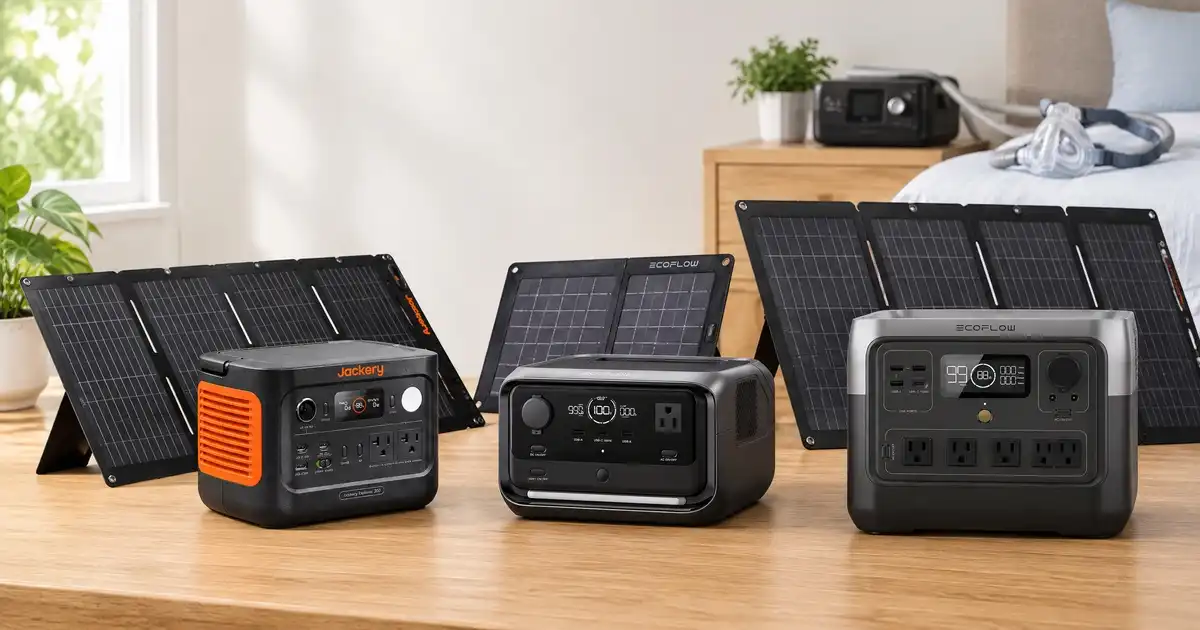
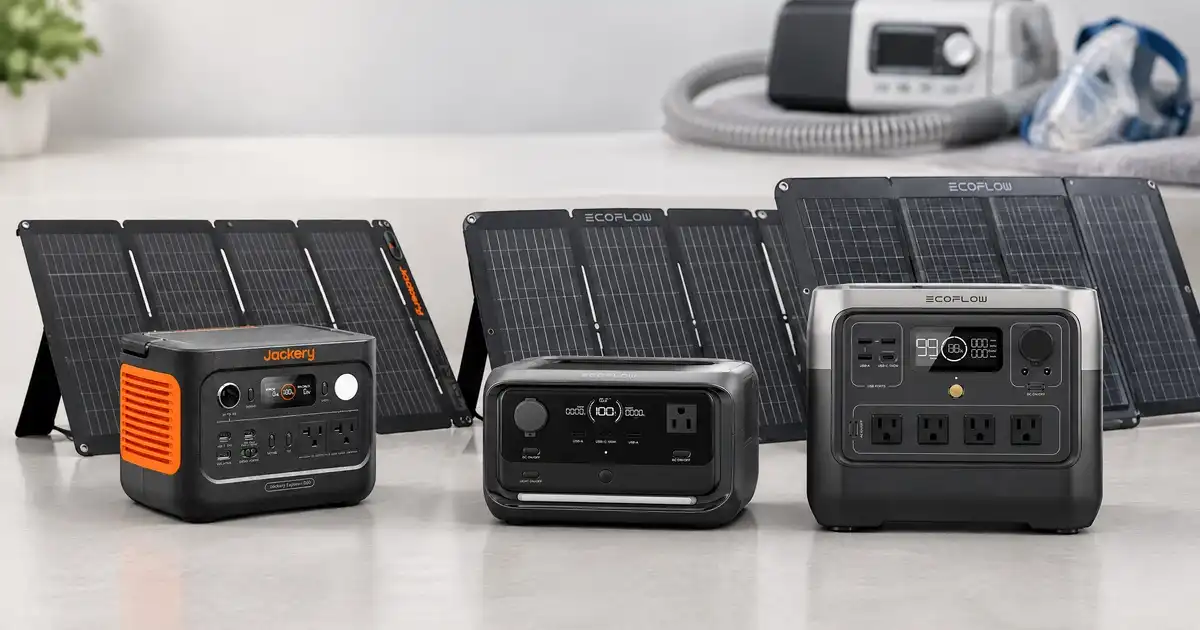
| Jackery Solar Generator 300 | EcoFlow RIVER 3 Plus | EcoFlow RIVER 2 Pro | |
|---|---|---|---|
| Capacity | 293Wh | 286Wh | 768Wh |
| Continuous output | 300W pure sine wave (500W surge) | 600W AC (760W combined across all ports; 1,200W X-Boost surge) | 800W (1,600W X-Boost surge) |
| Battery chemistry | LiFePO4 | LiFePO4, 3,000 cycles to 80% | LiFePO4 |
| UPS switchover | Not UPS-mode rated | <10ms | Not specified for UPS mode |
| Solar panel included? | Yes — 40W panel bundled | Yes — 45W panel bundled | Yes — 160W panel bundled |
| Estimated CPAP + humidifier runtime | ~5.5–6 hours | ~6–6.5 hours | ~15–17 hours |
| Best for | Bundled with a solar panel out of the box, occasional/travel backup | Full night of CPAP, best all-around budget pick | Multiple nights, or short-term light oxygen concentrator use |
Specs pulled directly from Jackery’s Amazon listing and confirmed against Jackery’s official product page; the RIVER 3 Plus figures come from its Amazon listing cross-checked against independent testing that clarified EcoFlow’s own manual distinguishes 600W AC output from 760W combined output across all ports simultaneously; the RIVER 2 Pro figures come from its Amazon listing. Runtime estimates assume a 30-40W average CPAP-with-humidifier draw and standard inverter losses — actual runtime varies by machine and humidifier setting, so treat these as planning estimates, not guarantees.
The Entry-Level Pick: Jackery Solar Generator 300
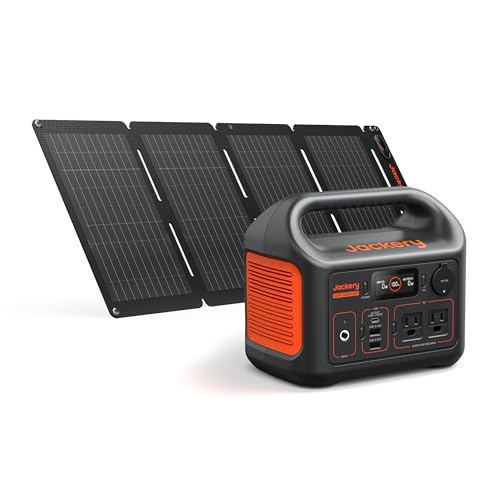
At 293Wh and bundled with a 40W SolarSaga solar panel out of the box, this is the pick that actually matches its “solar generator” name — unlike a bare power station sold without a panel, what you’re buying here is the complete kit. The Amazon listing specifically calls out a pure sine wave AC outlet, which matters if you’ve read our pure sine wave vs modified sine wave guide: a modified sine wave inverter is the thing most medical device manufacturers explicitly warn against, so having this confirmed on the listing itself is worth checking for on any budget pick, not just this one.
Pros:
- Ships as a complete solar generator kit — battery plus 40W panel — rather than requiring a separate panel purchase
- Confirmed pure sine wave AC output, the safer waveform for CPAP, BiPAP, and oxygen concentrator electronics
- LiFePO4 chemistry with the same safety profile as the other two picks
- 2-year standard warranty plus a 1-year extension (3 years total) when registered through Jackery’s site
Cons:
- At roughly 5.5 to 6 hours of CPAP-with-humidifier runtime, it doesn’t quite cover a full 7-to-9-hour sleep session for most people — better suited to bridging a shorter outage than being a sole overnight plan
- The included 40W panel is genuinely small — expect a slow trickle recharge unless you pair it with a larger panel separately, since 40W is a fraction of what the RIVER 3 Plus or RIVER 2 Pro can accept
- AC wall recharge takes about 4.5 hours, notably slower than either EcoFlow pick
Why You’ll Love It: For a first backup power purchase, the appeal here isn’t complexity — it’s that there’s nothing left to figure out. Every other pick in this guide asks you to think about the panel separately (wattage, cable compatibility, where to buy one); this one hands you a matched kit and calls it done. That’s worth something if you’re buying backup power for the first time and don’t want a second decision to research on top of the first.
Our Favorite Feature: The confirmed pure sine wave AC output is the detail we’d point to first — it’s not a given at this price point, and it’s the one spec that directly determines whether this is safe to plug a CPAP into at all, not just whether it’s convenient.
Compatibility Check: Check your specific CPAP cord’s connector before assuming DC compatibility — this bundle’s core spec sheet emphasizes the AC outlet rather than a DC car-style port, so machines that ship with their own AC power brick are the more straightforward fit here.
Setup & Charging Notes: AC wall charging takes about 4.5 hours to full. The included 40W panel alone will recharge slowly — plan on a full day of good sun rather than a few hours — so if you’re counting on solar recharge during a multi-day outage, budget for a larger panel purchase alongside this kit.
What Others Are Saying: Jackery has renamed this exact battery-and-panel combination more than once — it previously shipped as the “Explorer 300 Plus + 40W Solar Panel” before the current “Solar Generator 300” name, so Best Buy’s review page for that earlier listing is the closest verified feedback we could confirm on the underlying hardware: 4.5 stars across 184 reviews. Reviewer “Camper” (4 stars) took it camping the first weekend after buying it and reported it worked as described. “MGoose” (5 stars) called it the right size to run small electronics while still fitting in a pack. One critical review worth flagging: “DarrylW” (3 stars) described the solar input port as vulnerable to damage when angling the panel for better sun exposure — a fair mechanical caution for any foldable-panel setup, not just this one.
Warranty & Returns: 2 years standard, extendable to 3 years total with product registration through Jackery’s website.
HSA/FSA Note: As the lowest-cost kit of the three picks here, this is a reasonable entry point if you’re building an HSA/FSA case for backup power for the first time. The same IRS Publication 502 documentation requirements apply regardless of which unit you choose — check with your plan administrator before assuming any specific model is pre-approved.
The Sweet Spot: EcoFlow RIVER 3 Plus

This is the pick I’d point most CPAP users toward first. It edges out the Jackery on continuous wattage (600W AC, with a 1,200W X-Boost surge headroom) and adds a documented sub-10-millisecond UPS switchover mode, which matters if you want it plugged in full-time as automatic backup rather than something you manually swap over during an outage. One number worth clarifying since it shows up differently across listings: you may see this unit marketed as “760W” — that’s the combined output across all ports used simultaneously (AC plus USB plus DC), not the AC inverter’s own continuous rating, which is the 600W figure that actually governs what you can plug into the AC outlet. This specific listing bundles a 45W solar panel with the unit, so unlike a bare power station, what you’re buying here is a genuine solar generator kit out of the box.
Pros:
- Sub-10ms UPS/pass-through switchover, on par with a dedicated UPS
- Fastest AC recharge of the three, roughly 1 hour to full
- Ships with a 45W solar panel included, so solar recharge doesn’t require a separate purchase
- App connectivity with outage alerts and remote monitoring
- Genuinely low price point, regularly among the least expensive LiFePO4 kits in this capacity class
Cons:
- At least one verified Best Buy purchaser (username Veeak) reported the unit becoming completely unresponsive after charging — a persistent “436 error” with nothing plugged in, describing it as “a very expensive paper weight.” This is a single reported case out of a small review sample, not a documented widespread failure pattern, but it’s the kind of failure that matters most for a device you’re depending on in an actual emergency — worth knowing about even at low reported frequency.
- 286Wh capacity means the runtime margin for a full night is real but not generous, especially at higher humidifier settings
Why You’ll Love It: This is the pick that disappears into the background of your routine, which is exactly what backup power should do. Leave it plugged in, let the UPS mode handle the switchover, and the only time you’ll think about it is when the power actually goes out — at which point it’s already done its job before you’ve noticed anything happened.
Our Favorite Feature: The sub-10ms UPS switchover is the standout spec, not because CPAP data needs it the way a computer would, but because it means you can set this up once, leave it running, and trust it to catch an outage automatically instead of remembering to manually connect a battery at 2am.
Compatibility Check: Includes a 12V car-style charging outlet alongside three AC outlets, so the same direct-DC-connection option available on the Jackery applies here too for compatible CPAP cords. The UPS/pass-through mode is specifically relevant if you want this plugged in continuously as automatic backup rather than manually connected during an outage.
Setup & Charging Notes: AC charging reaches full in about an hour — the fastest of the three picks. The included 45W panel will recharge it meaningfully slower than that — budget several hours of good sun rather than expecting AC-speed results — though the unit can also accept a larger panel (up to 220W-class) for a faster solar top-off if you upgrade later. The battery is rated for 3,000 cycles to 80% capacity.
What Others Are Saying: Best Buy reviewer Ryan (5 stars) wrote that it “works well and has a very fast charge — great to have for camping and storms.” Reviewer AndrewJ, upgrading from smaller battery banks, said “I wish we’d done it sooner.” Against that, the Veeak review above is the one negative data point worth weighing — with only a small number of total reviews on file at Best Buy for this specific listing, we’d treat that single report as a flag to watch for rather than a confirmed defect rate; if you buy one, testing it once before you actually need it in an outage is a reasonable precaution regardless.
Warranty & Returns: 5 years in the US, matching EcoFlow’s RIVER 2 line — confirmed via independent testing documentation rather than EcoFlow’s own product page, which didn’t state the figure as clearly in the content we could access directly.
HSA/FSA Note: A full night of documented CPAP coverage is a meaningful detail if you’re building a medical-necessity case for reimbursement — under IRS Publication 502, deductibility hinges on maintaining a prescribed device’s operation, and a unit sized to cover a full therapy session supports that case more clearly than one that only bridges part of the night. Confirm documentation requirements with your HSA/FSA administrator before purchasing.
The Top of the Budget Range: EcoFlow RIVER 2 Pro
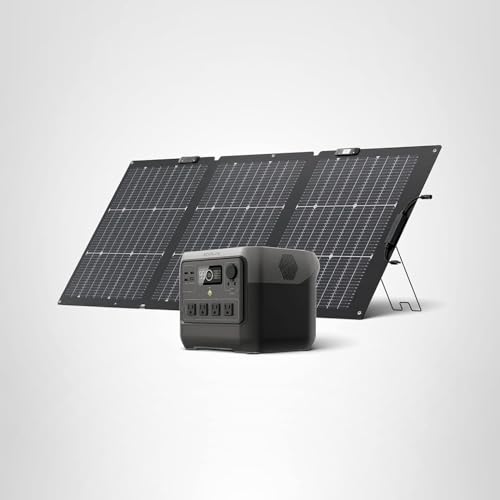
At 768Wh and an 800W continuous rating (1,600W X-Boost surge), this is where a genuinely different capability shows up: enough runtime for two full nights of CPAP use, or a few hours of light-duty use with a portable oxygen concentrator in the 150-250W range. This specific listing bundles a 160W solar panel with the unit — a genuine solar generator kit rather than a bare power station — priced well under this guide’s $1,000 ceiling even with the panel included. (EcoFlow also sells a 220W-panel version of the same bundle for a faster solar charge, but it runs closer to the budget line, so this is the more reliably-under-$1,000 option of the two.)
Pros:
- Largest capacity of the three, with real multi-night margin for CPAP use
- Ships with a 160W solar panel included — the largest bundled panel of the three picks, meaning a meaningfully faster solar recharge out of the box
- 4.5-star rating across 1,801 Amazon reviews on the base unit — the largest verified review sample of the three picks
- Cigarette-lighter-style 12V port plus two additional 5521 DC ports, giving more direct-DC connection options than the other two
- Fast charging, reaching 80% in under an hour
Cons:
- A documented pattern across multiple owner reports describes faster-than-expected self-discharge during long-term storage — meaning a unit charged and set aside for emergency-only use can lose more charge than expected by the time you actually need it. For a medical backup device that’s meant to sit ready, this is the single most consequential real-world issue to plan around: check the charge level periodically rather than assuming a fully-charged unit stays that way for months.
- At 768Wh it’s still not sized for a continuous-flow oxygen concentrator or dialysis equipment through a real multi-day outage — see the honest limits section below
Why You’ll Love It: The extra capacity here buys you something the smaller two can’t: room to stop doing the mental math every single outage. Two nights of margin means one bad week with the power out doesn’t turn into a crisis on night two, and that peace of mind is worth the step up for anyone who’s been caught out by a battery that ran dry sooner than expected.
Our Favorite Feature: The bundled 160W panel is what sets this apart from the other two picks — it’s large enough to meaningfully recharge the unit in a single day of decent sun rather than just trickle-charging it, which matters if an outage runs long enough that AC charging isn’t an option.
Compatibility Check: The two 5521 DC ports plus the 12V cigarette-lighter-style port give the most direct-DC connection flexibility of the three picks here, useful if your CPAP’s cord ends in one of these formats rather than requiring the AC outlet. As with the other two, confirm your specific cord’s voltage and connector type before relying on a DC connection.
Setup & Charging Notes: AC charging reaches 80% in about 56 minutes and full in about 70 minutes. The bundled 160W panel will take noticeably longer than that in good sun — expect several hours rather than AC-charging speed — though it’s still the fastest solar recharge of the three picks here given its larger panel size. Given the self-discharge pattern noted above, we’d recommend checking the charge level every few weeks if this is sitting as dedicated emergency backup rather than seeing regular use.
What Others Are Saying: Pulling directly from this unit’s Amazon review page (4.5 stars, 1,801 ratings): reviewer “bronchoed” gave it 5 stars running a full live-music setup — amplifiers, keyboards, and speakers — for over 30 hours, well beyond what they expected compared to a heavier EcoFlow model they’d previously owned. The most critical review on file, from “Herbert Frazier” (1 star), described it as barely able to keep a refrigerator running and requiring daily charging for that use case — worth noting that a refrigerator’s compressor cycling is a much heavier, more continuous load than CPAP, so that specific complaint doesn’t necessarily translate to CPAP performance, but it’s a fair data point on the unit’s ceiling for higher-draw appliances.
Warranty & Returns: EcoFlow’s documented warranty for the RIVER 2 series is 5 years — the longest confirmed term of the three picks here, matching the RIVER 3 Plus and outlasting the Jackery’s 3-year total.
HSA/FSA Note: Multi-night runtime and enough headroom for occasional light oxygen concentrator use can make this unit’s medical necessity easier to document if your prescribed equipment draws more than a single CPAP. Under IRS Publication 502, the case rests on maintaining your specific prescribed device, so keep documentation tied to what you’re actually powering rather than the unit’s general capability.
What This Budget Doesn’t Cover
Honesty about the limits here matters more than padding the list. A stationary home oxygen concentrator can draw up to 275W continuously even at a moderate flow setting, per manufacturer spec sheets we’ve verified elsewhere on this site — at that draw, even the 768Wh RIVER 2 Pro only delivers a few hours, not the multi-day coverage a continuous-flow oxygen patient actually needs. Home dialysis equipment runs even higher, often 480W and up. For either of those, you’re looking at a larger-capacity unit above the $1,000 mark, sized specifically to your equipment’s spec sheet — our main solar generator guide covers that higher tier, and our oxygen concentrator battery guide has device-specific sizing.
For more capacity options above what’s covered here without jumping straight to four-figure territory, our 5 best portable power stations for CPAP guide includes picks further up the range, including a couple of units that sit right around the $1,000 line.
FAQs
Is an entry-level budget power station actually enough for CPAP backup?
For a single night with a standard heated humidifier setting, generally yes for the RIVER 3 Plus tier (around 286Wh) — the runtime math lands close to a full night, though it’s a tighter margin than the larger RIVER 2 Pro. For the smaller Jackery Solar Generator 300, expect it to fall a bit short of a full 8-hour night.
Does a higher wattage rating mean better CPAP performance?
No — for CPAP specifically, any of these units’ wattage rating is already well above what your machine draws. The wattage number matters more if you’re also running a higher-draw device, not for the CPAP itself.
Can I add a solar panel to recharge these during an extended outage?
Yes — all three of the picks above ship as genuine bundled kits, with a solar panel included rather than sold separately: 40W with the Jackery, 45W with the RIVER 3 Plus, and 160W with the RIVER 2 Pro. Each can also accept a larger panel purchased separately for a faster charge; check panel wattage compatibility on the manufacturer’s product page before buying one.
Will any of these run a portable oxygen concentrator?
The RIVER 2 Pro (768Wh, 800W continuous) can run a portable oxygen concentrator in the 150-250W range for several hours, which may be enough to bridge a shorter outage. It’s not sized for multi-day continuous use at that draw — for extended oxygen concentrator backup, size up to the picks in our main solar generator guide.
Are any of these verified for indoor bedroom use?
All three use sealed LiFePO4 cells with a battery management system, which under normal operation doesn’t off-gas the way older lead acid batteries can. We cover ventilation specifics in our indoor solar generator safety guide.
Bottom Line
Under $1,000, the real decision isn’t which brand to trust — it’s matching watt-hour capacity to your actual device and how many nights you need covered, since the wattage rating on the box rarely ends up being the limiting factor for CPAP use. The EcoFlow RIVER 3 Plus is the strongest all-around pick for a single night of CPAP backup at a genuinely low price point, and the RIVER 2 Pro is worth the step up if you want multi-night margin or occasional light oxygen concentrator use. What this budget tier can’t stretch to cover is continuous-flow oxygen concentrators or dialysis equipment running through a real multi-day outage — for those, size up rather than hope a budget unit performs above its actual capacity.
This article reflects manufacturer specifications current as of October 2026 . Pricing and stock availability change frequently — verify current price and availability directly on the retailer’s listing before purchasing.